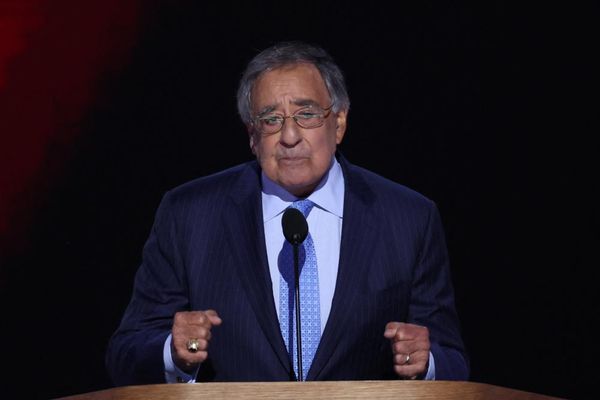
On the first night of the Democratic National Convention, New York Gov. Andrew Cuomo was among the first in a weeklong parade of speakers to issue scathing critiques of the Trump administration's coronavirus response.
Cuomo's criticisms drew a quick reply in a tweet from Michael Caputo, an assistant secretary for public affairs at the Department of Health and Human Services.
"Does the #DemConvention know @NYGovCuomo forced nursing homes across NY to take in COVID positive patients and planted the seeds of infection that killed thousands of grandmothers and grandfathers?" he wrote.
It was an easy jab: Cuomo has been dogged by criticism for months over his March advisory directing nursing homes in the state to accept patients who had or were suspected of having COVID-19. As long as they were medically stable, the notice said, it was appropriate to move patients in. Further, nursing homes were prohibited from requiring that medically stable prospective residents be tested for the virus before they arrived.
Between March 25 and May 8, approximately 6,326 COVID-positive patients were admitted to nursing homes, according to a state health department report.
While experts say this policy was flawed, is it fair to say that the governor's directive "forced" nursing homes to take patients who were sick with COVID-19? And to what extent did that strategy sow the seeds of disease and death? When we examined the evidence, we found it was less clear-cut than the statement makes it seem. The policy likely had an effect, but epidemiologists identified additional factors that fed the problem. What's more, the policy did not "force" nursing homes to accept COVID-positive patients. Nursing homes interpreted it this way.
We checked with HHS to find the basis for Caputo's comment but got no response.