The torrential rain that lashed large areas of western Japan in July caused the nation's deadliest flood-related disaster in the Heisei era (1989-). Why did so many people die and what must be done to prevent a repeat of such a disaster? The Yomiuri Shimbun asked three experts for their insights on what lessons can be learned to save lives in future floods. The following are excerpts from the interviews.
(From The Yomiuri Shimbun, July 13, 2018)
Move faster with flood-prevention measures
The most striking feature of this disaster is that flooding and landslides occurred simultaneously and in many places over wide areas of western Japan. The total damage, including loss of income by individuals and companies, will probably top 1 trillion yen. Loss of life is not uncommon in Japan during the typhoon and rainy seasons. The disaster underlined the nation's fragility again in the face of a flood-related disaster.
Mudflows occurred in more than 100 locations. Much of the land in Hiroshima Prefecture, which suffered extensive damage in this disaster, sits on a type of soil susceptible to rain-induced landslides, composed of decomposed granite. Mudflows can occur anywhere in valleys of mountainous areas, and more than two-thirds of Japan's territory is mountainous.
The basic method for preventing mudflows is to build "mud-control dams" in areas at risk of mudflows. If this option is difficult to implement, the government will need to review or strengthen regulations on the use of land in certain valleys.
Many people in Kurashiki, Okayama Prefecture, died when the Odagawa river breached its banks. This happened due to what is called a "backwater phenomenon." In this case, the Takahashigawa river, the main river, became swollen and its water level rose, preventing the Odagawa river, its tributary, from flowing downstream. The water then flowed back along the Odagawa river. The phenomenon could also occur in other rivers when water levels rise.
Flooding had occurred in this area before. For several decades, there have been warnings that countermeasures were needed to prevent flooding. Construction of such measures was scheduled to start this autumn. Construction of a new dam and strengthening of existing dams was planned for the Hijikawa river system that flooded in locations including Seiyo, Ehime Prefecture. If these projects had been completed, the floods could have been prevented or at least reduced. This point will need to be examined further.
Speeding up flood control measures is an urgent task for Japan. The number of times torrential rain of 80 millimeters or more per hour has fallen in Japan has increased 1.7-fold compared with 30 years ago. Disasters caused by torrential rains could occur anywhere in the nation. Depending on the location, such a disaster could even fall into the category of a "national disaster." For example, the Japan Society of Civil Engineers has calculated that if the Arakawa river burst its banks in the Tokyo metropolitan area, the economic losses could reach 62 trillion yen.
Despite this, the proportion of Japanese rivers with proper banks or embankments is low compared with Europe and the United States. The River Thames in London is completely embanked, and about 80 percent of the lower Mississippi River in the United States has been embanked. Only about two-thirds of the Arakawa has embankments.
Furthermore, flood control-related budgets in Britain and the United States have about doubled over the past 20 years or so. By contrast, the budget for these projects in Japan has been cut by more than half. If the current budget level could be boosted by just 20 to 30 percent, basic flood control measures could probably be completed within 15 years. Otherwise, it will become difficult to avoid being struck by a flood-related national disaster.
Of course, implementing disaster-prevention measures misses the point if they are completed after a disaster has already hit. That is why it makes no sense to advance disaster-prevention measures little by little by appropriating funds at the current budget level each year. If the government intends to make the same expenditure anyway, it would be logical to first complete these countermeasures quickly -- just like one gets a housing loan to buy a house -- and then have future generations that will benefit from these projects shoulder their fair share of the cost. That is "common sense" in disaster-prevention measures around the world.
-- This interview was conducted by Yomiuri Shimbun Senior Writer Masashi Yoshida.
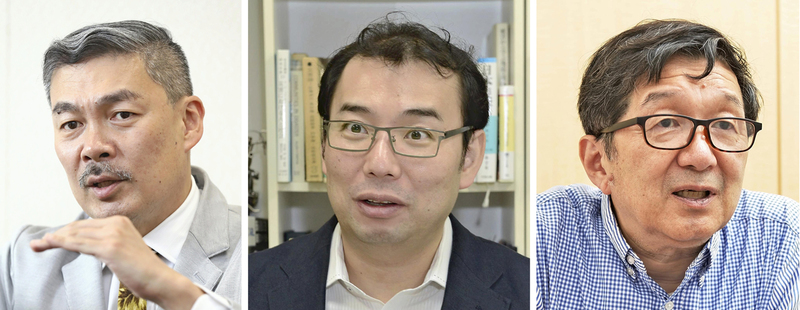
-- Satoshi Fujii / Kyoto University Professor
Fujii, 49, has been in his current post since 2009. An expert on urban management, he has served as a special adviser to the Cabinet Secretariat in charge of the New Deal policy that accounts for disaster prevention and mitigation since 2012.
Don't think a disaster couldn't happen to you
People generally have a habit of assuming that because they have gone through life without encountering any problems, something terrible probably won't happen to them. In psychology, this is called "optimism bias."
This tendency becomes especially strong when confronted with phenomena that rarely happen, such as major disasters. During the recent torrential rain, special emergency warnings, evacuation directives and other disaster-prevention information were issued, but I think many people probably disregarded them because they had not suffered harm in previous cases, so they did not take appropriate action.
If worse comes to worst, the key to protecting yourself lies in not thinking that disasters only affect other people. It helps to make yourself aware, even during normal times, that disasters could happen nearby and might directly affect you.
The Mabicho district in Kurashiki, Okayama Prefecture, suffered extensive damage from flooding. The flooded districts largely aligned with the areas hazard maps had singled out as vulnerable. The maps were very accurate. However, just distributing such maps is not enough. People who quickly glance at them will not feel any greater sense that a disaster could directly affect them.
On a hazard map, mark your own house, where you work, schools, supermarkets and hospitals you often go to, roads you often walk on and other locations crucial to your daily life. Then check what risks may present themselves based on the map. If you actually walk to these places and imagine how deep the floodwaters could be, the disaster might feel a little more familiar and you will take the threat more seriously.
If a warning is issued, flip your inner switch from being in a "normal" situation to being in an "extraordinary" situation, collect various information and carefully observe what is going on around you. Check your hazard map again, and if you are in a high-risk place, quickly evacuate. If you are in a safe location, do not leave unless there is a reason to do so. It is sensible to make preparations such as leaving a flashlight in an easy-to-reach location in case there is a blackout.
Even if warnings are declared, many people apparently pay little attention if previous warnings have passed without incident. They assume nothing will happen this time, either. This is called the "boy who cried wolf effect." However, a warning being issued does not mean that danger is imminent. Rather, it is information advising people to raise their level of awareness and vigilance because concern about a danger has increased significantly. People need to correctly understand the meaning behind these warnings.
With regard to the recent flooding, there must be cases in which people swiftly made appropriate decisions and saved themselves from harm. I want the media and regional authorities to unearth these good examples and convey to society why these people responded well to the situation. People are slow to move if they are given abstract information, but they are quick to learn when presented with concrete examples.
Just like people regularly have health checks to examine their physical condition, I believe that if we have a society in which many people incorporate regular "disaster prevention checks," in which they check the safety and preparedness of areas around them, we could reduce the damage inflicted by disasters.
-- This interview was conducted by Yomiuri Shimbun Senior Writer Masaru Kawanishi.
-- Reo Kimura / University of Hyogo Associate Professor
Kimura, 43, is an expert on disaster psychology and disaster-prevention education. He completed a doctorate in informatics at the graduate school of Kyoto University.
Special importance of special warnings
The volume of rain that fell during this disaster was unprecedented. In all the years the Japan Meteorological Agency has been recording rainfall volumes, I doubt there has been another case in which so much rain fell at the same time across such a wide area, rather than localized in just one area. This was a terrible disaster, but given the incredible volume of rainfall, I would not have been surprised if the damage had been even worse.
The seasonal rain front became trapped between a high-pressure system over the Sea of Okhotsk and another over the Pacific Ocean, so it could not move away from Japan. A staggering volume of moisture then flowed in from the south, generating the torrential rain. We often hear that torrential rains might be increasing due to global warming, but scientifically it is too soon to say for sure. That moist air, which reached a high altitude, is normally in the tropics. It seems it reached Japan due to the atmospheric pressure patterns.
These conditions were properly predicted on July 5, before the rain surged in volume. The agency announced it was "possible" that it could declare special emergency warnings for heavy rain in the following days and called on the public to stay very alert. This was an unusual approach.
Special emergency warnings are issued when there are extremely high concerns that a major disaster could occur. Usually, it is difficult to forecast such heavy rain more than one full day before it actually falls. I was at a weather forecasting company on July 5, and a chill went down our collective spines as we clearly grasped the agency's sense of urgency over the approaching rain.
Did the agency's sense of urgency translate into a sense of urgency among residents? Since the special warning system was established about five years ago, some observers have worried that people would mistakenly think they were safe "until such a warning is issued." This time, some people might have thought they would try to evacuate once a special emergency warning had been declared. It would be unfortunate if that were so.
Evacuations should be completed by the time a "heavy rain warning" is issued. If the rain gets to a point where a special emergency warning is issued, it is already too late to safely evacuate. At this point, the agency would not call on people to evacuate, but rather to "take action to protect your life." For example, if you cannot evacuate from a home facing a nearby cliff, you should go to the second floor on the opposite side of the cliff. That way, if a landslide engulfs the house and you get buried alive, you will have a slightly higher chance of being rescued than if you had been on the first floor and near the cliff side. A special emergency warning means the situation is that desperate.
The law that established the special emergency warnings system obligates local governments to notify residents that such an alert has been issued. If local authorities issue heavy rain warnings, which could develop into "special warning" situations, I believe disaster prevention officials are alert to the risks when calling on residents to evacuate.
It would not be unusual if rains as heavy as those recorded this time fall in localized areas, so local governments must steadily publicize their evacuation advisories and orders so residents seriously heed them in an emergency. Japan Meteorological Agency forecasts are due to become even more accurate from next year, so I expect people will have greater trust in weather warnings.
-- This interview was conducted by Yomiuri Shimbun Senior Writer Hiroshi Masumitsu.
-- Yo Nyomura / Aoyama Gakuin University Part-Time Lecturer
Nyomura, 67, is a meteorologist who worked at the Japan Meteorological Agency until 2011, where he served in positions including chief of the Tokyo Aviation Weather Service Center. He now works as a consultant specializing in reducing damage from disasters.
Read more from The Japan News at https://japannews.yomiuri.co.jp/