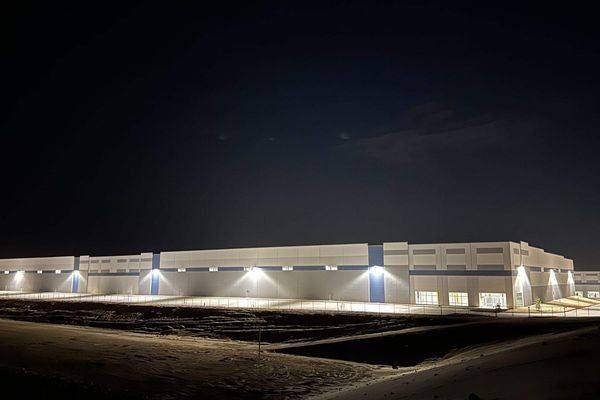
(Bloomberg Businessweek) -- In 2010, Facebook Inc. announced it would build a $450 million data center in Forest City, N.C., on the site of a razed textile mill in the foothills of the Blue Ridge Mountains. The isolated rural town of 7,500, where 1 in 3 residents lived below the poverty line, had hit a recession-era unemployment peak of 19.8 percent, and local officials were eager to trade hefty tax breaks for the promise of 21 full-time jobs with Facebook and 21 with its outside contractors.
Since the data center opened in 2012, helping to store and manage Facebook’s vast supply of friend requests and likes, the company has paid $13.9 million in taxes into the local Rutherford County coffers but received $13.5 million back in grants. That’s a lot of money for a struggling rural county with an annual budget of $64 million, especially compared with a company worth half a trillion dollars that spends about $15.2 billion a year. There were also untold millions in incentives from the state, which waived sales taxes on the center’s principal costs: computer equipment and electricity.
Although more people work at the data center than Facebook promised, some 275 in all, about a third are contract security, and many have come from at least as far as Charlotte, about an hour away. In partnership with nearby Isothermal Community College, Facebook created a “data center institute” to train people in the Forest City area as server technicians, but the institute’s only course, a two-week, uncredited program, hasn’t been taught since early last year, according to the college. About 100 people have finished the class since 2012; Facebook and Isothermal declined to share a job placement rate.
Local business boosters say they didn’t have much in the way of alternatives. The county spent four years trying to land a dozen data center projects before Facebook came to Forest City, and hasn’t found a second one since. “We were dominated by textiles, and when they all started leaving, all those jobs left,” says Tom Johnson, president of Rutherford County Economic Development. “We were looking for an option to diversify the economy.” State officials declined to comment, citing taxpayer confidentiality. As part of its deal with Facebook, the county is obligated to inform Facebook of any public-records requests made about the deal and to give Facebook three days to respond before complying.
Delfina Eberly, the vice president who oversees Facebook’s five data centers and its plans for five more, says the company has fulfilled its promise to put people to work in Forest City, including through Isothermal and outsourcing contractor Milestone Technologies Inc. “The commitment we have to these communities is to provide full-time jobs,” she says.
Giant tech companies, including Facebook and Google Inc., are racing one another to develop hardware that can radically reduce the size of their data centers. For now, though, they need jumbo facilities to handle their internet traffic, and municipal officials remain willing to subsidize them. “There are fewer ribbon-cuttings and fewer ways to show they are aggressive on jobs,” says Greg LeRoy, executive director of Good Jobs First, a Washington nonprofit that tracks corporate subsidies. “It makes them desperate and prone to overspending.”
Facebook received about $100 million in combined tax incentives from state and local governments to put its first three standalone U.S. data centers in Forest City, Prineville, Ore., and Altoona, Iowa, plus $147 million from Texas to put the fourth in Fort Worth. The company will enjoy $57 million in combined tax breaks when it builds facilities in Papillion, Neb., and New Albany, Ohio, and won’t have to pay property taxes on one it’s putting in Los Lunas, N.M., for 30 years. The states and municipalities seem unlikely to break even on those deals, or to materially boost local employment.
About a decade ago, when the likes of Facebook, Google, and Amazon.com Inc. first started looking for cheap places to put so-called mega-data centers, the facilities had more to offer locals without much training, says Yevgeniy Sverdlik, the editor of Data Center Knowledge, an industry news site. “In the early days, they didn’t need super-high-skilled staff,” Sverdlik says. “It used to be a much more labor-intensive process. Someone had to physically walk to a server tower and replace a bad server, but you could also teach anyone to do that.”
The tech companies, however, have worked aggressively to advance and automate their data center hardware, decreasing the need for human technicians while increasing the training the remaining positions require. Amazon’s three data centers in Ohio received $82 million in tax incentives and created 120 jobs. Iowa recently awarded $200 million in tax breaks to Apple Inc. for two data centers outside Des Moines with 157 jobs promised between them. Four years ago, Facebook says, its average technician managed 20,000 servers; today, the number is 25,000. The long-term goal is to eliminate all human repair work, according to a 2016 post on a company blog titled “Making Facebook self-healing: Automating proactive rack maintenance.”
As the data centers’ labor needs have shifted, tech companies have begun breaking ground in less rural areas. New Albany, the wealthy suburb of Columbus, Ohio, where Facebook is putting a $750 million facility, has a poverty rate below 3 percent, an unemployment rate around 4 percent, and a median household income of $196,000. Even so, Ohio is offering $371,000 in tax credits for each of the 100 full-time positions Facebook has promised there—none of which is likely to provide a lifeline to a laid-off factory worker. “In urban areas, you just have more people to draw from,” says Eberly, the Facebook VP.
She says that while Facebook’s increasing data center automation has eliminated technician roles, it’s meant more work for software engineers. Still, she’s clear that Facebook’s ideal data center manages itself a lot more efficiently than one maintained by people. “It’s impossible and unrealistic that a team of human beings can keep up with the sheer numbers of this ever-growing footprint,” she says. What’s less clear is why state and local governments are subsidizing that footprint’s expansion.
To contact the author of this story: Mya Frazier in New York at mya@myafrazier.com.
To contact the editor responsible for this story: Jeff Muskus at jmuskus@bloomberg.net.
©2017 Bloomberg L.P.