Beginning next week, daytime rocket launches are all officially scrubbed thanks to the government shutdown.
As the record-long shutdown of the U.S. federal government stretches into its second month, commercial air travelers are beginning to feel the impacts at the nation's airports. To help ease the strain, the Federal Aviation Administration (FAA) has issued an emergency order to limit who can access navigable airspace, which includes restricted hours on commercial rocket launches.
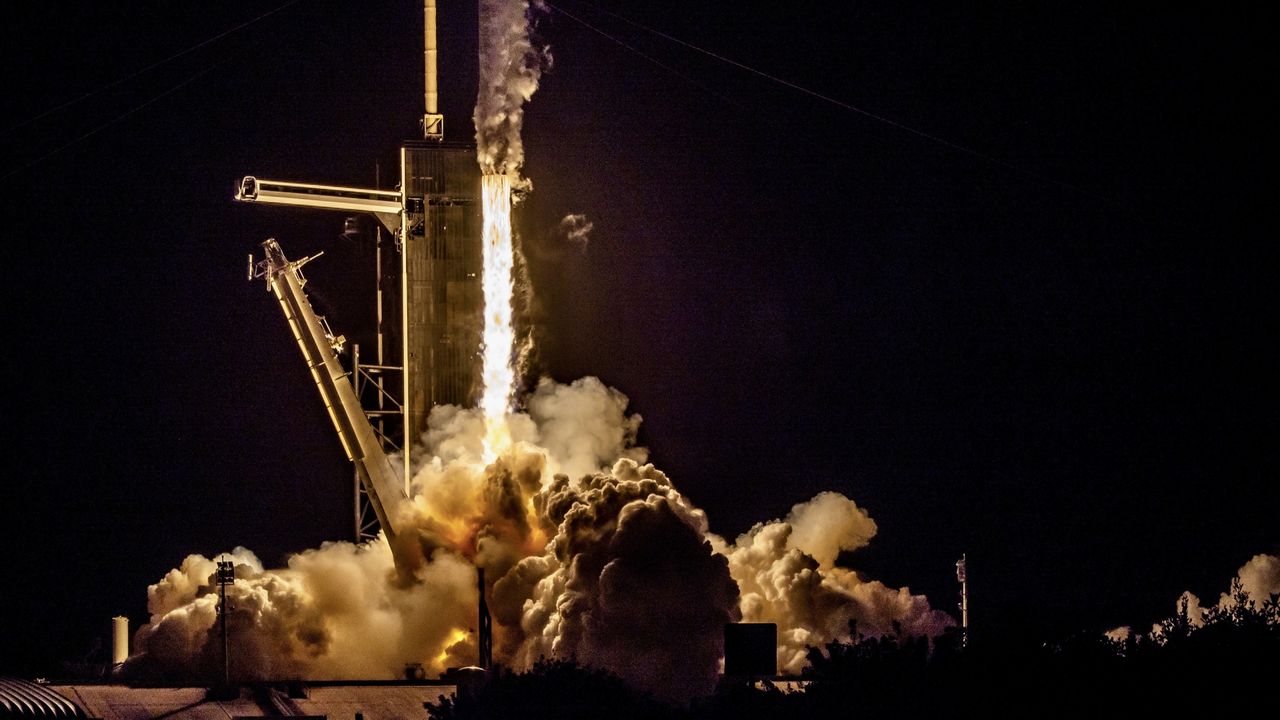
Beginning 6 a.m. EST (1100 GMT) on Nov. 10, commercial launches to space can only take place between the hours of 10 p.m. EST (0300 GMT) and 6 a.m. EST (1100 GMT), according to the FAA order. This will help keep airspace restrictions in Florida, near NASA's Kennedy Space Center and Cape Canaveral Space Force Station, as well as Vandenberg Space Force Station in California, to a minimum while air traffic delays stack up due to staffing shortages caused by the government shutdown.
Though its impact on greater U.S. air traffic delays across the country will be hard to measure, the restrictions coincide with the busiest coast-to-coast launch cadence in history. The order will primarily affect SpaceX, which routinely launches Starlink satellite stacks into low Earth orbit as it expands its wireless internet megaconstellation, though other launch providers and missions will likely need to reassess their launch manifests. SpaceX has launched over 140 Starlink missions this year alone.
One launch hoping to get off the ground before the order goes into effect is NASA's ESCAPADE mission to Mars. The Rocket Lab-built twin orbiters are scheduled to liftoff on a Blue Origin New Glenn rocket at 2:45 p.m. EST (1945 GMT) on Nov. 9. The impending restrictions mean the ESCAPADE mission won't have a chance to reset for a second launch attempt if the Nov. 9 liftoff is scrubbed for some reason.
United Launch Alliance's Atlas V launch of the ViaSat-3 F2 satellite could face further delays under the new launch restrictions, after two previous mission scrubs earlier this week due to issues with the rocket.
During the shutdown, all federal employees deemed non-essential are furloughed. Those whose job falls into the essential category are still required to go to work, but are not currently getting paid and must rely on backpay once the government reopens.
For NASA, this means nearly 15,000 people staying home from work. That's about 95% of the space agency's workforce. In contrast, 95% of employees at the Transportation Security Administration (TSA) are considered "excepted" and have continued to work without pay since the shutdown began Oct. 1.
.@USDOT has many responsibilities, but our number one job is safety. This isn’t about politics – it’s about assessing the data and alleviating building risk in the system as controllers continue working without pay. It’s safe to fly today, tomorrow, and the day after because… pic.twitter.com/YRrq5sdy4TNovember 7, 2025
In a post on X, Department of Transportation Secretary and Acting NASA Administrator Sean Duffy said the emergency order was, "about assessing the data and alleviating building risk in the system as controllers continue working without pay. It's safe to fly today, tomorrow, and the day after because of the proactive actions we are taking."