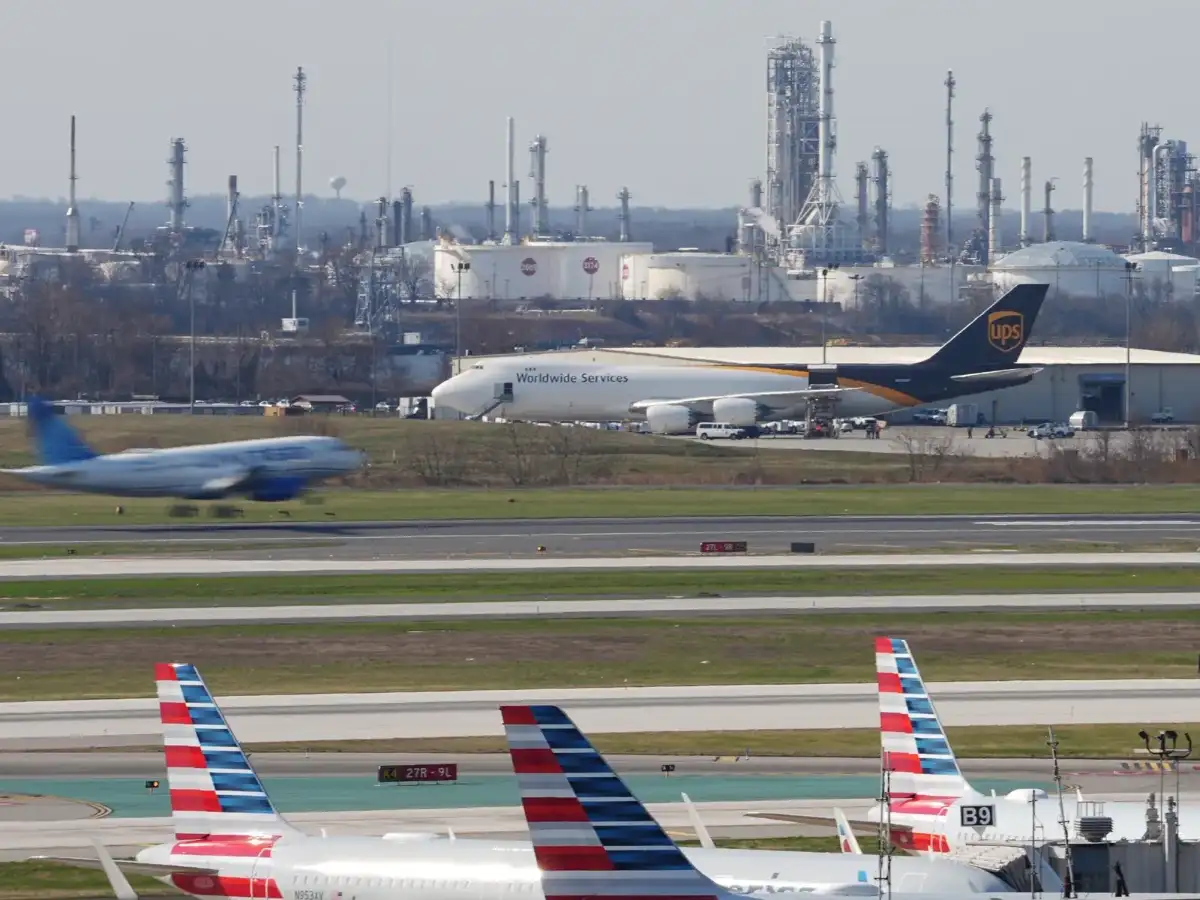
Thousands of air travellers across the American Midwest faced significant disruptions on Thursday after a technical outage at a key Federal Aviation Administration (FAA) air traffic control facility forced flights to be delayed, diverted and temporarily held on the ground.
Although the affected systems were later restored, the disruption continued to ripple through airports across multiple states, leaving passengers facing lengthy waits and altered travel plans well into the evening.
The FAA confirmed that the outage impacted aircraft operating across a vast section of US airspace rather than being limited to a single airport, making it one of the region's most significant aviation disruptions of the day.
Radar and air traffic control systems temporarily went offline
According to the FAA, the technical issue affected critical systems used by air traffic controllers, including radar and air traffic control operations.
As a precaution, flights travelling into and out of several Midwest states were either delayed before departure, diverted to alternate airports or temporarily prevented from taking off while controllers worked to safely manage air traffic.
The agency later announced that the affected systems had been successfully restored, allowing normal air traffic management to gradually resume.
However, officials cautioned that restoring the technology did not immediately eliminate delays already building across the network.
Major regional control centre—not Minneapolis airport—was affected
While many passengers initially assumed the disruption originated at Minneapolis–Saint Paul International Airport (MSP), the FAA clarified that the outage occurred at a regional air traffic control facility responsible for managing aircraft over an enormous section of US airspace.
The centre oversees approximately 330,000 square miles, coordinating flights across much of the Upper Midwest and ensuring safe separation between commercial, cargo and private aircraft operating in the region.
Because of the facility's extensive responsibilities, even a temporary systems failure had consequences far beyond Minneapolis itself.
Ten states experience flight disruptions
The outage affected flight operations across Minnesota and nine neighbouring states, highlighting how interconnected the US air traffic system has become.
According to the FAA, airports in the following states experienced operational impacts:
- Minnesota
- Michigan
- Kansas
- Missouri
- Nebraska
- North Dakota
- South Dakota
- Wisconsin
- Along with other surrounding Midwest airspace served by the affected control facility.
Airlines adjusted schedules throughout the afternoon and evening as controllers carefully managed aircraft movements following the outage.
Minneapolis flights among the hardest hit
By Thursday evening, average delays for flights operating through Minneapolis–Saint Paul International Airport had climbed to around 90 minutes, according to FAA updates.
Passengers reported extended waits before departure as aircraft queued for clearance while airlines worked to reposition aircraft and crews affected by the earlier disruption.
Other airports across the Midwest also continued to experience delays, even after radar and communication systems returned to service, as airlines dealt with the knock-on effects of earlier ground stops and diversions.
FAA begins investigation into cause of outage
The FAA has launched an investigation to determine exactly what caused the systems failure.
Officials have not yet indicated whether the disruption resulted from hardware problems, software issues or another technical malfunction.
The agency has also not reported any safety incidents related to the outage, emphasising that temporary flight restrictions and delays were implemented as precautionary measures to ensure aircraft continued operating safely.
Air travel continues to feel impact of technology disruptions
The latest incident highlights how dependent modern aviation has become on highly sophisticated air traffic management systems.
Even relatively brief interruptions to radar or controller technology can quickly affect hundreds of flights across multiple states, creating cascading delays that continue long after systems are restored.
With airlines operating tightly coordinated schedules, disruptions at a single regional control centre often spread throughout the wider US aviation network, affecting passengers far beyond the immediate area.
As investigators work to identify the cause of Thursday's outage, airlines are expected to continue recovering schedules, while passengers travelling through Midwest airports are being advised to check the latest flight information before heading to the airport.
Although operations are gradually returning to normal, the FAA's investigation is expected to focus on preventing similar disruptions in the future as air travel demand continues to grow across the United States.