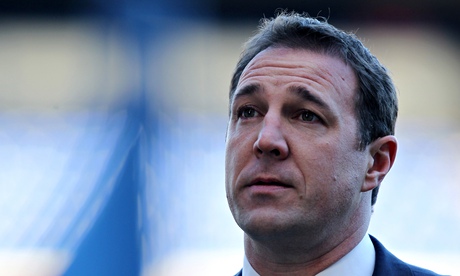
The instinctive, natural reaction to the Football Association announcement that it will not be charging Malky Mackay or Iain Moody over their foul, shockingly racist text exchanges is to deride the FA – once again – as useless, a bunch of blazers out of touch with modernity.
Yet that time-served exasperation with the FA and all its works is itself out of date now, and would be, perhaps surprisingly, unfair in this case.
The truth about the failure to charge the former manager and head of recruitment at Cardiff City, despite the startlingly crude insults they shared, is that it has not been for the want of trying.
During the nine months the FA has taken since receiving the full report of the text exchanges – which were discovered by Cardiff lawyers in a trawl actually investigating the pair’s financial dealings – the FA governance department investigators have not been whistling around Wembley’s circular corridors unconcerned by the racism expressed. The fact this has turned out to be a straightforward decision that could have been made in days – the text exchanges, however vile, were private and so outside the FA’s current, albeit unsatisfactory rule – in fact shows the FA pushed hard to go beyond that constraint, before finally admitting defeat.
The FA tried to make that clear as long ago as November, after the then Wigan Athletic chairman Dave Whelan appointed Mackay as manager and said he had been tipped off that Mackay would face no charges. Whelan, of course, went on to say Mackay had done “not a lot wrong” to call the Cardiff owner Vincent Tan a “chink” in one text, or say of the agent Phil Smith “nothing like a Jew that sees money slipping through his fingers”. Whelan then went on to make antisemitic remarks of his own which did draw a swift disciplinary charge and six-week ban.
In recent years, through the cases against Luis Suárez, John Terry, Nicolas Anelka, Whelan and others, the FA has undoubtedly shown it has markedly changed in its attitudes and preparedness to act on racist incidents, and Mackay and Moody have not been left lightly investigated.
In its November statement, the FA denied that any assurances had been given to Whelan over Mackay, and said that in fact it had widened its investigation, to see if Mackay’s texts with Moody “indicate a culture in which other acts of a discriminatory nature may have taken place”.
That was a strong signal that the FA already knew, early on, that it would struggle to make a charge stick for the texts, given its rule – apparently, bizarrely, unwritten – that communications expressed privately are not subject to its disciplinary jurisdiction. The chairman, Greg Dyke, famously gave that explanation when the FA took no action against the Premier League chief executive, Richard Scudamore, over sexist exchanges in his emails. Given the virulent, blatant racism in the Mackay and Moody exchanges, the FA decided not to surrender, and to stretch its investigation as it indicated, into the culture Mackay, particularly as the manager, ran at Cardiff, to see if it was discriminatory. That investigative activity, rather than inactivity, is what has filled this stretch of time but finally the FA has had to admit, in a statement seething with frustration and grumbling hints, that it was not going to make anything stick.
There is no reason to doubt that the FA did, as it has stated, follow leads, and interview Mackay and Moody at length, as well as 27 potential witnesses in the UK and overseas. That, to be fair, takes time, as does the consideration of the charges and evidence by a QC, necessary because all of these high-stakes football disciplinaries have now become quasi-courtroom affairs with top QCs engaged by both sides to argue over the meanings of every word.
The “serious concerns” the FA expressed about how some evidence came to it, which it said “necessitated significant further inquiries and liaison with external law enforcement agencies,” was unsatisfactorily cryptic but seems designed to show how time-consuming the investigation was, into a fall-out at Cardiff outstanding for its level of bad feeling.
Lord Ouseley, the chairman of Kick It Out, whose views on anti-racism always demand respect, was scathing about the failure to charge but his exasperation seems more aimed at the rule itself, which protects private communications even when they are made public, than its interpretation in this case.
The rule is subject to a review process which does show up the FA’s modern flaws, being over-long, bureaucratic and prey to vested interests. But, surprising as it may seem given the FA’s long-term reputation and poisonous views expressed in these texts, the decision not to charge appears to have come after investigators tried their best.