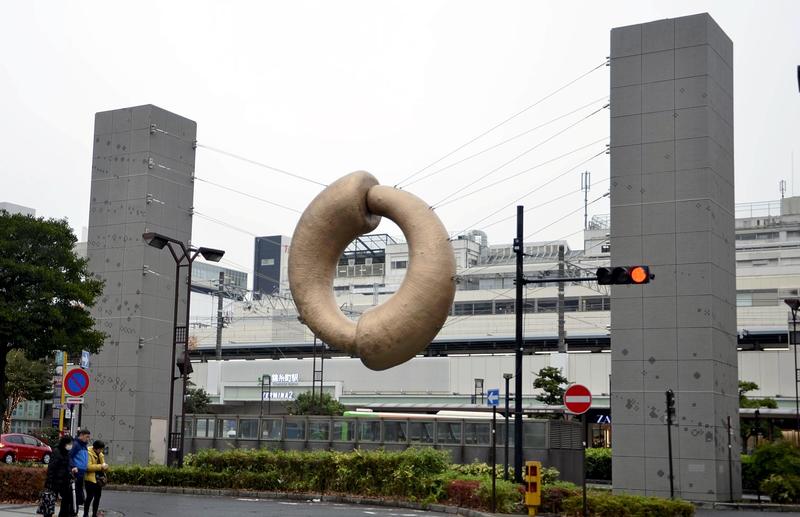
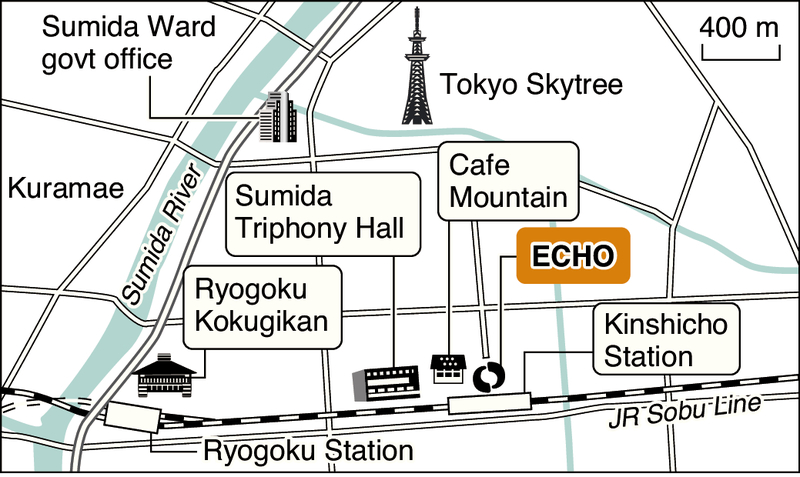
When you come out the north exit of JR Kinshicho Station in Sumida Ward, Tokyo, a circular gold object can be seen. Hung by wires from two pillars, it looks like a huge doughnut floating in the air. What does this represent?
The Kinshicho district continues to develop as one of the most bustling areas in Tokyo's 23 wards. It is home to large commercial facilities, office buildings, restaurants, stores and other facilities.
In 1997, the Sumida Triphony Hall opened in Kinshicho. One of the largest music halls in eastern Tokyo, its main hall has a capacity of about 1,800 and is equipped with a German-made pipe organ. The hall is a primary concert venue for the New Japan Philharmonic Orchestra.
When opening the Sumida Triphony Hall, the Sumida Ward government set up many pieces of music-themed artwork in and around the building. A typical example is "ECHO," which was created by U.S.-based artist Loren Madsen and installed at the main entrance of the district.
The main circular part of "ECHO" weighs about 25 tons and was created by combining two objects shaped like F-clefs. The five wires on each side indicate the staff notation, and symbol-like patterns on the two 15-meter support pillars symbolize past masterpieces and the musical history of various countries.
"'ECHO' is a symbol of the musical city of Sumida. We hope more visitors will learn about it," said Akiko Hakata, 46, an official of the ward government's culture and art promotion section.
Beethoven's 9th Symphony
Sumida Ward began aiming to develop the town through music after the Kokugikan hall was relocated from the Kuramae district of Taito Ward, Tokyo, to the Ryogoku district of Sumida Ward.
In February 1985, a concert was held to celebrate the opening of the Ryogoku Kokugikan hall, where about 5,000 ward residents sang in a performance of Ludwig van Beethoven's 9th Symphony.
Toshiko Kimura, a 75-year-old former ward official who took part, said: "After singing, I felt such a sense of accomplishment and was so moved that I cried. I wanted to sing better the next time, so I've gotten really involved in the activity."
Many choral groups were formed in the ward after the concert.
"Beethoven's 9th Symphony by 5,000 people" was continued from the next year on, and has become an annual event in the community. A member of the the New Japan Philharmonic Orchestra participated in the performance, leading the Sumida Ward government and the orchestra to sign a franchise agreement in 1988.
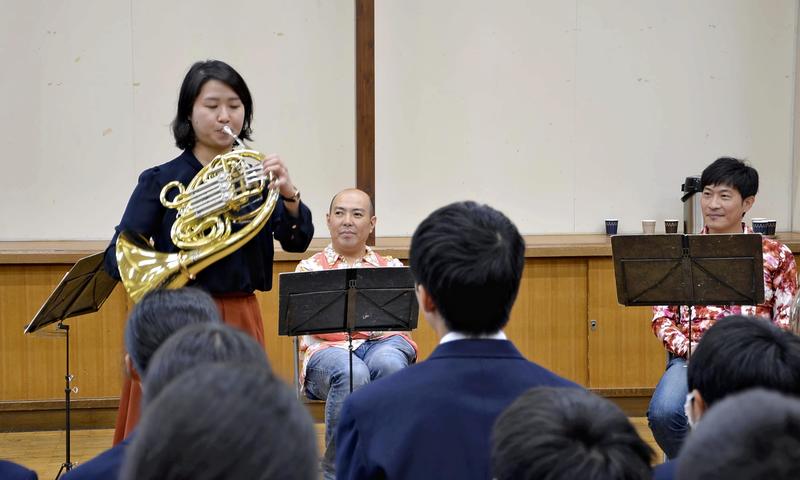
Under the agreement, the ward offers the orchestra a place for practice and performances, while the orchestra works to hold exchanges with local residents through music. Members of the orchestra teach playing skills at elementary and junior high schools, welfare facilities, children's halls and other places in the ward.
Orchestra official Masakazu Hamada, 42, said, "Contributing to the community through music also helps orchestra members grow."
In addition to concerts by famous musicians and orchestras from across the country, other events at the Sumida Triphony Hall include the Sumida Ward music festival participated in by local music groups such as choral groups, brass bands and high school brass band clubs.
Changing town
According to the ward office, "Triphony" is a coined word that means creating unique art through harmony among residents, artists and the hall.
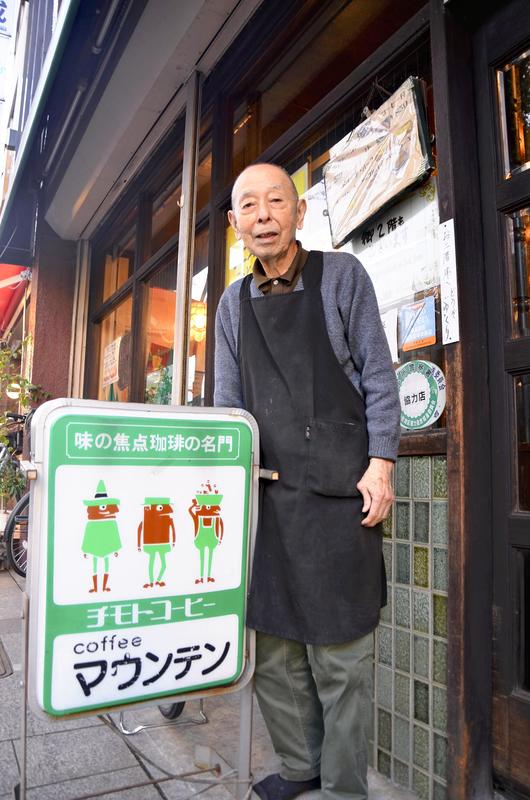
Ryoji Yamashita, 87, the owner of the Cafe Mountain coffee shop that has operated near the north exit of Kinshicho Station since the late 1960s, felt the town has changed since the opening of the Sumida Triphony Hall and the installation of artworks including "ECHO."
"In the past, there were many confectionery wholesalers in the area, and most of my customers were regular customers living nearby. Today, orchestra members, fans from distant places, students and others come to my coffee shop. The town is more bustling now," Yamashita said with a smile.
Read more from The Japan News at https://japannews.yomiuri.co.jp/