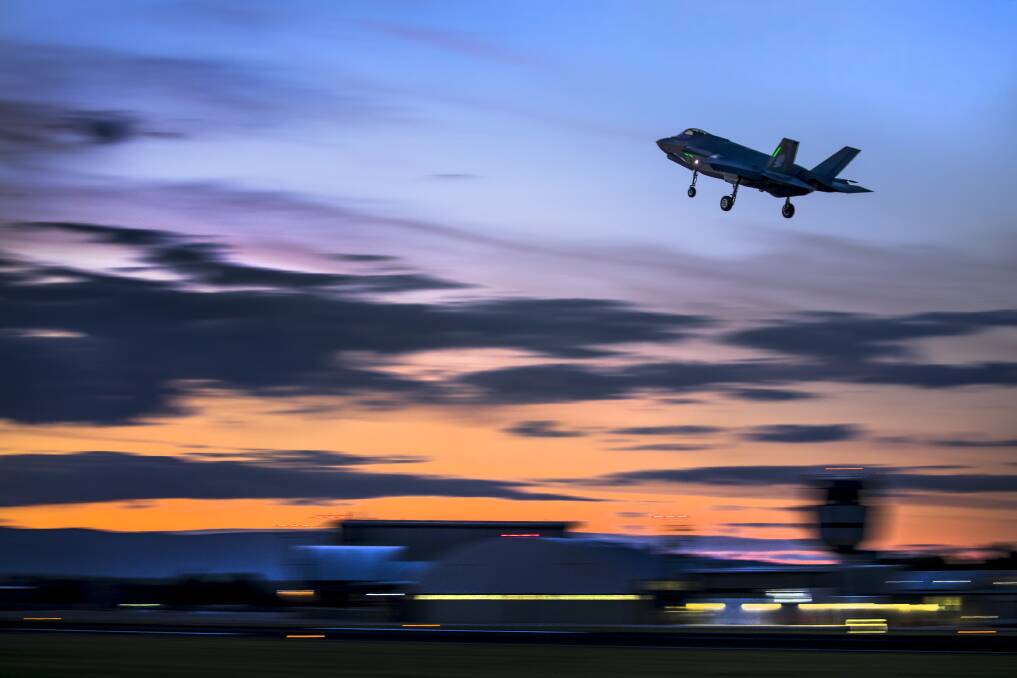
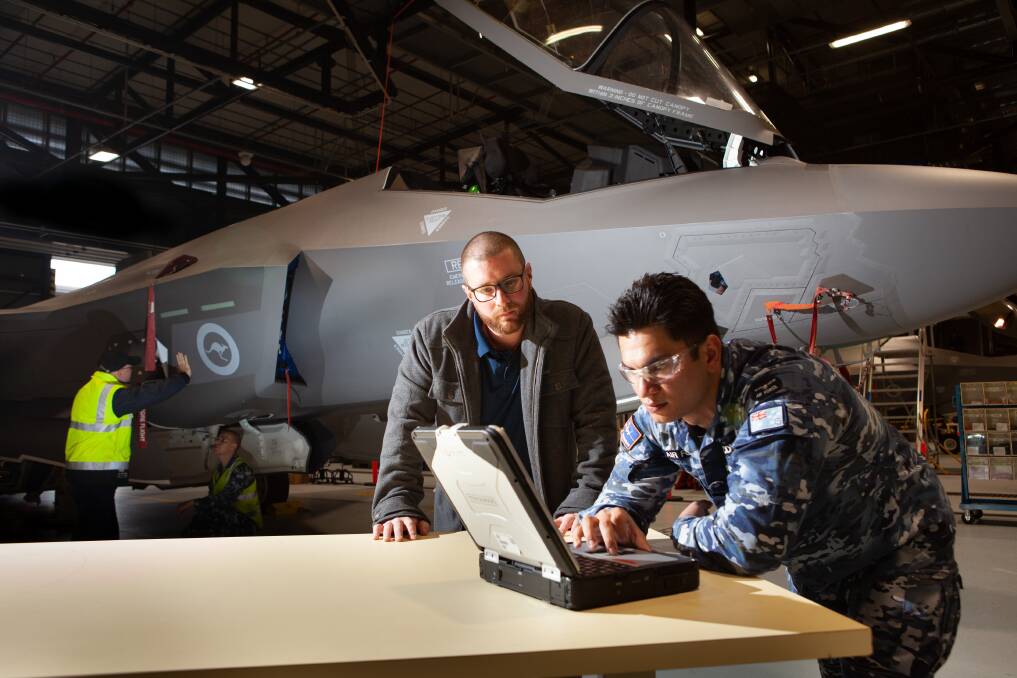
The Joint Strike Fighter F-35 platform will require a unique blend of complex technical skills that will attract some of the world's best technicians to the Hunter in coming decades, a recent economic analysis of the $65 billion project has found.
It is estimated that maintenance and sustainment tasks will require 30 different skill sets.
More than 21 jets are currently at Williamtown. This number is expected to grow to 72 by 2024.
There is also potential for Australia to order an extra 28 F-35 aircraft by 2030 to replace the F/A-18F Super Hornets.
"Accordingly, the support program may run until planned withdrawal of the aircraft in 2054," the BIS Oxford Economics report said.
"There is also potential to extend the support program to 2070, beyond the life of the RAAF fleet."
Sustainment of the fifth generation fighter fleet is expected to directly create about 750 direct and indirect jobs across Australia by 2025, including 360 jobs in the Hunter.
Several Hunter-based companies including Milskil, HI Fraser and Varley, have already secured sustainment and maintenance contracts.
"Both programs have been active in supporting small to medium enterprises in their local region as well as across Australia," the report said.
The Hawke program currently purchases from 168 businesses across its supply chain, of which 86 are SMEs, with 20 of those SMEs being located in the Hunter Region. By 2025 the F-35 program will purchase from 76 companies across the country with 22 being SMEs and five being SMEs located in the Hunter.
Prime Minister Scott Morrisonsaid the project would provide generations of Hutner residents the opportunity to pursue careers in the local defence industry.
"That means boys and girls going to primary school here in the Hunter know that in the future they can train to work right here and be the best in the world at what they do," he said.