
As the 2020 Tokyo Olympics and Paralympics approach, efforts are rapidly being made to accommodate assistance dogs that support disabled people.
Foreign tourists accompanied by assistance dogs are expected to visit Japan, so the Health, Labor and Welfare Ministry has introduced a new system to certify overseas assistance dogs, and owners of retail stores in Tokyo are participating in study sessions about them. A "hospitality strategy" has been launched in both the public and private sectors.
70% admit to not knowing law
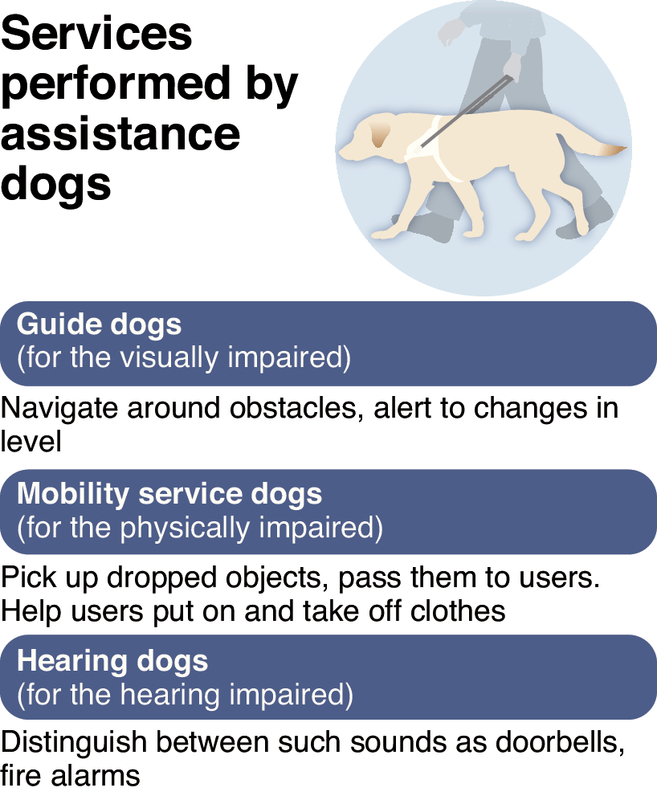
Assistance dogs consist of guide dogs, hearing dogs and mobility service dogs.
"Assistance dogs are hygienic and docile. They won't cause trouble to stores or other customers," Eri Matsumoto, 50, director of the Japanese Service Dog Resource Center, said in May at a study session for store owners in Chiyoda Ward, Tokyo. The center is a nonprofit organization based in Yokohama.
The law on Assistance Dogs for Persons with Physical Disabilities, which took effect in 2002, requires transportation facilities, hotels, restaurants and other facilities to accept assistance dogs. Assistance dog users are also required to show that their dogs received adequate training and are certified.
In a survey conducted by the Japanese Service Dog Resource Center on people working at restaurants and hotels nationwide in 2018, nearly 70 percent of the respondents said they did not know about the law.
"I've often been refused entry to stores because they mistook my hearing dog for a pet," said Matsumoto, who is hearing-impaired.
Understanding of assistance dogs is not widespread, but disabled people accompanied by such dogs are expected to come from overseas during the Tokyo Games for such purposes as supporting Paralympic athletes. Overseas assistance dogs are outside the scope of the law.
Also, some overseas assistance dogs do not wear harnesses like Japanese dogs, and others are not well-trained. Given these issues and possible language barriers, they may cause trouble between their users and stores.
Guidelines for volunteers
Under such circumstances, the ministry introduced a system to certify overseas assistance dogs in November. Under the system, Japanese certifying organizations and others confirm the training records of overseas assistance dogs entering Japan in advance and issue certificates.
Users of certified assistance dogs should carry a certificate with the dog's photo attached and show it when entering stores during their stay in Japan. The ministry asks stores to accept assistance dog users that have the certificate, as with domestic assistance dogs.
The New National Stadium, the main venue for the Games, will have two toilets that assistance dogs can enter. Other Olympic venues will have "amenity seats" where assistance dog users can watch the competitions with their dogs. The organizing committee of the Games will compile guidelines for management staff and volunteers to adequately deal with assistance dogs and use the guidelines in training.
Nobuyuki Wagatsuma, 48, who lives in Sendai with his mobility service dog, aims to compete in canoe and badminton at the Tokyo Paralympics. "I want the Games to become an opportunity not only to enjoy sports but also to show the rest of the world that Japanese society is kind to assistance dogs," Wagatsuma said.
Read more from The Japan News at https://japannews.yomiuri.co.jp/