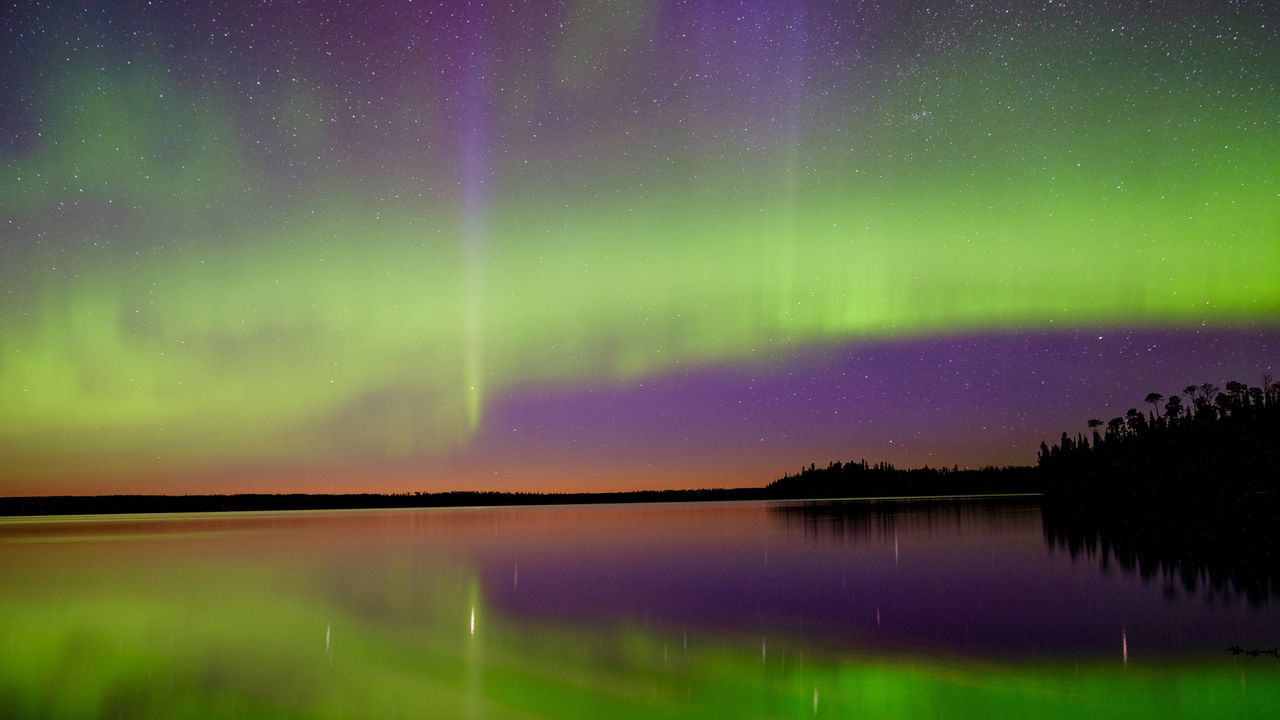
A solar flare could bring the northern lights to photographers and sky watchers in several northern states on December 08 and 09, if winter snowstorms clear in time for a view of the sky.
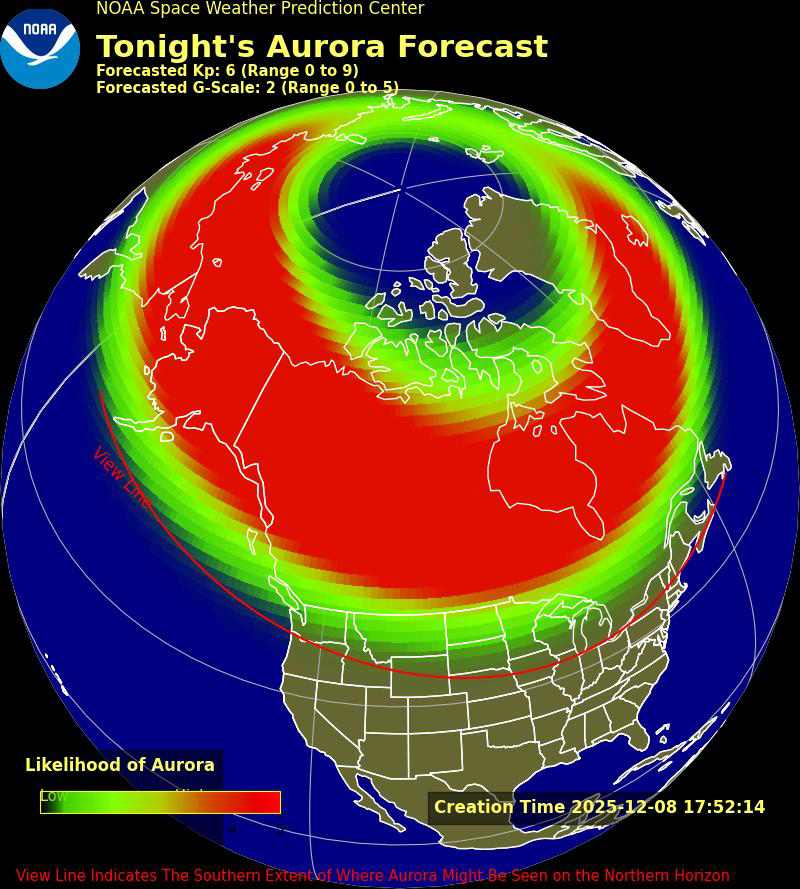
The National Ocean and Atmospheric Administration predicts a sun flare could bring aurora activity up to a potential KP 6 on December 08 and 09. That could bring aurora sightings to as many as 17 US states, as far south as Oregon, Wyoming, and New York.
The NOAA three-day forecast currently predicts prolonged periods of activity spanning from a G1 to a potential G3-level solar storm. The strongest forecast falls between 10 PM December 08 and 10 AM December 09, but conditions are predicted above a G1 through 4 AM EST December 10.
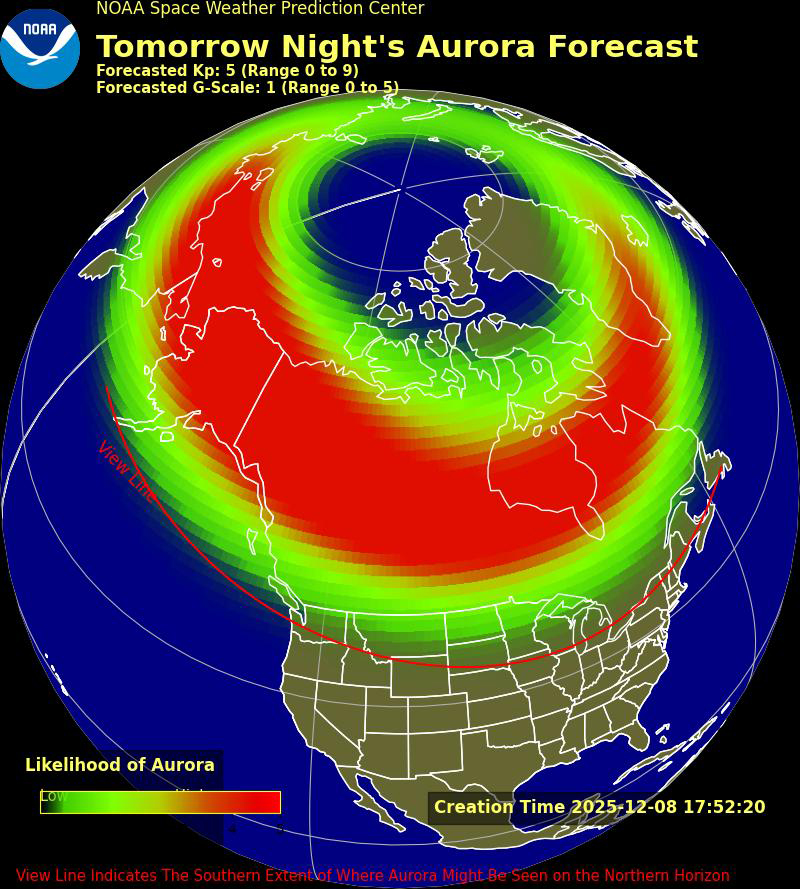
However, solar activity needs to coincide with clear skies, and much of the northern US is expected to be under cloud cover for Monday and Tuesday, according to the National Weather Service forecast.
I’ve missed more than a few major solar storms thanks to cloud cover, so I understand the frustration of seeing a high probability of the aurora alongside a high probability of overcast skies. But, astrophotographers may want to check their local forecast and watch for a clear patch of sky to the north over the next few nights.
Besides solar activity and clear skies, astrophotographers and skywatchers will need the solar activity to come under the cover of darkness to spot the lights. Cameras can often see the aurora before the naked eye as well.
The aurora can be hard to predict, but the odds of an accurate forecast increase the shorter the lead time is, so astrophotographers may want to check both the local weather forecast and NOAA’s 30-minute aurora forecast to see if conditions change.
Aurora photography tips
Learn how to photograph the aurora with a smartphone, or northern lights photography tips and techniques.