Myopia, commonly known as near-sightedness or short-sightedness, is an increasingly prevalent health concern affecting children worldwide. In India, studies have shown that 1 in 4 children have myopia.1 It is essential to spotlight this health issue, which has significant implications for our younger generation's future vision and overall well-being.
Myopia is a condition in which people can see clearly up close, but objects farther away appear blurred. It commonly occurs when a person’s eyeball is too long. 2Myopia typically develops in children of school-going age and tends to worsen every year until adulthood.
Children are now becoming myopic at younger ages and are therefore at greater risk of eventually developing high myopia. Higher levels of myopia are associated with a higher risk of eye diseases and may even lead to vision impairment later in life. Any level of myopia increases the risk of ocular conditions compared to emmetropes, but the risk increases exponentially once reaching high myopia. High myopia significantly increases the risk of sight-threatening conditions later in life, including glaucoma, macular degeneration, retinal detachment, and cataract.
That is why early detection and intervention in children is important in reducing the impact of myopia on their long-term vision health. Additionally, myopia, which has not been corrected for a while, can also impact a child's academic ability and performance, social interactions, and overall quality of life.
Many factors may increase the risk of developing myopia, such as family history and environmental factors. However, recent increases in myopia prevalence mainly come from lifestyle changes, with children now spending less time outdoors and more time indoors doing near work activities.
Timely detection by an eye care practitioner is vital to provide your child with a solution that ensures clear vision through correction of myopia and help providing myopia management solutions to slow down myopia progression.
However, there are some proactive steps that parents, educators, and health care professionals can take to address this growing concern of myopia:
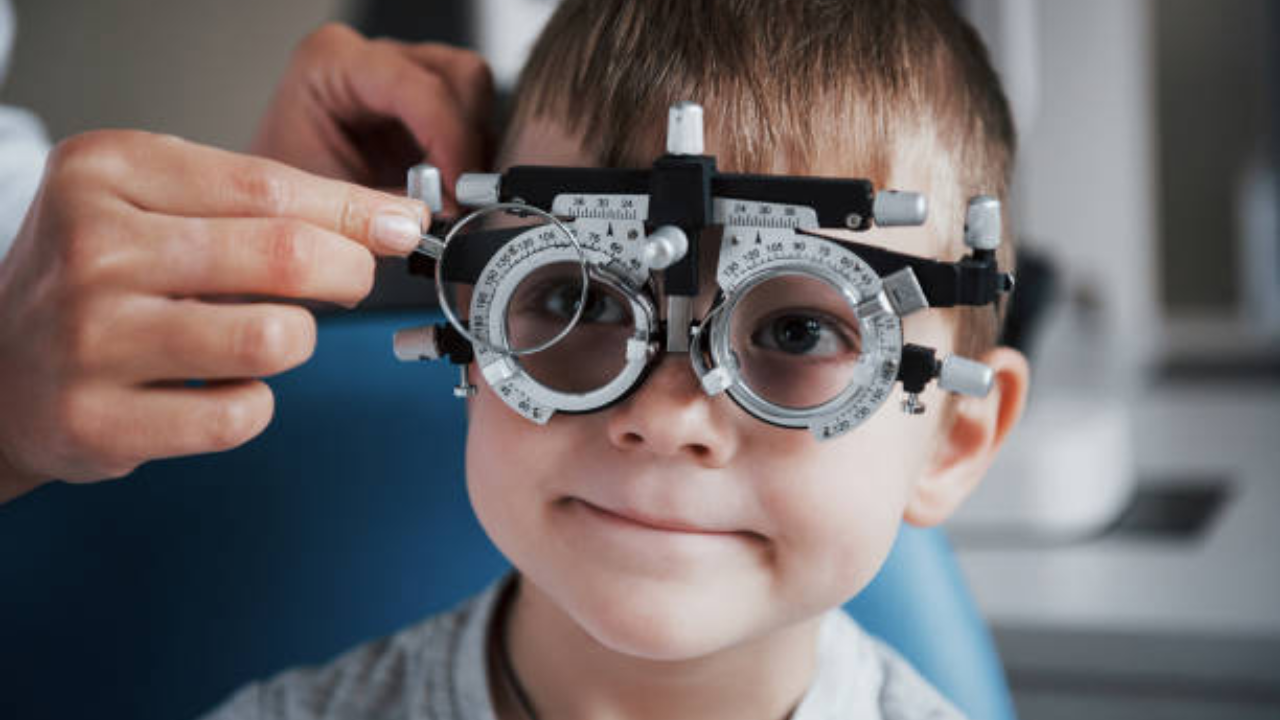
Regular eye examinations: Early detection of myopia is vital, even if your child is not showing any noticeable vision problems. Parents/guardians should schedule regular eye examinations for their children. The eye examinations for myopia should start as early as six months of age and continue at regular intervals throughout childhood to ensure timely interventions.
Promoting outdoor activities: Exposure to natural light is significant for children as research shows it can delay onset of myopia and promote healthy eyesight. Encourage your child to spend at least 2 hours outdoors every day. Outdoor activities have been associated with delaying the onset of myopia and indoor near work activities are reduced as well.
Tips for indoor time: There is evidence that prolonged near work activities may lead to myopia. Near work is any task that requires close visual focus, like reading books, colouring, and using digital devices such as smartphones and tablets. Studies have shown that the risk of myopia development and progression is higher in children who read at closer distances (less than 20cm), or for continuous periods without a break.
Parents should encourage their children to maintain an appropriate viewing distance, more than 20 cm or use the “Elbow Rule” which ensures that the screen or text is farther than the distance between hand and elbow. Parents should also promote breaks between near-work activities such as reading, studying, etc., to reduce the risk of myopia progression. Implementing the 20-20-20 rule, taking a 20-second break to look at something 20 feet away every 20 minutes, can also help reduce digital eyestrain in kids.
Myopia management interventions: When addressing myopia in children, it is crucial to understand that simply correcting their current vision is not sufficient for ensuring their future eye health. Myopia has the potential to worsen over time, posing risks to their long-term vision.
Each child is unique, so tailor myopia strategies to your child’s needs and lifestyle. By promoting a balanced visual environment, you can support their eye health and manage myopia effectively.
So, let us prioritize our children's eye health. By taking proactive and responsible measures, one can quickly address the risk of childhood myopia and safeguard the future of their younger ones, ensuring that they see the world with confidence.
(Author: Dr Vijaya VasanthaKumar, Medical and Professional Affairs Director, EssilorLuxottica)