A south-east Queensland maternity support program for Indigenous families has almost halved the odds of pre-term births, a result hailed by researchers as "quite extraordinary."
The Birthing in Our Community service was set up in 2013 by the Institute for Urban Indigenous Health, the Aboriginal and Torres Strait Islander Community Health Service and Mater Health.
Women who use the service are given their own midwife and help with transport, food and financial support, if needed.
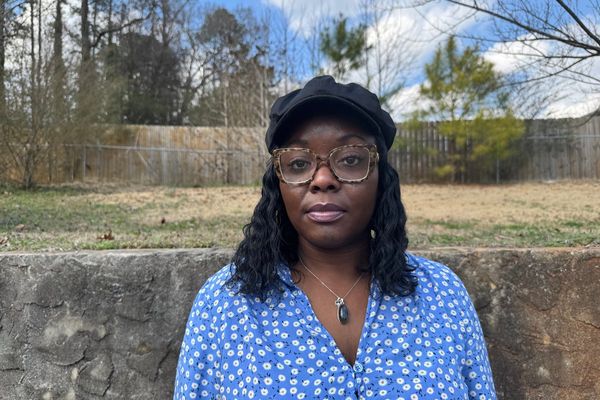
Mother of three Rebekah Hauiti said using the program while having her children was a wonderful experience.
"You get to know who your midwife is and you are wanting to come to appointments, and then — because you are coming to appointments, and you're following their advice — they [the babies] end up so healthy," she said.
The service has a multi-disciplinary Aboriginal and Torres Strait Islander workforce.
Ms Hauiti forged a strong bond with her midwife Ryndell Levkovich, adding it prompted her to learn more about her heritage.
"It was just so lovely to know her and to have her there in my birth," she said.
"I didn't know much about my heritage, so to be here and to see how involved everyone is in their culture, it gave me the passion to go and find out more about my history," Ms Hauiti said.
'Unprecedented findings'
Researchers from the Mater Research Institute have published their findings on the service in The Lancet.
The study compared the outcomes for 461 woman who used the Birthing in Our Community service with 563 women who received standard care between January 2013 and December 2017.
Lead researcher Sue Kildea, said the results were unprecedented.
"For women who received care through the Birthing in Our Community model, their chance, or their risk of having a pre-term birth, were about halved — and that's pretty extraordinary," she said.
Contributing author Yvette Roe, said reducing pre-term births in the Indigenous community was vital.
"It actually can change life trajectory, you know preparation for schooling, cognitive development, physical development, and these are critical as a social investment," she said.
"What the Birthing in Our Community [model] does, is it gives babies the best start to life, it allows baby to flourish."
Closing the Gap
Professor Kildea said the target of halving the gap in child mortality rates between Indigenous and non-Indigenous children was not on track.
"If you look at child mortality, children under five dying, 83 per cent of those deaths for Aboriginal and Torres Strait Islander babies happen in the first year of life, and if you look at that around about half of those are due to perinatal conditions like pre-term birth," she said.
She said the Birthing in Our Community model could help reduce pre-term Indigenous births across Australia.
"We believe that there's a very good chance that this could be rolled out with the same results in other locations, context-specific of course."