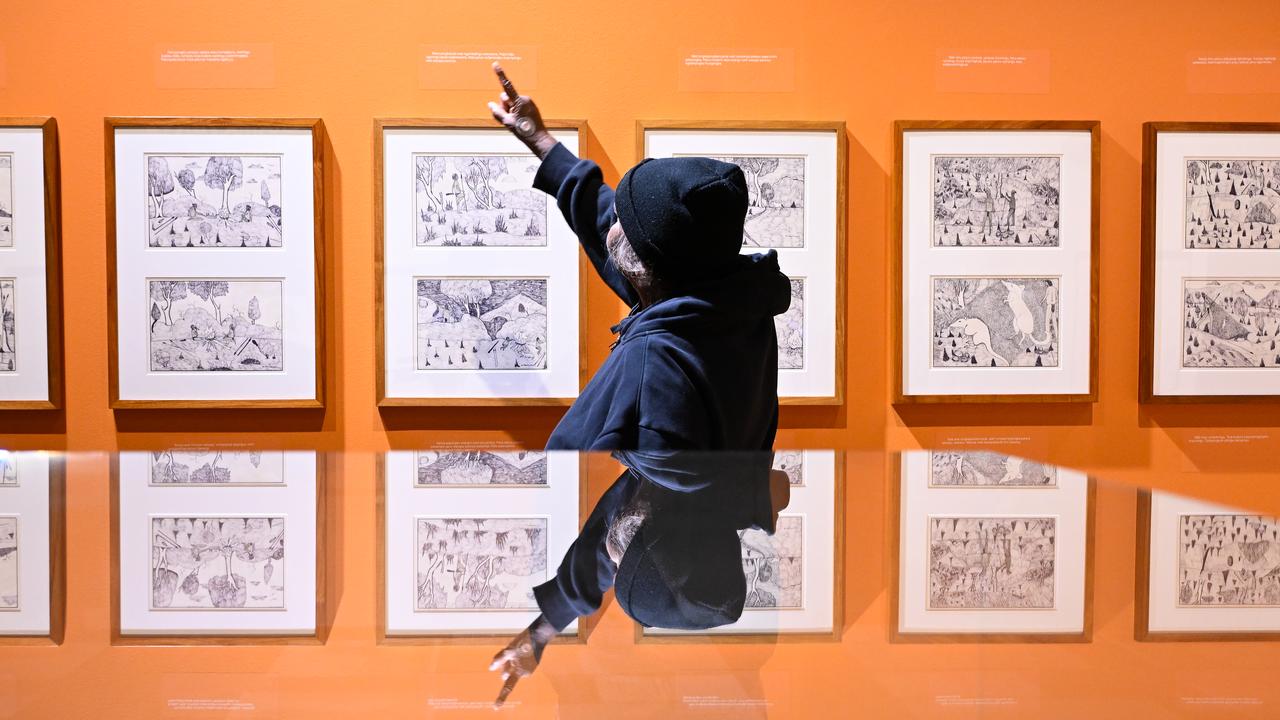
In a filing cabinet in an old darkroom at the remote Aboriginal community of Papunya, illustrations by founders of the renowned Western Desert art movement laid preserved for decades.
The artworks by the likes of Johnny Warangkula Tjupurrula illustrate bilingual publications produced during the heyday of the Papunya Literature Production Centre in the Northern Territory.
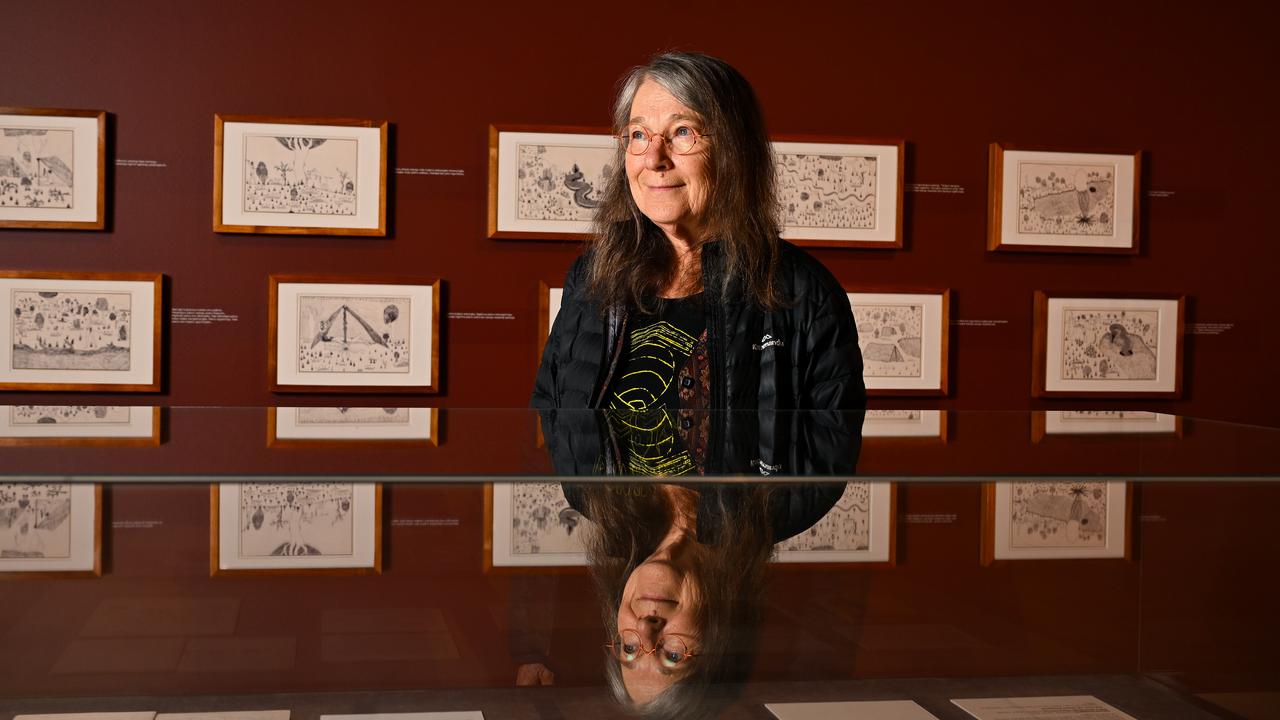
They have now gone on display as part of the free exhibition Wangka Wakanutja: The Story of the Papunya Literature Production Centre at the National Library of Australia in Canberra.
"The old people would come into the centre, and world famous artists would tell stories they had honed to an extraordinary degree, telling them around the campfires at night," explained researcher Professor Vivien Johnson.
"They found a way of conveying these same stories they'd heard as children countless times into something that's equally compelling, and the drawings are just exquisite."
The centre operated between 1979 and 1990 and spearheaded a movement to preserve culture and language, before the Northern Territory government cut back funding for bilingual education.
With the guidance of community elders, the centre produced hundreds of Pintupi-Luritja bilingual readers as literacy tools for children, telling tales of dreamings, the environment, and life in the community.
"It's really unusual for people to have an image of a community, its stories and history, written by the members of that Indigenous community, it's like a window into their world," Prof. Johnson said.
One section titled "When we first saw white fellas" contains recollections of the community's initial encounters with western culture and technologies, such as aeroplanes flying overhead, with some stories dating back to the 1930s.
The exhibition builds on a recent show at the Library and Archives NT in Darwin and, as well as photography, original drawings and manuscripts, it makes use of the more than 350 Pintupi-Luritja readers preserved in the National Library's collection.
Accompanying the exhibition is a book of the same name by Prof. Johnson, Samantha Disbray and Charlotte Phillipus that tells the history of the literacy movement, with recreations of Papunya readers in Pintupi-Luritja language.
The exhibition opens Saturday and runs until October 11.