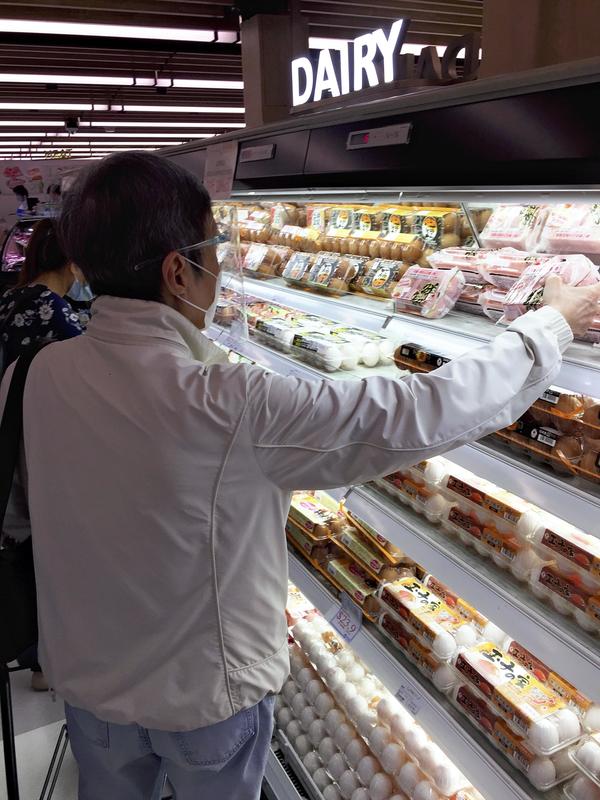
While exports of agricultural, forestry and fisheries products and food have been negatively impacted by the novel coronavirus outbreak, some items, such as eggs and rice, are continuing to sell well due to an increase in demand for goods to be consumed within the home. The government intends to increase exports by focusing on a number of Japanese items that are high in demand.
The Agriculture, Forestry and Fisheries Ministry reported that the value of exported chicken eggs from January to September stood at 3.2 billion yen, more than double the figure from the same period last year. The figure has also exceeded the annual export value of 2019 -- a record high.
Hong Kong receives the majority of Japan's egg exports. As the coronavirus crisis has reduced exports to Hong Kong from Malaysia and Thailand, entities including several industry groups have identified the cause to be a change in the way eggs are being consumed in Hong Kong.
Globally, eggs are generally eaten after being cooked. However, as the number of visitors to Japan increased, methods such as eating rice topped with a raw egg or soft-boiling them have become increasingly popular in Hong Kong.
Although relatively expensive, Japanese eggs are said to be very hygienic and their increased consumption in homes has been chalked up to the coronavirus crisis.
"Japanese eggs, which were once thought to be out of reach for the common man, are now available in supermarkets and are becoming quite popular," said an official of Fusion, an egg producer and vendor in Miyazaki Prefecture.
However, cases of a highly pathogenic avian flu were confirmed this month in Kagawa Prefecture and other areas. The fact that exports from a number of areas have been suspended is cause for concern.
The export of rice is also going strong, with its value from January to September increasing 17.6% to 3.6 billion yen, nearing the record high of 4.6 billion yen set in 2019.
A U.S. branch of Omusubi Gonbei, an Iwai Co. onigiri rice ball shop with a headquarters in Tokyo, reported a sales increase of about 10% compared to pre-pandemic figures. A spokesperson said, "The demand for takeout food is increasing."
On the other hand, items such as wagyu and sake, once leading exports, are not faring well. This is thought to be the result of a drop in restaurant demand as the value of beef fell 13.3% to 18.1 billion yen from January to September while sake fell 14.7% to 14.6 billion yen.
Exports of agricultural, forestry and marine products and food reached of 912.1 billion yen in 2019, a record high for the seventh consecutive year but slumped 3.5% in the first nine months of 2020 compared to the same period last year.
By the end of the month, the government is expected to finalize a new strategy aimed at increasing exports to 5 trillion yen by 2030, about five times the current value. The government is considering designating specific Japanese products as priorities and fostering their production areas.
Read more from The Japan News at https://japannews.yomiuri.co.jp/