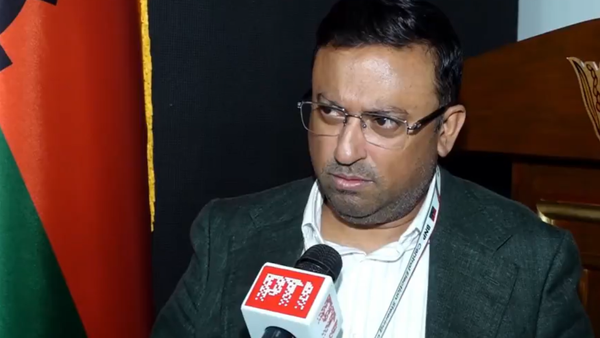
Asean countries should transition to becoming producers of goods and services rather than consumers, Malaysian Prime Minister Mahathir Mohamad said during an address at Chulalongkorn University in Bangkok on Thursday at the end of his two-day trip to Thailand.
Speaking on Thai-Malaysian bilateral relations and Asean, Dr Mahathir said he sees tremendous potential in the bloc's "vigorous" population.
He urged Asean members to focus more on production instead of relying for so much of their goods on those sourced outside of the regional bloc in order to "grow much faster".
"The Asean countries have tremendous potential even if they are poor. They still constitute a market. Based on this market we can increase our output today we are buying everything from outside.
"We can do all those things by ourselves. If we do that the money will flow in rather than out. If we do it the easy way we just buy everything people sell. But if 600 million people as a market produce everything they need and decide to come together I am quite sure Asean countries will grow much faster," he said.
Thailand will chair Asean next year. Dr Mahathir said Asean should work together economically but politically "we should allow each country to have its own way," cautioning against too much pan-bloc regulation.
"If they say they are not ready for democracy, it's OK. Trying to change political and legal systems will cause a lot of conflict," he said.
He said Asean has helped neighbouring countries settle more disputes through negotiation and resolve problems through non-violent means to promote peace and stability in the region.
The 93-year-old, who was elected for his second time in office earlier this year, also discussed the LGBT movement in Malaysia. Censuring Asian countries for adopting Western values without questioning them, he said "at this moment we do not accept [same-sex marriages and gay rights] but if [Western societies] want to accept it, that is their business. But don't force it upon us."
Dr Mahathir stressed the importance of strong ties with Thailand and described current bilateral ties as "a good model of a peaceful relationship". He cited the cementing of personal contacts to help resolve conflicts through "friendly" discussions.
After meeting Prime Minister Prayut Chan-o-cha at Government House on Wednesday, he said Malaysia is keen to help end the violence in Thailand's restive South, which has a large Muslim minority and is dealing with a more than decade-long insurgency.
He said terrorism usually stems from people's anger over perceived injustice. "In the Middle East, territories belonging to one race were given away to different sets of people," he said. "On top of that, when these people try to get back the land, they cannot fight a conventional war because they don't have the weapons."
"But injustice is [still] going on against them. When they are angry and frustrated, they resort to what we call 'terrorism' -- they tie bombs to their bodies and blow themselves up. These are desperate things," he said. "But it is not because of religion. It's because of the sense of injustice."
"Seventeen years ago we didn't see these extremist, different religions were there," he said, adding there was no conflict. "Now we see it spreading all over the world because of the sense of frustration and anger that they cannot recover their own land."
Former 4th Army commander Udomchai Thammasaroraj, the new chief of the Thai negotiation team in the peace talks with the southern insurgents, said earlier that peace talks could resume as early as next week.
Malaysia is expected to try and contact the Barisan Revolusi Nasional (BRN) group to engage them in talks with the Thai negotiating team, according to a source.
Gen Udomchai told Abdul Rahim Mohd Noor, Malaysia's new facilitator for the peace talks, that he must explain the Thai government's policy on the southern insurgency to hardcore elements within the group, the source said.
The BRN has so far made five key demands, the source said.
The BRN is demanding that it lead the peace talks between Thailand and the Patani Malay liberation fighters; that Malaysia be accepted as a mediator not facilitator; and that the peace talks are to be witnessed by representatives of Asean, the Organisation of the Islamic Conference, and NGOs.
Its other demands are that the government recognise the existence and supreme power of the administration of the "Patani Malay" nation on "Patani" territory; and that all detainees on security-related charges be released.
Gen Udomchai said he could not guarantee a ceasefire during the talks and that security officials would carry out their tasks as normal, the source said. A meeting next week would be considered a major breakthrough in the peace process, pundits say.
The new facilitator, Mr Abdul Rahim, who was a former police inspector-general, expressed confidence on Thursday that peace could be restored within a year.
He said the southern unrest instigated by the BRN is a wide-reaching security threat that Malaysia is willing to work with Thailand as its neighbour to help tackle.