As the World Wide Web approaches its 30th birthday this March, most Americans can't imagine life without it _ especially young people born into a digital world. Toddlers learn colors and letters on their parent's cellphones. Teens Netflix away boredom on hours-long car rides. Young adults Uber food to their doorsteps, and their friends Venmo them to pay their share of the tab.
But, it's not that easy for everyone. In fact, according to 'The State of Broadband: Broadband catalyzing sustainable development,' a United Nations report tracking the current status of broadband globally, more than half of the world's population has never been online. And many who have been online in developing nations run into obstacles that their peers in developed nations rarely encounter.
Our teen staff at iGeneration Youth wanted to explore the role the internet plays _ and sometimes doesn't play _ in the lives of young people who may not be able to access the internet with the same ease we're accustomed to. What's it like for our peers on the other side of the digital divide?
Of course, finding sources through the internet who struggle to access the internet presented an obvious challenge. Here's how we did it. First, we combed the Web to find young videographers in 10 countries. Next, we gave them a set of questions to learn where and how youths access the internet, the quality of internet service, what young people mainly use the internet for, the cool things young people are using the internet for, and what they are hoping for in the future of the internet.
Each videographer took to the streets to conduct on-camera interviews with youth people 21 and younger. Here's a sample:
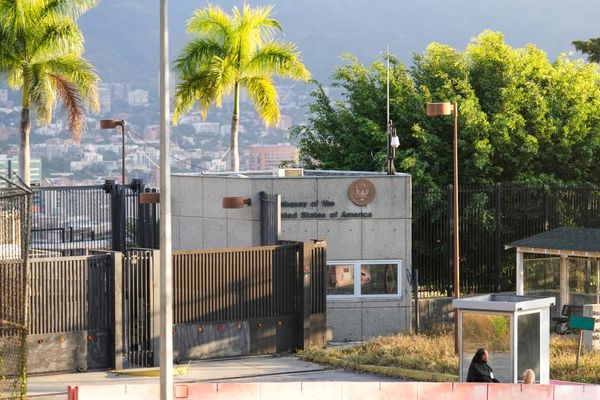
VENEZUELA
Estefania Garcia, or "Chia," depends on the internet for practically everything: doing homework, which is always online; managing social media for her theater group; posting her writing on her Instagram account; and watching music videos on YouTube.
"Sometimes, though, the videos don't load," said the 21-year-old from Caracas, who is studying visual arts and scriptwriting at Venezuela's Catolica Andes Bello University. "Or the signal just doesn't work."
The internet is important for young people in Venezuela because it allows them to earn money, Garcia said. "With the hard economic situation, everyone just tries to work everywhere, even if they have to use their phone."
While the priority is work, people are using the internet in creative ways, she said. For example, her friend, who is studying graphic design, makes videos and short films with animation. "It wouldn't be possible without the internet," said Garcia. "She wouldn't have even learned it."
The coolest thing she's heard about is the ability to control a house from a phone. "Control the volume of the TV, the lights, turn the kitchen on with your phone. Everything for comfort. It's fantastic."
She hopes in the future that the signal will be good in every corner of the world.
TURKEY
Yagiz Akkaya, 18, spends about five hours a day on the internet, usually at home in Istanbul. Very rarely, he uses Wi-Fi at Kahve Dunyasi, a Starbucks-style cafe. He doesn't use any other community Wi-Fi because he doesn't think it's safe.
When he's not watching movies or television series, Akkaya uses the internet for self-improvement, such as Google's online marketing training, which he's finished, earning a certificate. Although he's not actually interested in online marketing, it's something to put on his Curriculum Vitae.
"The internet is important because it is very difficult for us to learn something, whether it is education or things in society," said Akkaya. "There are some online platforms, publishing the classes of world universities such as Cambridge and Sorbonne. Google also offers wonderful free things that are certified. I think they're terrific platforms."
However, although some of the workshops are free, if you want a certificate, you have to pay for it, he said.
Akkaya also likes watching cool things on the internet, from little kids who post amazing videos to bands who play music on the subway.
He does worry about the younger generations, especially his circle of friends, which he said gets false hope from the internet.
"There really is a lot of trash content on YouTube," said Akkaya. "Most of them want to make content like others on YouTube. They come up with ideas to me. 'Come on, buddy, I have a video idea. Let's make money on YouTube.' They want to make money, and they think they can use the internet for this. They are losing time."
He worries about children who grow up on what he considers to be empty content. "Their sole purpose is to watch videos."
Overall, Akkaya thinks the internet is effective. It helps him to find useful things, he said.
In the future, he hopes more free content will come to the forefront, he said.
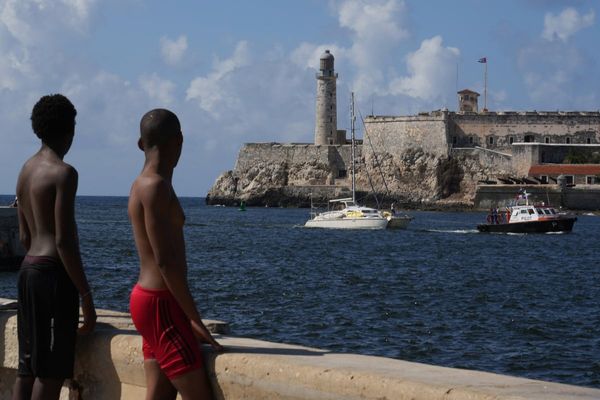
MAURITIUS
Paige McIntyre, 13, lives in Beau-Bassin Rose Hill on the African island nation located about 1,200 miles off the continent's southeast coast, in the Indian Ocean. She has access to the internet most of the time using Wi-Fi at her house or in a commercial center, but the connections are not very good. 4G networks are available through her cellphone, but mobile packages are expensive.
Like most young people in Mauritius, McIntyre uses the internet mostly for social media _ that is, Facebook, Instagram, and sometimes Twitter, she said. She's a student, so she communicates with her teachers via email. But the internet is much cooler than that, she said.
"I try to post all my photos on Instagram and Facebook, so people would see my work," said McIntyre, who loves photography. "I look at what professional photographers post online."
Her cousin is also recording and sharing her songs on YouTube, she said.
The coolest thing McIntyre said she's found on the internet are all the YouTube influencers. "They are people who travel the world and post videos on their adventure and the countries they discover. I think this is very interesting, and it pushes me to want to travel more."
McIntyre said the internet helps young people to reinvent themselves and create new things.
Going forward, she hopes to see improvements to the internet, which is not highly developed in Mauritius. "I would like the internet to be free for everyone so that we can access it everywhere."