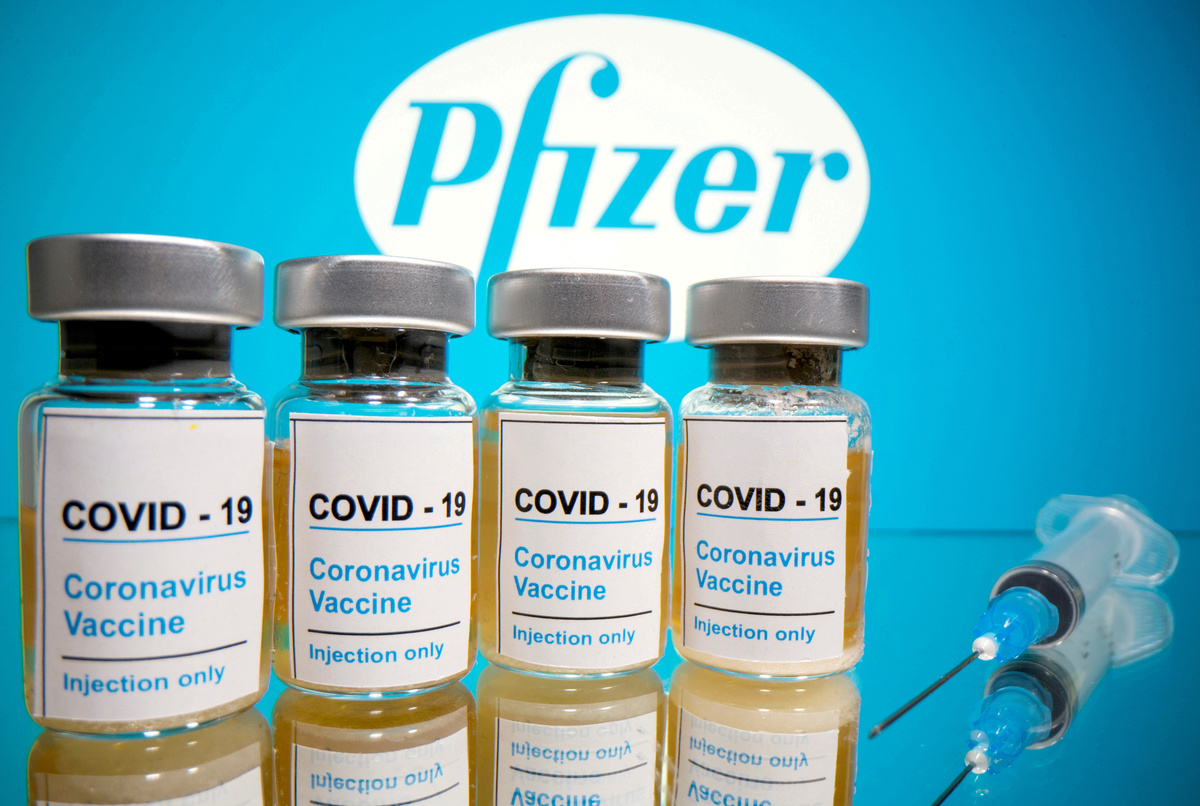
Britain on Tuesday became the first country in the world to roll out the COVID-19 vaccine developed by Pfizer Inc and BioNTech SE , initially making the shot available at 50 hospitals.
The country's National Health Service is giving priority to vaccinating people over the age of 80, frontline healthcare workers and nursing home staff and residents.
The following is what people getting the vaccine should expect.
WHAT HAPPENS WHEN SOMEONE GETS THE VACCINE?
The vaccine, developed with new messenger RNA technology using a manufactured fragment of the coronavirus' genetic code, is injected into the arm. The inoculation is given in two doses, three weeks apart, and has been shown in trials to prevent illness from COVID-19 in 95% of recipients.
Pfizer has said side effects in trial volunteers were mostly mild to moderate, and cleared up quickly. The most severe side effects occurred after the second dose: fatigue in 3.8% of volunteers and headache in 2%. Older adults tended to report fewer and milder adverse events.
WHAT KIND OF PROTECTION DOES IT GIVE?
The vaccine begins conferring some protection after the first shot and reaches full effectiveness about a week after the second shot, according to a review by the U.S. Food and Drug Administration released on Tuesday.
Clinical trials so far have not been designed to determine if an immunized person can still spread the coronavirus to someone else. Some vaccines, such as hepatitis A, do provide such protection - known as sterilizing immunity - but others do not. COVID-19 vaccine makers focused trials on determining whether the drug stopped people from becoming ill.
It will also be several more months before it becomes clear how long the vaccination will protect someone from the coronavirus.
"Until then, it is better to avoid the pub, and other in-person gatherings with many people," said Dr. Anita Shet, infectious disease specialist at Johns Hopkins Bloomberg School of Public Health.
DOES THE VACCINE MEAN BACK TO NORMAL LIFE?
Since there is no evidence that the vaccine prevents transmission of the virus - and no vaccine is 100% effective - scientists call for continued vigilance, including mask-wearing, hand-washing and social distancing.
"As with all vaccines, it may work really great in certain patient subsets, but not as well in others ... Does that mean you are free to hop on a plane or have 30 people over at your house? Probably not," said Dr. Michelle Barron, senior medical director for infection prevention at Colorado's UCHealth.
Vaccination campaigns are unlikely to reach "a critical mass" until next spring or early summer.
(Reporting by Deena Beasley; Editing by Aurora Ellis and Bill Berkrot)