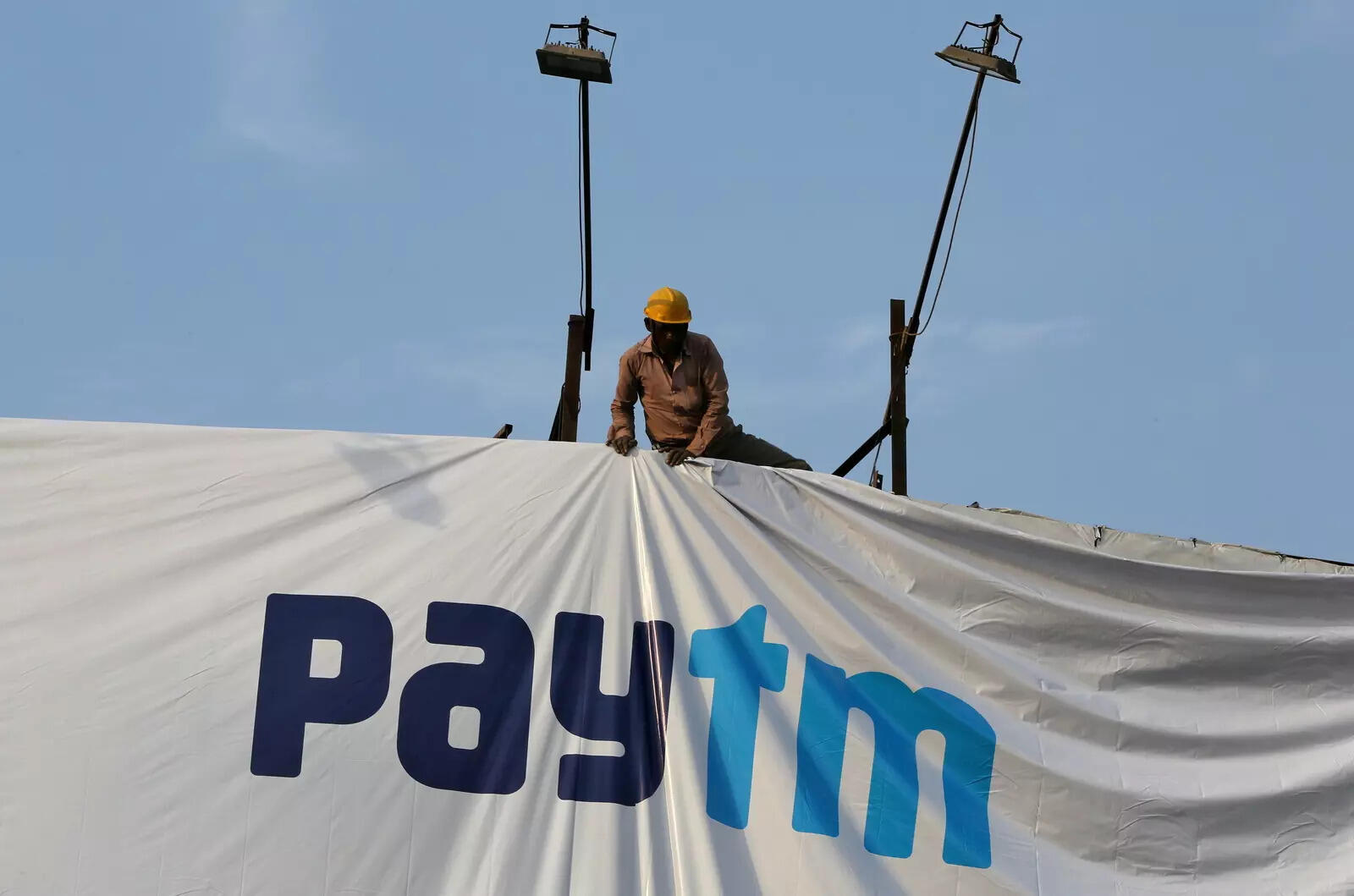
Just ahead of its IPO, digital payments company Paytm raised Rs 8,235 crore from anchor investors. Top sovereign wealth funds and financial investors such as Singapore's GIC, Canada’s CPPIB, BlackRock, Alkeon Capital, Abu Dhabi Investment Authority are among those that picked up stake in the fintech major’s parent One97 Communications’ anchor slot. Aditya Birla Mutual Fund and other domestic mutual funds are among the 122 funds who put bids in this round, which was oversubscribed by around 10 times.
Anchor investors are offered a part of the shares reserved for qualified institutional buyers a day before the IPO opens for subscription to the public, but they can’t sell their shares until 30 days after the listing. In a way, they help the retail investors to safeguard their investment from low-quality IPOs since retail investors in particular believe that anchor investment provides credible certification about quality of the issue.
What are anchor investors?
Anchor investors are institutional investors, such as mutual funds or sovereign wealth funds, that buy substantial shares in the company just before its IPO opens for a subscription in order to jazz up the issue. They are technically the first investors in a company and act as a bridge between the issuer and the retail investor.
Anchor investors have to buy the shares at a fixed price in order to make other investors feel confident about the issue. Each anchor investor has to put a minimum of Rs 10 crore in the issue so that other retail investors feel confident that there is demand for the shares offered. Now, in the case of Paytm, the issue was oversubscribed 10 times, implying a huge appetite from investors, which provides the much needed assurance and boost to the IPO to lure retail investors.
When was the concept introduced?
Market regulator Sebi introduced the concept of anchor investors in IPOs in 2009. Up to 30 per cent of the total issue size can be allotted to anchor investors. No merchant banker, promoter or their relatives can apply for shares under the anchor investor category. In offers of size less than Rs 250 crore, there can be a maximum of 15 anchor investors. An additional 10 investors are allowed for every Rs 250 crore increase in IPO size. ) One-third of the anchor investor portion has to be reserved for domestic mutual funds.
Why can't anchor investors sell shares for 30 days?
The anchor investor is not allowed to sell his/her shares for at least 30 days after the allotment. This rule ensures that investors who want to flip shares on listing, do not use the ‘anchor’ route. Historically, there is always selling pressure near the end of the 30-day lock-in period or on the first day of trade after the 30-day lock-in period is over. But their decision to sell a particular share in which they have invested in an IPO as anchor investor, is not required to be made public in advance.
When does an anchor investor get the shares?
Even though talks between a company and investors can start months in advance to the IPO, the actual allotment of shares can only happen a day prior to the IPO. In Paytm's case, the allotment occured on Wednesday, since Thursday to Sunday were market holidays.
Pricing:
If the price fixed as a result of book building is higher than the price at which the allocation is made to the anchor investor, he/shee will have to shell out the additional amount. But if the price fixed as a result of book building is lower than the price at which the allocation is made to anchor investor, the excess amount will not be refunded. The number of shares allocated to anchor investors and the price at which the allocation is made, has to be made available in public domain by the merchant banker before opening of the issue.
How do anchor investors affect valuation of IPO and stocks?
Anchor investors are informed investors that have private information which is not available to common investors. They have an extensive understanding about the market as well as valuation of the firm going public. So, a larger participation from anchors in terms of subscription provides an early signal to the market about the quality of the issue. Taking the cue from this, retail investors overwhelmingly subscribe to the IPOs backed by anchor investors. The price at which they bid for IPO stocks could be used as a reference for price band and final offer price. They have their own reputation to protect and hence invest in quality issues to maintain their credibility.
A sample study of 135 Indian IPOs, issued during 2009–2014 by Seshadev Sahoo, Professor of the Finance and Accounting area at Indian Institute of Management Lucknow, showed that anchor investors' investment in an IPO reduces underpricing. "The larger the number of anchors bidding for an issue the less would be the underpricing. This suggests that anchor investors being institutional investors help the new issue market to reduce information asymmetry among issuing firm, investment bankers and investors; all investors respond to the anchor-participated IPO in a positive manner i.e. both retail and institutional investors subscribe more to anchor-backed IPOs than non-anchor backed IPOs; post-listing (including listing day) pricing performance analysis indicates that anchor-backed IPOs are less risky than non-anchor backed IPOs".
However, Sundar Rangan, Head-Merchant Banking Arihant Capital Markets Ltd examines in a report that not all IPOs boasting anchor investments are necessarily safe and risk-proof. "There have been cases of Companies with huge anchor investor endorsements, which have subsequently faced serious allegations of financial irregularities, obfuscation of financial statements and consequent regulatory penal actions leading to preposterous diminutions in share value. And it is also a recorded fact that such companies have attracted investments from a good number of premier anchor investors. Which brings us to the reality check that eventually an equity investor will need to assess his own risk appetite, be conscious of the cover page warnings in Offer Documents about the inherent risks in any equity investment and use anchor investment data as an additional comfort factor rather than as sole factor guiding his investment decisions."
The big names that opted for anchor investors in the last couple of month?
While food delivery platform Zomato raised a little over Rs 4,196 crore from anchor investors, Softbank-back Policybazaar raised over Rs 2,569 crore from its anchor investors. Cosmetics to fashion startup Nykaa received bids for 40 times the number of shares it plans to sell to anchor investors in its initial public offering (IPO), and raised Rs 2,396 from anchor investors. In June, automotive components and technology supplier Sona BLW Precision Forgings (Sona Comstar) has raised Rs 2,498 crore from anchor investors while Chemplast Sanmar mobilised over Rs 1,732 crore in August.