
Relationships often involve thoughtful gestures for a partner, like planning special dates or giving gifts, but experts revealed there can be a point at which generosity becomes unhealthy.
A growing relationship trend known as “spoiled pig syndrome” is being used to describe situations where one partner becomes so used to receiving special treatment that they begin to expect it all the time.
While the phrase is not an official psychological diagnosis, relationship experts shared that the dynamic behind it can leave one person carrying most of the emotional, financial, or practical load in a relationship.
Relationship experts revealed “spoiled pig syndrome” can create an unhealthy power balance

Despite its unusual name, “spoiled pig syndrome” is not actually about pigs.
The term comes from a behavioral idea involving pampered pigs that eventually stop respecting boundaries because they have become accustomed to getting whatever they want.
Relationship experts said a similar dynamic can develop between romantic partners.
According to Dr. Max Doshay, clinical psychologist and co-founder of KMN Psych, the phrase is commonly used to describe a relationship in which one person develops unrealistic expectations about being treated with constant attention and special care.

“The ‘spoiled pig syndrome’ does not exist as an official medical or clinical diagnosis,” Dr. Doshay explained.
“Rather, it has become a common colloquialism that refers to a specific type of relationship dynamic in which one individual develops an unhealthy expectation for being treated with special attention.”
Over time, that can lead to a relationship where one partner consistently gives more than they receive.
The imbalance does not always begin with bad intentions.


Many couples naturally go out of their way for each other during the early stages of dating. Expensive dinners, surprise gifts, weekend getaways, and grand romantic gestures are often part of getting to know someone.
Problems can arise when those efforts become expected rather than appreciated.
“In simple terms, it describes a situation where being excessively spoiled leads one partner to develop a strong sense of entitlement,” experts explained.
The pattern often develops slowly as one partner keeps putting the other first

Experts revealed that some people may enter relationships already expecting special treatment because of past experiences or childhood conditioning.
In many cases, however, the behavior develops gradually.
“This behavior pattern can develop over time,” Dr. Doshay said.
“One of the partners in a relationship is typically more likely to consistently give in when confronted with a demand from the other. In addition, one of them may take on an unhealthy amount of the responsibilities in the relationship.”



According to the psychologist, repeatedly prioritizing one person’s needs over the other’s can unintentionally send the message that their wants should always come first.
“When these behaviors continue, they can inadvertently send a message to the other person that they have priority,” he explained.
Eventually, that kindness becomes an expectation.
As a result, one partner is left feeling exhausted, underappreciated, or responsible for maintaining the entire relationship, while the other becomes increasingly dependent on receiving constant validation.
“Spoiled pig syndrome” is not the only relationship behavior experts have been discussing recently

Another term that gained attention in 2025 was “monkey-barring,” a dating pattern where someone starts building a connection with a new romantic interest before ending their current relationship.
The name comes from the idea of a monkey swinging from one bar to the next without ever fully letting go.
In dating terms, it describes people who keep one foot in their current relationship while searching for a replacement.
Experts shared that the behavior often stems from deeper emotional issues.
According to relationship expert Angelika Koch, people who engage in monkey-barring often avoid the difficult work of processing emotions after a relationship ends.



“People who do this often lack emotional growth, because they are constantly moving through life in a fear-based manner to avoid the hard work it takes when healing from wounds in a past relationship,” Koch told Vice.
She added that constantly moving from one partner to another prevents people from fully understanding themselves.
“Jumping from one potential partner to another doesn’t allow you room to truly grow and get to know yourself,” Koch said.
Unlike consensual polyamorous relationships, monkey-barring typically happens without the knowledge or consent of a current partner, leading some experts to describe it as a form of emotional cheating.
Experts further added that clear boundaries are the best way to prevent relationship imbalances

Whether it is spoiled pig syndrome or monkey-barring, experts explained that healthy relationships require mutual effort and respect from both partners.
For spoiled pig syndrome in particular, Dr. Doshay believes the best solution is establishing boundaries before unhealthy patterns have a chance to take hold.
“Maintaining equilibrium in your relationship from the outset is the most effective way to prevent abu*se,” he said.
“Partners who work together and are open with each other about their expectations have healthy relationships. Healthy relationships require that both partners put forth an equal amount of effort and show mutual respect for one another.”

He also encouraged people not to ignore their own needs simply to keep the peace.
“Be mindful of your needs so you can avoid putting them aside in order to maintain the peace,” Dr. Doshay added.
“Establishing consistent boundaries will give both parties in a partnership a sense of value instead of having all of the burden fall on one individual.”
People online shared their experiences of viral “spoiled pig syndrome”










Paintings often blur the line between reality and imagination, depicting symbolic, allegorical, or entirely fictional scenes that exist only in the artist’s mind.
But it is highly unlikely that a century-old artwork would depict a smartphone, a technology not invented until 2007.
However, that is exactly what many believe about Italian artist Umberto Romano’s 1937 work, Mr. Pynchon and the Settling of Springfield, hanging on one wall of the Commonwealth of Massachusetts State Office Building.
Conspiracy theorists have long claimed that this detail proves time travel is real. The painting recently went viral again after scientific author and columnist Cliff Pickover shared it on his X account.
“I think the guy with the iPhone is sitting in a Hot Tub Time Machine,” one user said, referring to the 2010 time-travel comedy movie.
Conspiracy theorists claimed that a century-old painting has depicted a “time traveler”
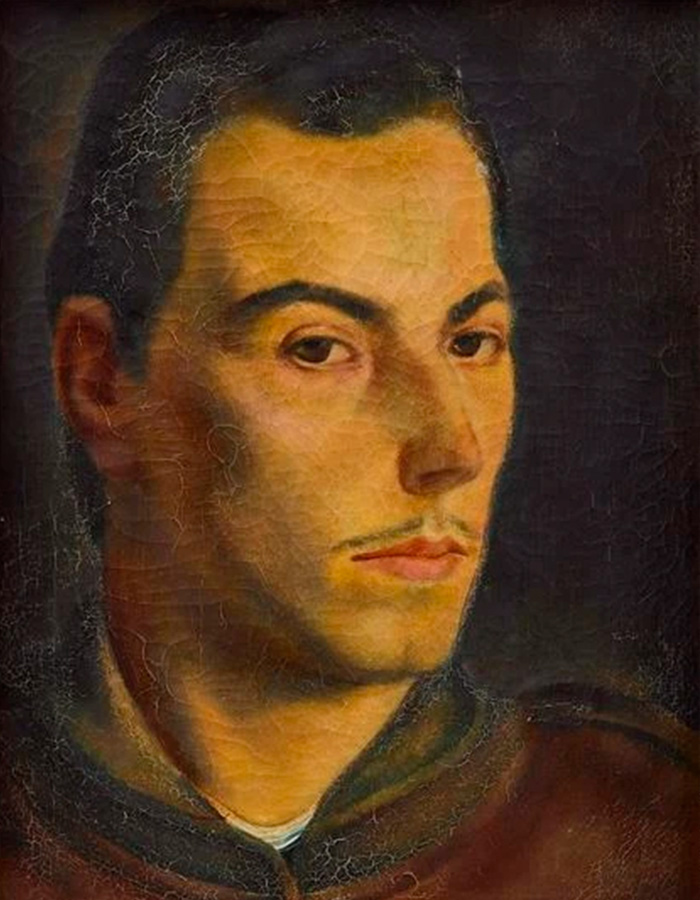
Born in 1906 in Bracigliano, Italy, Umberto Romano moved to the United States at the age of 9 and later pursued a career in art.
Romano was tasked with creating six mural panels for the Springfield Main Post Office in Massachusetts, USA (which later became the Commonwealth of Massachusetts State Office Building in 1984). He finished the project in 1937 with the help of his students.
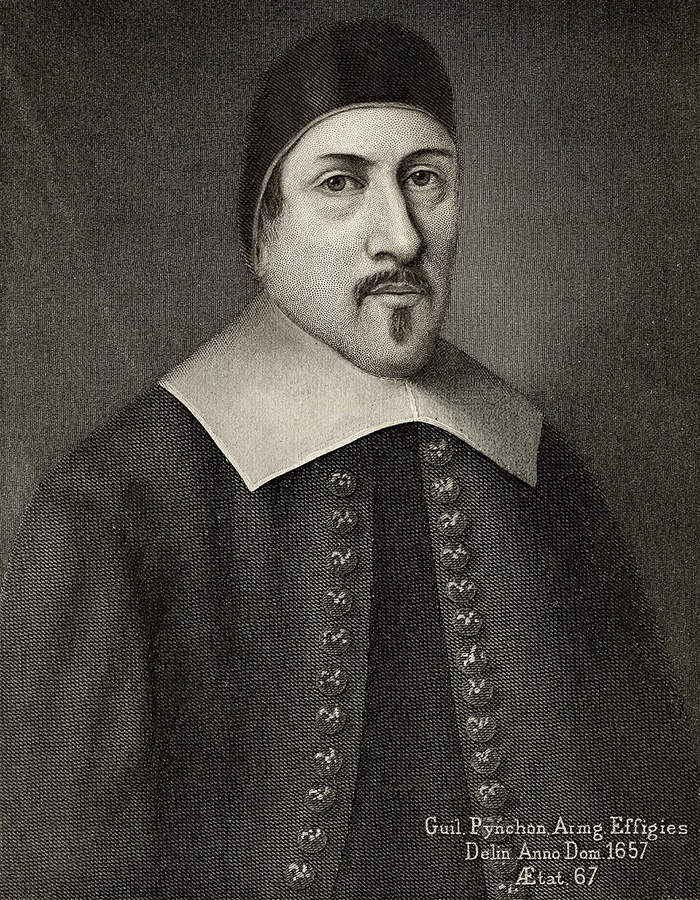
One of the murals was Mr. Pynchon and the Settling of Springfield, which depicted the 1636 settlement agreement between English colonist William Pynchon and the Pocomtuc indigenous peoples who lived in the Springfield area, then called Agawam.
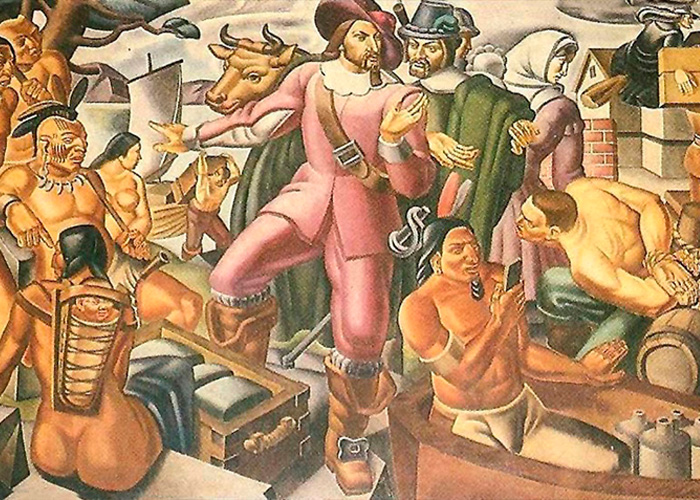
The painting features Pynchon in the center, dressed in a pink suit, accompanied by his entourage of English settlers and their cattle. Indigenous peoples surround him, some observing Pynchon and others looking at what seem to be Europe-made goods, such as textiles and ceramic vases.
The detail that sparked the time-travel conspiracy is in the bottom right corner, where an indigenous man sits in a crate of goods and holds a rectangular, grey-black bar close to his face.

Many have argued that the object is an “iPhone,” and that the man himself is a “time traveler.”
“Below [Pynchon] is a Native American looking as if he’s taking a selfie. Time travel?” one tweet read.
Counterarguments have said that it could be a stone or a clay tablet, a common household object of the time.
Historians have debunked the theory, making suggestions as to what the object could be
Science and technology journalist Brian Anderson wrote an article on VICE’s Motherboard in 2017, admitting that the detail was “uncanny” and he couldn’t stop looking at it.
“The longer I look, the closer his profile appears cut along what is perhaps the defining gesture of the digital age, a pose made all the more curious considering the obvious: that both the painting and what’s painted came many generations before the digital age,” he said.
Intrigued, he reached out to two historians to weigh in on the theory — Daniel Crown and Dr. Margaret Bruchac.

“Given the scene’s focus on the founding of Springfield, Romano, in reductive fashion, was probably trying to capture the introduction of modernity into a curious but technologically stunted community, which was instantly bewitched by Pynchon’s treasure trove of shiny objects,” Crown told Anderson, suggesting that the smartphone-like object was possibly a mirror.
While the use of reflective objects to see one’s face dates back to the earliest civilizations worldwide, including Native American communities, the Romans allegedly created the first glass mirrors in the 1st century CE, which the Venetians later refined.
Crown also offered another theory that the rectangular object could be a religious text: “One of the gospels or maybe Psalms. These did exist at the time and were roughly the same rectangular shape.”
‘Mr. Pynchon and the Settling of Springfield’ was completed by Italian Umberto Romano in 1937 and shows a scene from the 17th century
The painting shows Pynchon in a pink suit and to his left, below him is a Native American looking as if he’s taking a selfie
Time travel?? pic.twitter.com/nAmv73ayS2
— Field Notes (@SocialLens360) November 19, 2017
Dr. Bruchac, Assistant Professor of Anthropology and Coordinator of the Native American & Indigenous Studies Initiative at the University of Pennsylvania, proposed a third possibility. She theorized that the object could be an iron blade, with the sharper edge resting against the man’s palm.
“It does bear a rather uncanny resemblance, both in the way it’s being held and the way it focuses his attention, to a smartphone,” she admitted, adding that the painting inaccurately depicted many details from that time.
Eagle-eyed viewers have spotted “time-travel” details in a few other old paintings


Mr. Pynchon and the Settling of Springfield is not the only work of art to have sparked time-travel theories.
Austrian painter Ferdinand Georg Waldmüller’s 175-year-old artwork, The Expected One, is one such example. Painted in 1860, it is now displayed at the Neue Pinakothek museum in Munich, Germany.
The painting depicts a woman walking down a path lined with flowered shrubs, looking down at something rectangular in her hands, while a man at the turn of the road waits for her with a flower. Conspiracy theories have claimed that the object she is holding could be a phone.

“The girl in this Waldmüller painting is not playing with her new iPhone X, but is off to church holding a little prayer book in her hands,” Gerald Weinpolter, CEO of an Austrian art agency, clarified with Brian Anderson in 2017.
Another artwork that sparked similar arguments was Portrait of a Boy, painted by Dutch painter Ferdinand Bol in 1652, depicting a young boy by a red-clothed table, holding a goblet.
The intriguing factor, however, was in his black pointed shoes, one of which seemed to have the signature Nike tick in white.
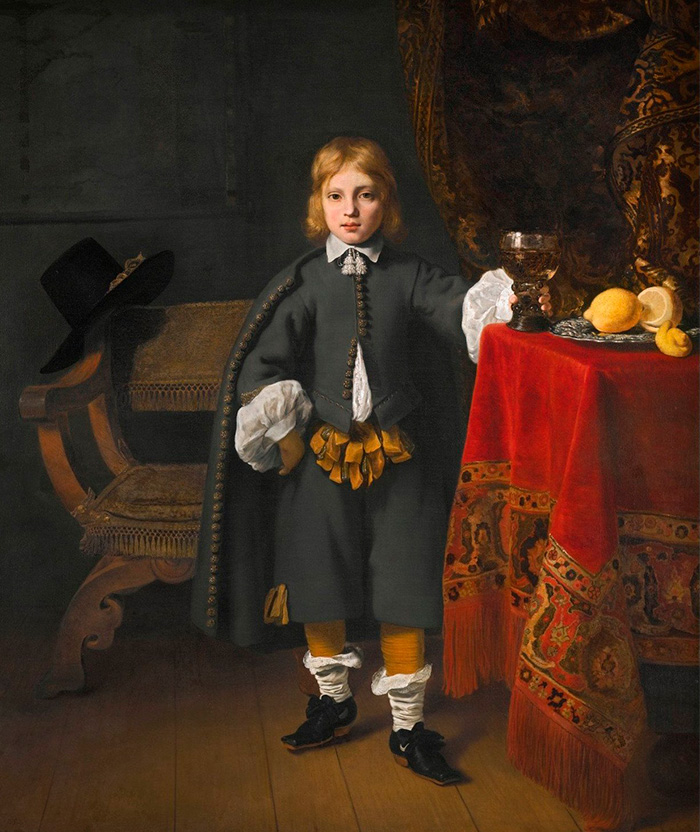
“Looking at the age, he must have got his hands on the first pair of Nike trainers ever made. Or is he actually a time traveler?” British citizen Fiona Foskett told The Sun after spotting the detail during a visit to the National Gallery in London with her daughter in 2023.
However, in her defense, the National Gallery’s social media account shared a photo of the painting, asking followers to spot “a more ‘modern detail’” in the 400-year-old painting. Foskett and her daughter merely participated in the joke, but many took it seriously as well.
“Is that an iPhone?” Netizens came up with conspiracy theories about Umberto Romano’s 1937 painting