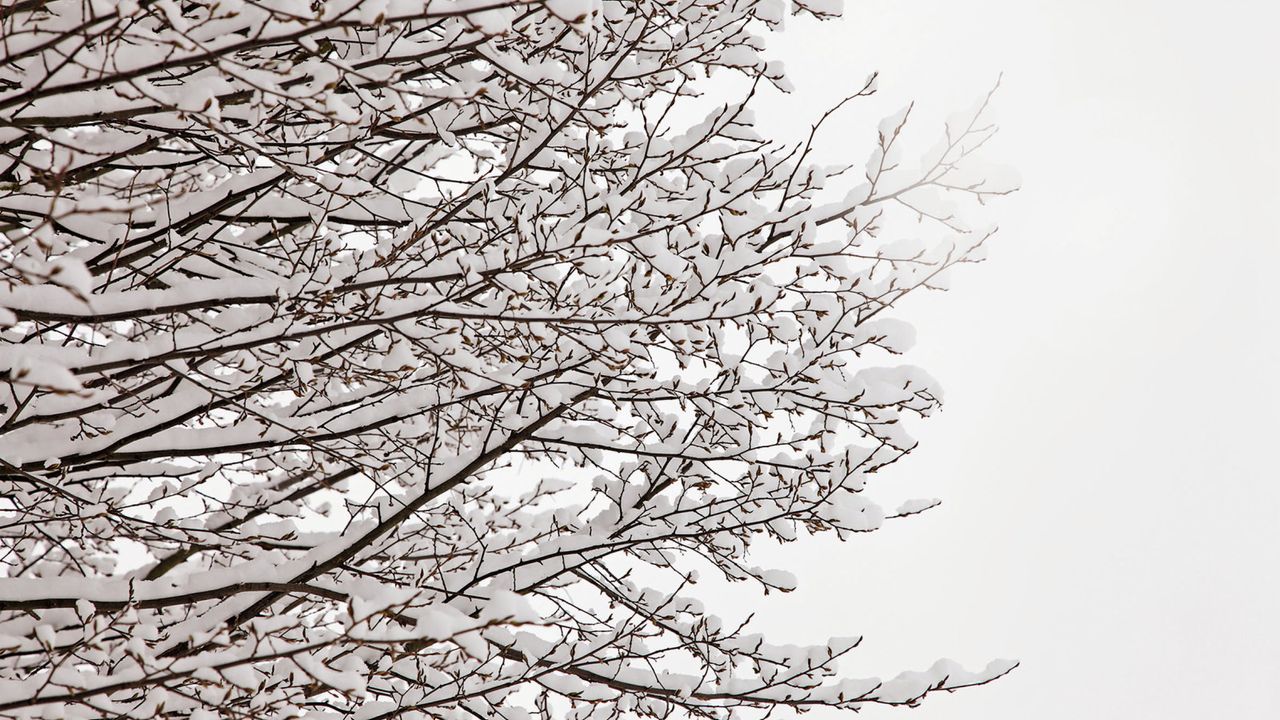
Heavy snow accumulating on tree branches can cause them to bend and ultimately snap. Rather than letting this happen, homeowners should keep an eye on their trees and remove a build-up of snow as it accumulates. Luckily, experts have revealed the safest way to remove snow from trees.
The great news is that it isn’t overly technical, and it doesn’t need any fancy tools. Removing snow from trees can be done with a simple household or garden item, or even with your hands. It does, however, need to be done properly and at the right time.
Here, experts discuss how to remove snow from trees, including revealing the proper technique and timing for removing snow from plants. This includes dos and don'ts, so you can work confidently and safely to ensure the trees and shrubs in your yard remain intact over winter. Make sure to add this advice to your winter gardening checklist.
How to Remove Snow From Trees and Shrubs Safely
Being careful is essential when removing snow from trees, as recklessness can cause major issues for the plant and for the gardener.
You can get the job done with common household or garden tools, plus some essential seasonal kit, including thick gardening gloves (such as these winter work gloves at Amazon), and non-slip boots. In some circumstances, such as when clearing snow from branches above head height, a helmet and eye protection may be required (like this helmet and visor combo at Amazon).
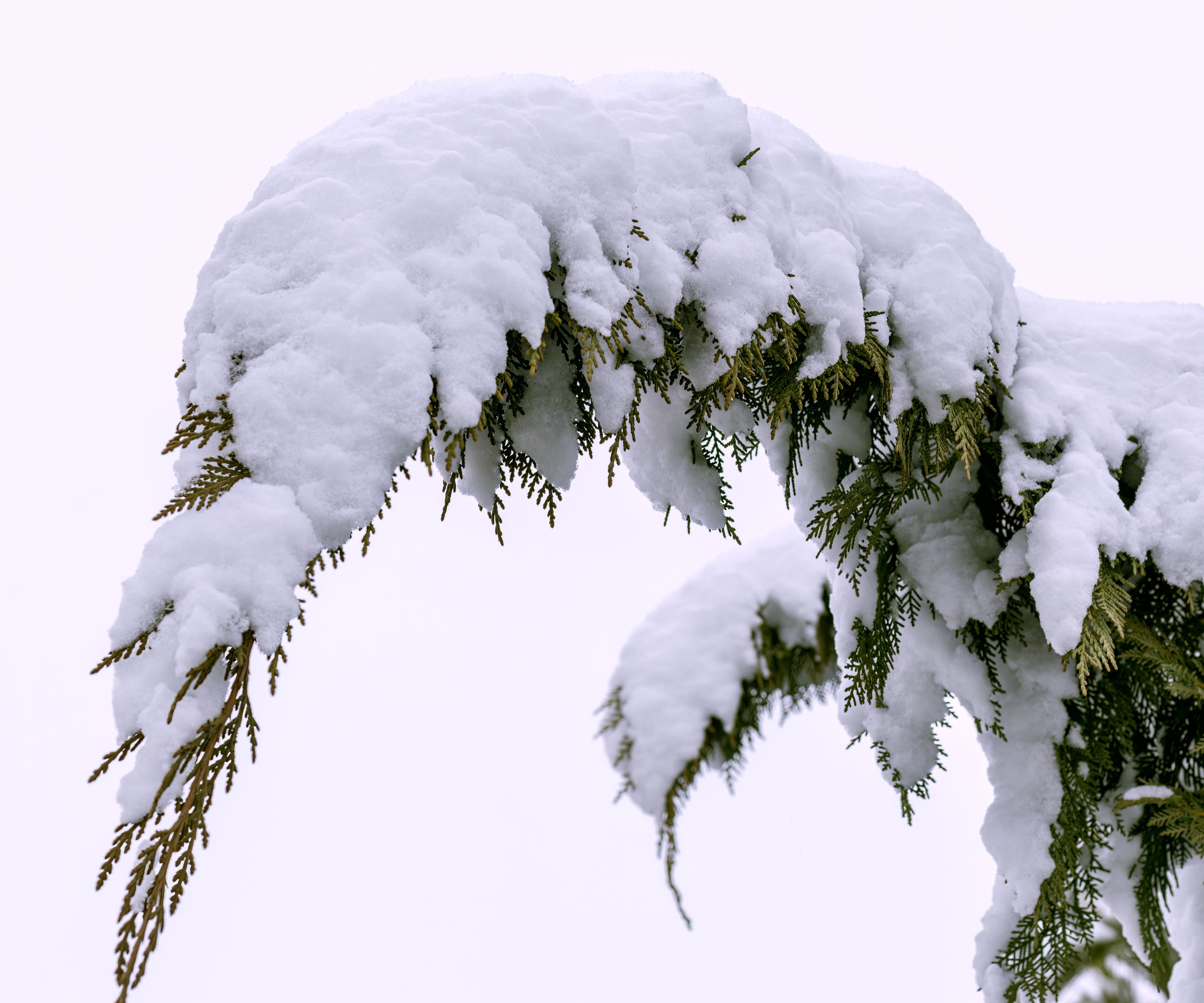
It is recommended to act quickly after heavy snowfall to reduce the weight sitting on the branches of trees and shrubs. Wet, heavy snow can exert huge stress on the branches, so don’t let more than a couple of inches build up. There are some plants you should always remove snow from, including conifers, evergreen trees and shrubs whose foliage can hold lots of snow, those with brittle wood, and multi-stemmed trees that can split under the excessive weight.
When it comes to how to remove snow from trees, experts recommend you take a light approach rather than a heavy-handed one. Peter Lowe, Garden Program Manager at The Dawes Arboretum, says: ‘If you do decide to brush snow off a plant or tree, brush it off gently using a broom or your hands.
‘Never shake the tree or remove ice build-up - you’ll potentially cause more damage to the branches.’
After heavy snowfall, brush the snow off the tree in an upward motion with your broom (such as this extendable long handle broom at Walmart) or even your own arm. The upward motion is key, as downward force puts extra weight onto an already weighted branch and risks it breaking. Shaking the branches is also a major no-no, as the branches can be brittle in winter and snap if handled too aggressively.
As well as knowing how to remove snow from trees, understanding the best timing also ensures you don’t do any unnecessary damage to them. Patrick Martin, a seasoned gardener and founder of the Frantoio Grove olive farm, advises, ‘Work during or just after snowfall before it freezes, and if the snow is iced on or crusted, wait for a thaw rather than forcing it off.’
Consider where the snow you are clearing will fall. When removing snow from trees, always stand to the side of the tree and never underneath it. Patrick Martin adds to ‘start at the top’ and recommends, ‘support branches with your free hand while you relieve the load from the center outwards.’
Don’t take risks or try shortcuts when clearing snow, such as using de-icer to remove snow from trees, as the products contain chemicals that are toxic to plants.
If a tree is damaged by the accumulation of snow or the process of removing it, make a sound judgment for when to prune trees. ‘Make sure to prune the tree using proper techniques as soon as possible so it has time to heal before the spring season,’ says Peter Lowe.
It would be a tree-pruning mistake to do any trimming during extreme freezes, when the wood is brittle and prone to cracking. Wait until the temperatures are above freezing to remove any damaged wood.
Snow, frost, and freezing winds can cause a myriad of issues for trees, particularly young trees and trees growing in pots. However, there are ways to protect trees from winter weather. These include making an A-frame over them and wrapping the tree in burlap or frost cloth, or moving potted trees to a sheltered position. You can get burlap rolls at Walmart and horticultural fleece at Amazon to protect plants from frost.
Tools for removing snow from branches
This lightweight snow brush extends from 40 to 58 inches long and can be used to gently brush heavy snow off tree branches.
This pole extends from five to 24 feet, giving you up to 30 feet when standing. You can attach a brush head and use it to remove snow from tree branches.
This cordless, handheld snow blower can be carefully used to blow snow from tree and shrub branches. It fully charges in three hours.
This lightweight snow shovel has a 20-inch wide graphite blade and a D-grip handle to help make clearing snow comfortable and efficient.