The global health community has issued a stark warning: the world is 'edging dangerously close' to a pandemic for which it remains fundamentally unprepared.
As public health infrastructure buckles under the weight of plummeting vaccination rates and rapid viral evolution, a 'perfect storm' of epidemiological threats is brewing.
Experts have pinpointed four specific viruses—mpox, rubella, avian influenza (H5N1), and Oropouche—as the primary candidates for 'Disease X', the World Health Organisation's (WHO) placeholder for a currently unknown or mutated pathogen that could trigger the next global crisis.
Unlike the sudden onset of COVID-19, these 2026 threats are 'known unknowns'—viruses already circulating in animals or humans that are one significant mutation away from catastrophic spillover.
Scientists stress this is not a prediction but a risk assessment rooted in current data, weakened immunity, and gaps in global surveillance. The concern is not panic, but preparedness — and the window to act may be narrowing.
Mpox's Dangerous Evolution
Once considered exotic and geographically isolated, mpox has transformed into an entrenched global threat that refuses to retreat.
Dr Michael Head, a research fellow in global health at the University of Southampton's faculty of medicine, warned that 'Mpox outbreaks continue in many countries around the world, including in Europe, for example Spain' and 'there are new strains emerging, and it's increasingly clear that the virus, previously very rare, is now here to stay globally'.
The virus's trajectory has been staggering. Since May 2022, a wave of unprecedented outbreaks swept through at least 100 countries previously untouched by mpox, including the UK, the US, Australia, mainland Europe and Canada. Towards the end of 2025, a mutant strain of mpox was discovered in England—a hybrid combining elements of two dangerous clades, Ib and IIb.
Researchers at the WHO now warn that 43 new confirmed cases of the more aggressive clade Ib strain were reported across six global regions since September 2025, with 24 of these cases showing no recent travel history, suggesting worrying evidence of local transmission.
Rubella Resurgence: A Genuine Threat
Rubella, once believed to be nearly eradicated, has re-emerged as a genuine threat as MMR vaccine uptake has collapsed to a 15-year low. Dr Head fears the virus could make a devastating comeback amongst populations left defenceless by declining immunisation rates.
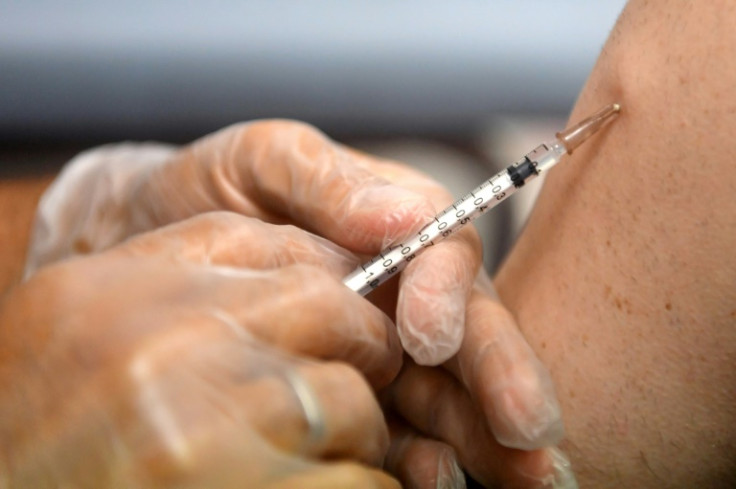
The consequences are already visible and deeply troubling. If a woman contracts rubella during pregnancy, the virus can trigger congenital rubella syndrome in up to 85 per cent of cases, causing miscarriage, stillbirth or devastating birth defects including deafness, heart problems and intellectual disabilities.
The resurgence of Rubella in 2026 is a direct consequence of a 'catastrophic' decline in MMR (Measles, Mumps, and Rubella) vaccine uptake, which has hit a 15-year low in regions like the UK and Western Europe.
The Canary in the Coalmine: Measles cases in the UK surged to a decade-high in April 2025, serving as a warning for Rubella.
Congenital Risks: If Rubella becomes endemic again, the risk of Congenital Rubella Syndrome (causing deafness and heart defects in newborns) could affect up to 85% of pregnancies where the mother is infected.
Vaccine Gap: UK vaccination rates have dropped to 84.4%, well below the WHO-recommended 95% "herd immunity" threshold.
The falling uptake of the lifesaving jab has already manifested in shocking measles statistics, with cases rising sharply in the UK since April 2025—particularly in the North West and London—reaching the highest number in over a decade.
Measles, one of the world's most infectious diseases, spreads when an infected person breathes, coughs or sneezes. The virus can cause severe disease, complications and even death.
Bird Flu and Oropouche: Emerging Wildcards
Bird flu has haunted public health warnings for decades, but the current H5N1 strain has proven 'particularly nasty'.
Since 2020, it has aggressively decimated wild bird and poultry populations worldwide, mutating to spread from birds to mammals like dairy cows—and, critically, to circulate through milk itself.
Dr Ed Hutchinson, professor of molecular and cellular virology at the University of Glasgow, warned that 'for as long as H5N1 is circulating and infecting humans, it will pose a pandemic risk' and whilst antivirals and vaccines exist, 'a new flu pandemic would still be a major challenge'.
The UK reported its first-ever cases of Oropouche virus—commonly called 'sloth fever'—last year, following a surge in cases across Europe.
Officially known as Oropouche virus, the illness is transmitted to humans by infected midges, with symptoms typically emerging up to eight days after a bite, including muscle aches, eye pain, rashes, light sensitivity, and vomiting.

The expanding geographic range presents an ongoing concern, with Professor Jackson from the University of Virginia noting that 'in 2026, Oropouche outbreaks will likely continue to affect travellers in the Americas' and that 'the biting midge carrying Oropouche virus is found throughout North and South America, and the range of the virus could continue to expand'.
The 'Disease X' Checklist: Why These Four?
Experts use the One Health approach to rank these viruses based on their 'spillover potential.' The 2026 criteria for a 'Disease X' candidate include:
Respiratory Efficiency: The ability to spread via breathing or coughing (H5N1, Rubella).
Environmental Resilience: Surviving in diverse climates (Mpox, Oropouche).
Vaccine Evasion: Mutating faster than current 'vaccine libraries' can adapt.
Health researchers emphasise that none of these viruses is guaranteed to become the next pandemic. The danger lies in complacency. Reduced vaccination, strained surveillance, climate-driven spread, and political hesitation converge, experts say, mirroring the early warning signs seen before COVID-19.
'Disease X' is not a prophecy. It is a reminder that prevention depends on vigilance, funding and trust — long before hospitals fill and borders close.