The Trump administration is waging war on voting rights using justice department lawsuits, FBI investigations and an executive order to limit voting by mail, moves mirroring the US president’s false claims he lost the 2020 election due to voting fraud, say election experts and ex-officials.
Since Donald Trump began his second term, numerous 2020 election denialists have been installed in key agencies such as the Department of Justice, the FBI and elsewhere to pursue widely discredited claims of fraud, which can intimidate election workers and voters in swing states that Trump lost to Joe Biden in 2020.
The justice department has also filed lawsuits seeking sensitive voter data from 30 states – even though, by law, states control elections – and the FBI has launched investigations into debunked allegations of voting fraud in Georgia, Wisconsin and a few other swing states that Trump lost in 2020.
Trump in late March this year issued an executive order sharply tightening mail-in voting rules, which Trump has long claimed without evidence contribute to fraud. The order gives the United States Postal Service unprecedented powers to issue new rules making voting by mail harder.
The administration’s multi-pronged push to change voting rules is under way despite laws that empower states and Congress to set election rules, sparking lawsuits from states and non-partisan voting rights groups.
In early April, for instance, officials from 23 Democratic states including California and Washington DC filed a lawsuit to block Trump’s executive order to curb voting by mail, arguing that the order was an unconstitutional effort to interfere with states administering their elections.
The administration’s aggressive steps to tighten voting rules come as Trump and many Republican allies have voiced strong fears that the November midterm elections are likely to give Democrats control of the House, and possibly the Senate too, limiting Trump’s powers and possibly leading to his impeachment again.
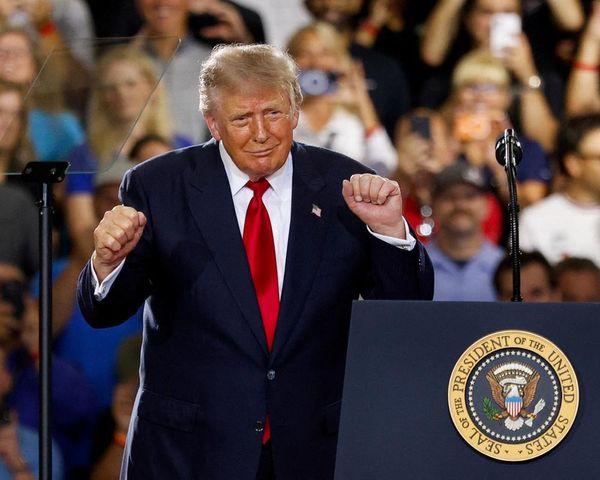
At a Republican House retreat in January, Trump stressed the stakes were high for his future if Democrats win control of the House. “You gotta win the midterms, because if we don’t win the midterms, it’s just gonna be … I mean, they’ll find a reason to impeach me,” Trump told lawmakers.
Former federal officials with voting expertise are sharply critical of the Trump administration’s moves to limit voting rights with phoney charges of voting fraud.
“The Department of Justice has no authority to sweep up the voter rolls, which contain private information like driver’s licenses and social security numbers, from every state in the nation,” Eileen O’Connor, a senior counsel with the Brennan Center who spent eight years in the justice department’s voting section of the civil rights division, told the Guardian.
“The department has 30 active lawsuits against states and the District of Columbia to force the turnover of these sensitive records. So far, eight courts have issued rulings in these cases, and the DoJ has lost each one.”
O’Connor stressed that “lawsuits against the states are only one part of a broader campaign by the Trump administration to interfere with elections. The administration has targeted election officials, attempted to rewrite election rules, pardoned January 6 rioters, and elevated election deniers.
“It has also raised the prospect of deploying federal immigration agents at polling sites – but federal law explicitly bans federal officers from interfering in elections and prohibits armed federal agents from being deployed anywhere an election is held.”
Other ex-election officials voice alarms about Trump’s moves to revamp voting rules and curb voting rights.
“Trump continues to falsely claim that voting by foreign nationals, which is illegal and rarely occurs, and practices such as mail-in voting resulted in a fraudulent election in 2020 and will result in the 2026 midterm elections being rigged against Republicans,” Larry Noble, a former general counsel at the Federal Election Commission who now teaches law at the American University, told the Guardian. “However, numerous audits and lawsuits have failed to find any meaningful fraud in the 2020 election.”
Noble added: “Trump apparently believes that Democrats winning an election is proof enough that there was fraud because, as Trump has brazenly charged, “[I]f they didn’t cheat, they could not win …”
Such criticism has not deterred Trump and top officials at the justice department and other key agencies from claiming the voting changes and investigations they are pursuing are needed to combat what they falsely insist was widespread voting fraud in 2020. The acting attorney general Todd Blanche, for instance, told Fox News last month there was “a ton of evidence that the election was rigged” in 2020.
In a potential harbinger of voting fraud charges ahead in the fall elections if Trump doesn’t like the results, Trump quickly claimed that California’s early June primaries were rigged when Spencer Pratt, a Trump-backed mayoral candidate in Los Angeles, lost an early voting lead in the nation’s largest state, where final results often take longer to tabulate.
Trump wrote on Truth Social that it was “Not possible for Spencer Pratt to have lost the L.A. runoffs after the big lead he had… 3rd World Nation.”
Further, soon after the primaries were held Trump claimed without details that they were “under investigation by the US attorney’s office in Los Angeles”. The justice department also sent a federal prosecutor to observe ballot processing in Los Angeles.
The justice department’s heavy tilt to election denialism became palpable soon after Trump took office in 2025 as the department’s voting section in the civil rights division was revamped to align with Trump’s election denialist views and its staff was sharply reduced last year from about 30 lawyers to less than half that number, according to a former Department of Justice lawyer.
To implement Trump-backed changes in voting rules and curb voting rights, the justice department has recruited a number of new lawyers whose résumés include efforts to fight Trump’s 2020 loss to Joe Biden.
The justice department in April, for instance, tapped the ex-Republican congressman Dan Bishop of North Carolina, an avid election denier in 2020 who had been serving as a US attorney in his state for just five months, to lead a national drive to ferret out voting fraud including debunked allegations from 2020.
In related moves, Democracy Docket disclosed in May that William Mohrman, a Minneapolis lawyer who was involved in lawsuits that sought to overturn Biden’s victory, had been hired as a senior counsel by the justice department’s voting section, according to court filings.
Court documents show that Mohrman entered his first appearance on behalf of the government in a lawsuit seeking Georgia’s unredacted statewide voter registration records from 2020.
Mohrman is one of a growing list of attorneys the section added since 2025 who were involved in 2020 election challenges or who worked with well-known election deniers. Among others, the current acting head of the section, former California prosecutor Eric Neff, reportedly has various links to election-conspiracy promoters.
These new hires coincide with shifts in the justice department’s voting section away from its traditional priority of voting rights enforcement towards lawsuits seeking sensitive voter records from states and counties nationwide. In another big break from non-partisan traditions, the Department of Justice last year backed the legality of a Texas redistricting plan that could help Republicans pick up five House seats in the midterms, while it challenged unsuccessfully a California redistricting plan voters approved that could help Democrats win five seats.
On another election front that tracks Trump’s bogus voting-fraud claims, the FBI has made investigating 2020 voting fraud a growing priority. The FBI has active inquiries into voting fraud in 2020 in Georgia and Wisconsin which critics say perpetuate lies about Trump’s loss and may intimidate election workers and voters.
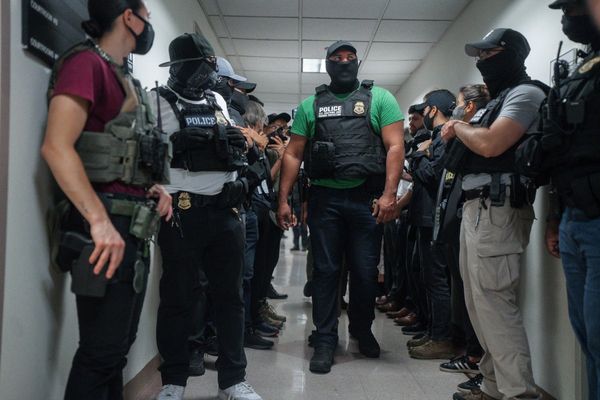
This year, the FBI raided an election hub in Fulton county, Georgia, seized election data and images of ballots in Arizona, demanded ballots in Michigan, and in May expanded its inquiries to include the Milwaukee, Wisconsin area, according to the Washington Post.
FBI agents, the Post reported, visited homes of former and current Wisconsin election officials as part of an investigation into discredited election conspiracy theories pushed by Trump.
The FBI has tried for months to seize ballots, obtain access to poll workers’ personal information, and talk to election officials in swing states, moves that mirror Trump’s debunked claims that he won the 2020 election.
Elsewhere, Trump’s March 2026 executive order on voting by mail has ignited a firestorm of lawsuits and alarms from voting experts.
The gist of the order charges the USPS with deciding who may vote by mail and authorizes it not to deliver ballots sent by individuals who are not included on newly developed federal mail voter lists. The order, ominously, threatens criminal penalties for election workers, mail carriers and others who deliver or send ballots to people the administration claims are ineligible.
In a related step, the order instructs the Department of Homeland Security to develop lists of citizens in every state using unreliable and incomplete federal data materials. The Brennan Center and other voting rights advocates have warned that if implemented, the order would create chaos and curb voting by eligible US citizens.
The Brennan Center and other groups, both non-partisan and partisan, as well as states, have challenged the executive order in court, just as they challenged Trump’s March 2025 executive order changing key voting rules.
To date, several federal courts have blocked major parts of Trump’s 2025 order that would require citizens to show a passport or similar document to register to vote, which the administration has appealed.
Notably, some Republican veterans also foresee big risks with Trump’s executive orders on voting.
“These attempts are clearly unconstitutional. States run elections, not the feds. One executive order even directs the US Postal Service to decide which voters can receive mail-in ballots and which not, as if they could manage such an assignment,” said the veteran Republican consultant Charlie Black.
Noble warned: “Trump’s executive order requiring the Department of Homeland Security to compile a list of verified US citizens eligible to vote and the Postal Service to limit mail-in voting, could very well disenfranchise millions of voters while doing nothing to eliminate virtually non-existent voter fraud.”
In Noble’s eyes, “Trump is using lies to justify an unprecedented effort to have the federal government take over the administration of elections, despite the constitution giving the states that power.”