A governmental panel of experts on disease control measures for the novel coronavirus showed a strong sense of alarm on Wednesday, warning that there is a possibility of medical facilities becoming dysfunctional due to the rapid rise in the number of infections, particularly in urban areas.
In order to prevent local medical systems from falling into a state of collapse, as seen in some foreign countries, people's cooperation is vital in stemming the spread of infections. As there have been circumstances in which people in some regions have apparently grown tired of self-restraint measures and eased their sense of precaution, the panel once again called on people to modify their behavior.
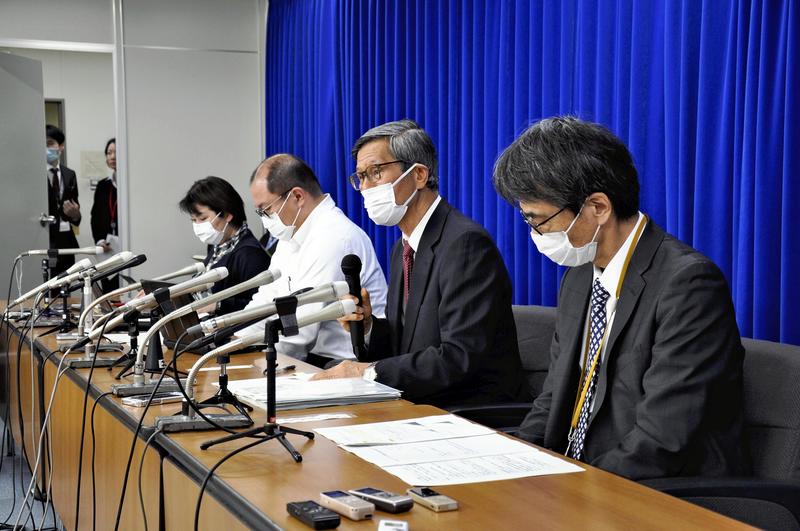
"The medical system collapses even before an overshoot [an explosive surge in the number of infected patients] occurs," Shigeru Omi, deputy chairman of the governmental panel of experts on measures to cope with the new coronavirus, said at a press conference on Wednesday.
Omi, also a former director of the Western Pacific Regional Office for the World Health Organization (WHO), expressed fear over the possibility of shortages of hospital beds as the number of infected cases rises sharply, leading to a situation in which medical facilities would become unable to accommodate patients in serious need of treatment.
In order to grasp the current state of infections, the panel analyzed the "effective reproduction number," or the average number of secondary infections produced by one infection at a particular time. A number greater than 1 indicates that there will be a spread of infections in the area. The figure for Tokyo was estimated to be 1.7 for the period in late March, highlighting the current situation in which the number of cases is rising, mainly in urban areas.
As to the definition of "overshoot," the panel calls it a circumstance in which the cumulative number of infected cases increases continuously at a pace to double over a few days. In Tokyo, new cases of infections doubled every two and a half days from March 21 to 30. However, as these figures include many cases of hospital-acquired infections and cases whose transmission paths have been identified, the panel considers that the situation in Tokyo warrants close and continuous monitoring.
In order to prevent medical service systems from falling into a state of collapse, cooperation on the part of local residents is indispensable. As evidence for assessing the infection situation in each area, the panel has presented five barometers, including the number of new cases (which reflects the actual situation of the spread of infections about two weeks earlier), the number of cases whose source of infection is unknown (which relates to the expansion of infections across particular areas), and the number of people visiting clinics because they have either returned from abroad or have had close contact with infected people.
On top of these, the panel has given different degrees of priority to what sorts of measures should be taken, depending on the infection situation of the areas. In light of these barometers, the panel has divided the areas into three categories.
Category 1 describes an area where infections are greatly expanding, thus making precautions necessary.
Category 2 describes an area where the existence of infections has been confirmed.
Category 3 describes an area where no confirmed cases of infection have occurred.
The panel went on to prescribe countermeasures for each of these areas.
For Category 1 areas, where the number of new cases has increased markedly in the past one-week period, the panel calls on local governments to request residents to exercise self-restraint on outings for a specified period of time, while calling on people in the area not to gather in large groups, including dining with a large number of people, except within families.
For Category 2 areas, where the number of new cases has increased but is limited within a certain range, the panel calls on citizens to refrain from taking part in events where more than 50 people gather indoors.
For Category 3 areas, where there have been no confirmed cases in the past week, the panel has approved people watching outdoor sports events or using cultural facilities, on condition that certain measures against infection are taken.
As there is no knowing where or when infections could spread, the panel has once again emphasized, regardless of how areas are categorized, the need for people to thoroughly refrain from activities in which the following three conditions are met simultaneously: 1) a closed space without good ventilation; 2) a space crowded with many people; and 3) a place where conversations take place at close range.
The panel also pointed out the need for members of the public to prepare for an eventuality in which they become infected themselves, by finding out ahead of time what place infected people in their area should contact and considering how they will find transportation to a hospital.
The panel has also incorporated in its proposal the need to support such efforts as considering the efficacy and safety of existing drugs for treatment and accelerating the development of a new, Japan-made vaccine.
As to factors causing the spread of infections, the experts noted the problem of people who are unaware of being infected spreading the virus at nightclubs and other such venues, causing so-called "nightlife clusters" of infections.
With the start of a new fiscal and academic year in Japan, there have also been infection clusters at drinking parties held by college students. Omi said, "The key to the battle [against the virus] lies in actions to be taken by all generations."
Read more from The Japan News at https://japannews.yomiuri.co.jp/