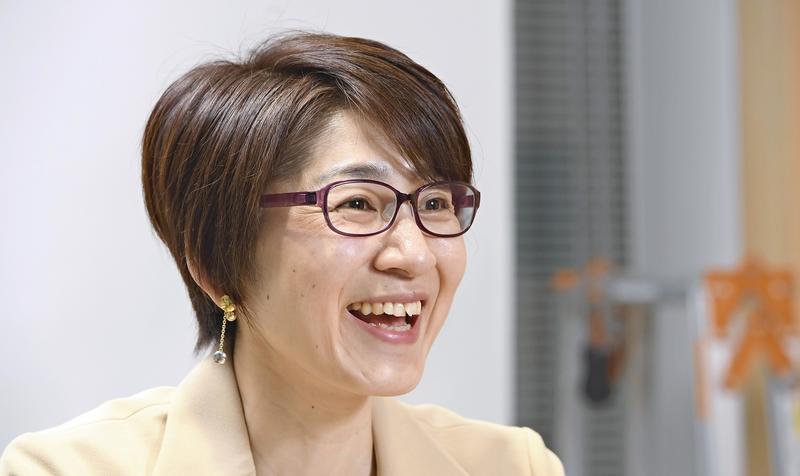
Reiko Shiiba, a guest researcher at the Japan Telework Association, discusses the current situation in which telework has prevailed amid the coronavirus crisis and ways to expand the horizon of telework. The interview was conducted by Yomiuri Shimbun Staff Writer Hiroshi Arimitsu.
Reiko Shiiba: In Japan, many people consider telework as tantamount to "working from home," but mobile work done by sales reps while in transit and "working at satellite offices instead of head offices" are also categorized as telework. Lately, more and more companies have contracted rental offices operated by real estate agencies that their employees can use whenever they want to.
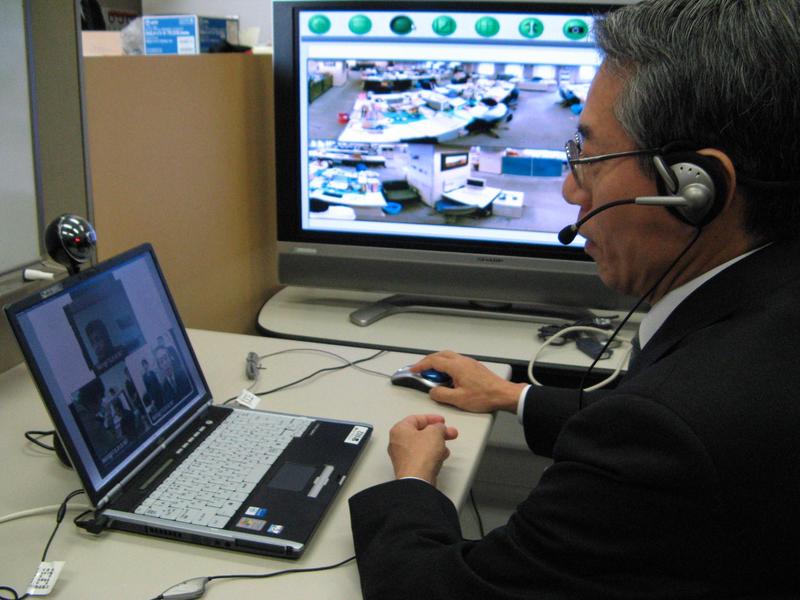
Telework in Japan started in the mid-1980s when land prices in central Tokyo skyrocketed as an experiment of satellite offices aimed at achieving proximity between the home and workplace. However, as internet services were not widespread at that time, telework was conducted on a small scale. With sales reps beginning to work outside in around 2000 thanks to mobile phones and smartphones thereafter, mobile work has progressed.
The word "telework" began to be widely used in the wake of the 2011 Great East Japan Earthquake. Rolling blackouts were carried out in Tokyo, making it impossible for company employees to work at offices even if they commuted there. This led to the emergence of company employees working from home.
Of late, the government has been promoting telework as part of work style reforms. More and more companies have been adopting telework as young people tend to give weight to whether companies permit telework.
However, even among firms that were positive about implementing telework if the Tokyo Olympics and Paralympics were held this summer, as scheduled, the period over which telework was planned company-wide was about a week. This underscores just how much the coronavirus pandemic has unexpectedly contributed to the rapid spread of telework.
The biggest worry about telework is overwork, or so-called unreported overtime. The more serious people are, the harder they work.
To prevent overwork, it is a good idea to confirm the times a personal computer has been turned on and off, as well as to strengthen stress checks. Some companies restrict time for sending emails and messages. Nonurgent and nonessential communication should be avoided after work and on off days.
As I worked until midnight at the website producing company I had established, I felt it would be hopeless for women to pursue a career with such long working hours. While I was considering long working hours and constraints at workplaces after establishing a company to support the work styles of women, I came across mobile work and thought the range of telework would need to be expanded.
As for information management and security measures when teleworking, guidelines compiled by the Internal Affairs and Communications Ministry and Japan Telework Association can be used as a reference. There are offices at the communications ministry and the Tokyo metropolitan government that offer free consultation services on telework as well.
If a company employee plugs a specific device into a personal computer at home, it is connected with a personal computer at their office that then enables the use of services at relatively low fees without data being left inside the terminal device.
As teleworking requires various expertise and skills to cope with cyber-attacks, I think it is advisable to ask for help from outside experts as much as possible.
Telework can be done without spending much money. If you use crowdfunding services or subsidies provided by organizations such as the labor ministry and the Tokyo metropolitan government, you can curb initial investment. Dramatic changes can be expected simply by ceasing operations such as those involving "paper" and "hanko or personal seal" and digitalizing.
In Japan, many are used to working while reading the room. Therefore, if they don't work at the physical office, they are liable to feel fears such as "I hardly work" and "I am making little contribution to the company."
A job-type employment system that lists required abilities and the range of work is mainstream in Europe and the United States. Under this system, employees can receive recognition when they achieve results even if they don't report to offices. In this case, personnel evaluation is a challenge.
Telework also has the problem that it is difficult to maintain emotional connections between the employees. Ideas and innovations come up through idle talk. Online chat, emails and web conferences basically center on business.
Many supervisors are also suspicious that their subordinates are "ditching work" as far as telework is concerned. There is software whereby it is possible to monitor personal computer screens and the situation of PC usage, but it is more advisable to reshape communications between a supervisor and employee without using such software.
In the case of a certain company, it has reexamined the practice of holding a regular meeting once a week and increased the frequency of short-running web conferences. Moves have also emerged to set up a chat room on a website.
It is advisable to increase opportunities for superiors and subordinates to talk one-on-one. This makes it easier for bosses to understand the feelings of their subordinates. Subordinates, for their part, can increase their trust in their superiors if they feel accepted.
Working hours will change through the introduction of telework. Working hours are generally from 9 a.m. to 5 p.m. But there must be people who want to start working at 7 a.m. and finish earlier in the afternoon. If this is made possible, the time saved can be spent on hobbies, side jobs and studying to get certified.
A "hybrid" formula wherein employees are given a choice between teleworking and reporting to the office is an ideal method for the future. Based on the experience of adopting telework amid the coronavirus crisis, it is essential for private and public sectors and educational fronts to work together and discuss ways to utilize telework while working toward having it take root in society.
--Reiko Shiiba graduated from Keio University's Faculty of Policy Management in 2000. She established a company named Lucida that helps promote telework and diversified ways of work styles for women and serves as its president. 42 years old.
Read more from The Japan News at https://japannews.yomiuri.co.jp/