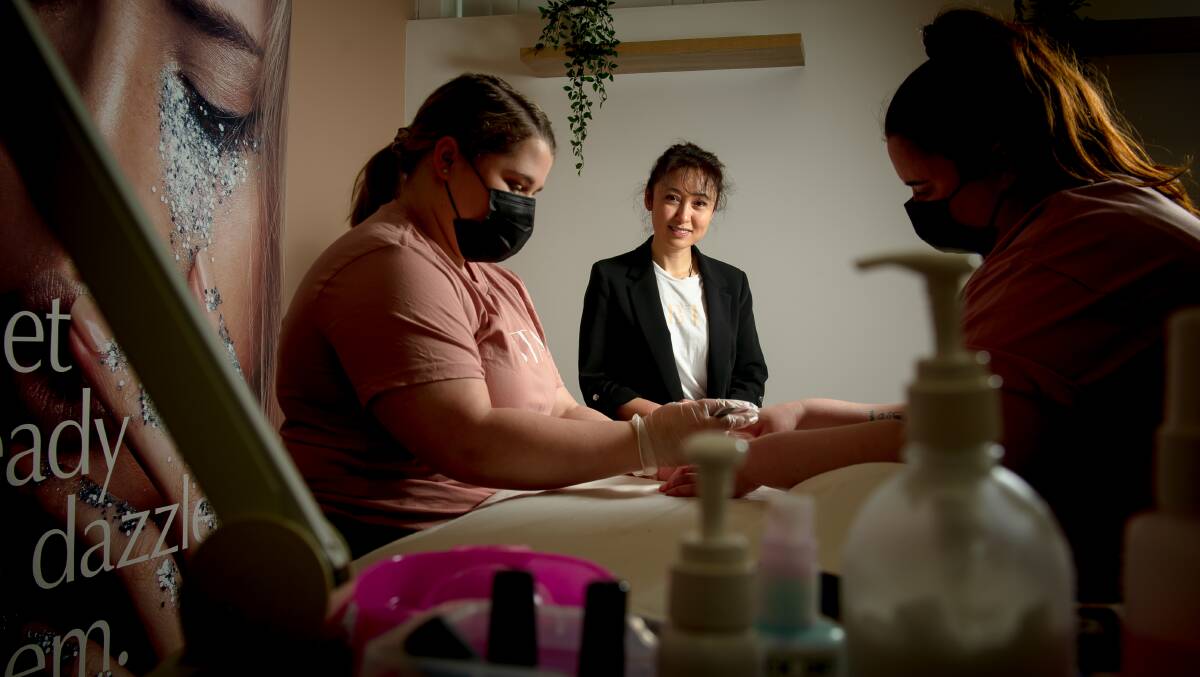
Two months in lockdown is a long time to leave acrylic nails on, so you may be looking to remove them yourself.
As part of last week's announcement of the ACT's path out of lockdown, nail salons are allowed to open on Friday, with a limit of five customers at a time.
So for those who can't wait or may not be able to get an appointment, how can you go about it safely?
According to Australian Beauty Therapy Academy principal and senior trainer, Ping Gan said there are some techniques that should be undertaken to keep the nail and the skin surrounding it strong and healthy.
"A lot of people try to use nail drills or something to grind them down but that could go overboard," she said.
"If it does go down to the natural nail, that can be damaging. Regardless of what treatment we do, we want to enhance the look, without doing any damage to the natural body structure."
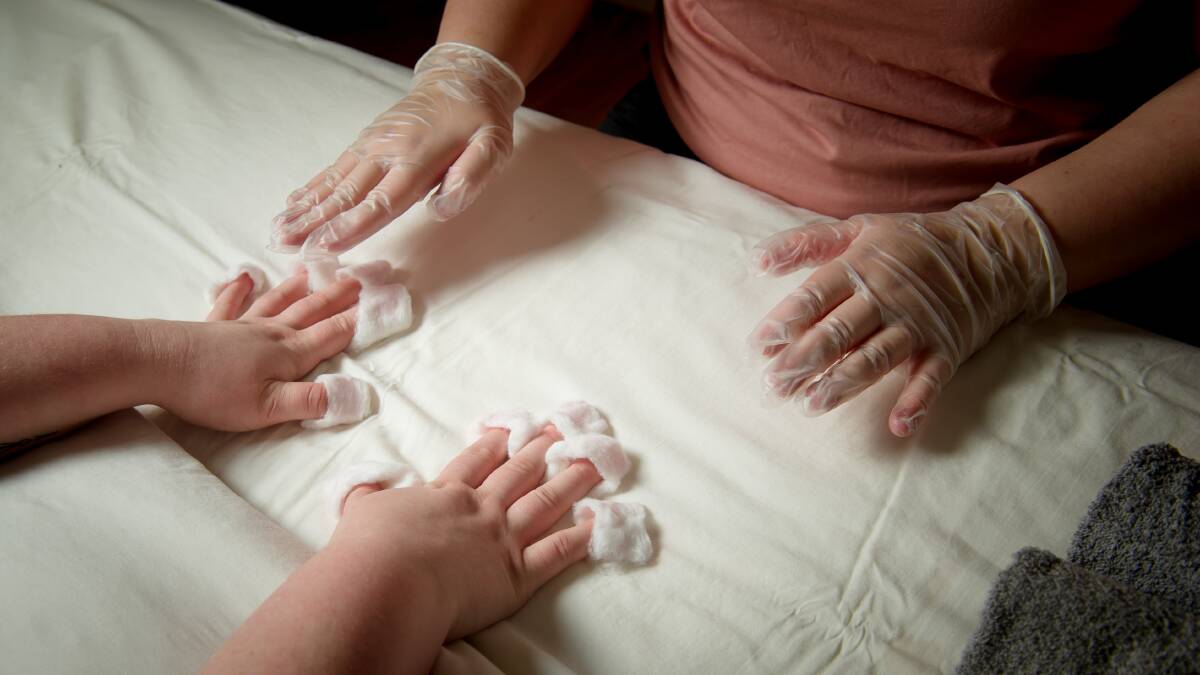
Ms Gan said to instead clip the end of the nails off - as it is mostly acrylic - and then buff the rest down as thin as you can while avoiding the natural nail. Then place acetone soaked cotton wool on your nails and let them sit.
"The length of the time that you soak depends on the thickness of the nail and if it's too thick it will damage the skin around it," she said.
"When the skin's overexposed to the chemicals, it changes the pH and that could open up opportunities to bacteria and infections. So if you can buff down the bulk of it, then you can use the cotton wool with the acetone soaking on the top of the surface, rather than dipping the finger into the whole solution.
"If you use a bowl to soak your nails, when you take your fingers out usually you can see the skin almost white because it's almost like it's been bleached, and it's super dehydrating for the skin."
If the skin, in particular, is overexposed to the chemicals it leaves the skin open to infection not just while the acrylic nails are being removed, but afterwards as well. Ms Gan said that as people go about their daily business - such as doing the dishes - the skin is open to infection until the pH is restored.
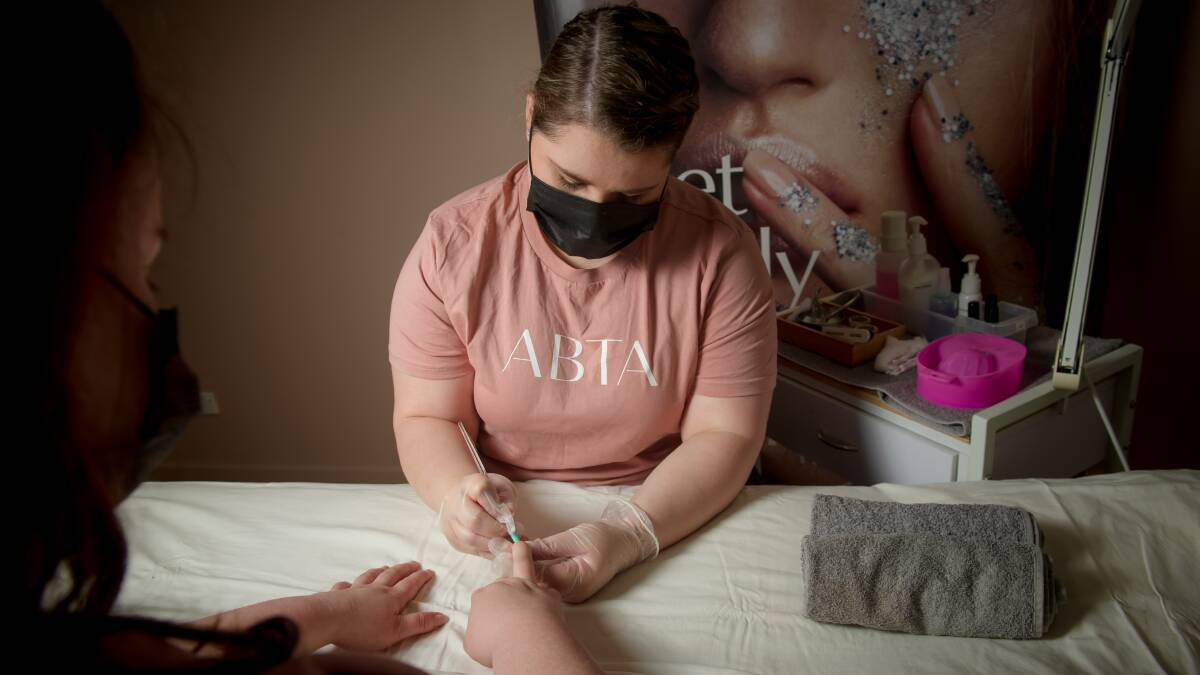
Once the acrylic nails are safely removed, Ms Gan said to buff the nail and then apply a nail hardener. Unlike normal nail polish, nail hardener has nylon fibres in it.
"Often the nail surface is a bit rough and some people just leave it rough but that can mean that a lot of dirt and stuff can get stuck in there. So gently buff the nail because the smoother the surface, less debris gets stuck," she said.
"We want to then apply cuticle oil. It's for nourishing the nail but also it forms a coating on the surface to protect the nail from dehydration.
"Once that oil has soaked in and you can gently use a non-acetone nail polish remover to remove the excess oil if you want to. And then I would suggest to apply a nail hardener that gives the extra strength."