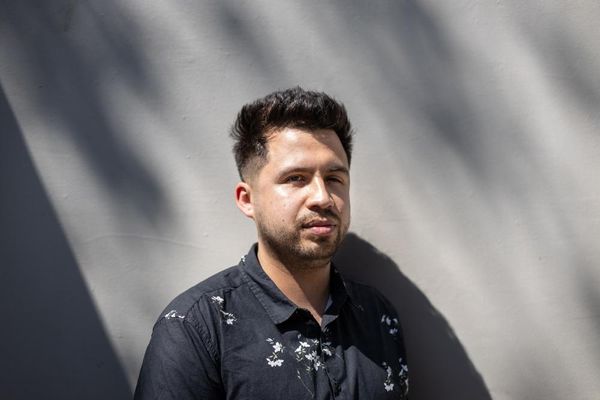
When Zak Romaszko finished his physics degree at the University of Liverpool, a PhD in computing was his obvious next step. “I have always been fascinated with computers,” says the 27-year-old. “I broke my dad’s PC when I was younger and he was away in the forces, so I had to fix it myself.” His interest grew from there, but Romaszko’s choice of focus for his research isn’t just any type of computing – but the cutting-edge quantum variety.
Thought by many to be the next step in the field, and key to solving complex problems in a manageable amount of time, quantum computers use quantum bits rather than the regular bits used by standard computers.

“It will be able to solve problems that might take computers millions and billions of years in timescales that are more realistic to humans,” says Romaszko. “It seemed to be that this would be the way forward in how big calculations would be done in the future.”
He found an opportunity to undertake a PhD at the University of Sussex with Prof Winfried Hensinger – a subject expert – linked to making an ion trap quantum computer, the next step in the computers of the future. Romaszko, who is from Barnoldswick in Lancashire, spent four years on the project as part of the university’s Ion Quantum Technology group, graduating in June 2020. He has now joined a spin-off company founded by Hensinger called Universal Quantum, which is looking to commercialise the technology to make a large-scale quantum computer.
“My PhD focused on how we would scale this technology from the level we are at now and get to the point where we need to be to make a truly useful quantum computer,” he says.
It sounds like science fiction but Romaszko explains that quantum computers could hold the key to solving some major issues in our world today. “People are looking into things like simulation of chemicals and materials and understanding how medicines interact within the body and AI applications,” he says.
While it may be difficult to grasp the scale of the computing power at work in the quantum, Romaszko is thrilled to be pushing the boundaries. “With a PhD you’re basically learning about a field and a very narrow area of science that you just plan to push out a little bit further and expand human knowledge. It’s really exciting.”