I can remember everything from that day, 7 April 2011. I was 13 and lived in Realengo, Rio de Janeiro. I woke up and didn’t want to go to school, so I was dawdling, but my mother said, “You have to go, even if you’re late.”
I was in Portuguese class when we heard a sudden noise. It sounded like firecrackers and someone said not to worry, that someone had probably set them off in the playground. But the noise continued and we started to realise something was wrong, that it wasn’t firecrackers.
There was a window in each room, so I could see into the next class. I saw everyone running to get out. I went to the door, and I saw a young man with a gun just shooting people. I went to run, but I found I couldn’t move my legs – I was too frightened. The first thing I thought was that my sister was also in school that day. I turned around and hid under the chairs and tables.
The man came into the classroom and shot a boy, hitting him in the eye. He was standing over me. He said, “You’re beautiful, but you’re going to die.” I put up my arm to defend my face, and he shot me. The bullet went into my arm. He pointed the gun at my head then shot three more times. But he missed. One bullet went into my waist, and the other two into my stomach. I fell and pretended to be dead, and closed my eyes; but when I opened my eyes I saw him shooting my classmates. I shut my eyes whenever he looked my way.
I thought I was going to die, but it was as if he couldn’t see me any more. His shooting spree took no longer than five minutes, but it felt like an eternity. When the police came, he shot and killed himself. I later found out that his name was Wellington Menezes de Oliveira, and he was 23.
It was so hard to watch my friends die and not be able to do anything. Twelve died in total, nine in my class. I couldn’t help them; I just have to hope they would understand that.
When the police came I was still under the desk. I wasn’t sure if I could really trust them. I was afraid to come out. I refused to speak to them until finally they sent in a female police officer. I was the last to leave the classroom alive.
It’s impossible to understand why Oliveira did it. People said that he had been bullied when he was at the school, but how does that justify what he did to us? None of us even knew him then.
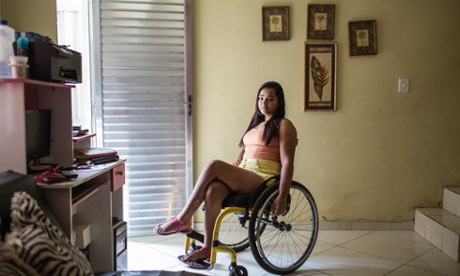
I was in hospital for three months, and the first year after the attack was very hard. I was depressed. The doctors thought I would be paralysed from the waist down, because one of the four bullets reached my spine and damaged my spinal cord. But I was determined not to listen to them. Four years on, I’m in a wheelchair, but I have got some feeling back in my legs. Doctors also said after two years my condition wouldn’t improve, but it has continued to get better. I have managed to stand using a brace, and my intention is to walk again. My wheelchair is worn out and I’m waiting for a new one, but we have to fight a lot to get the things I need, which is frustrating.
I always wanted to be an athlete, and now I’m back at school and have learned to paracanoe. I feel free out on the water, where everyone is the same. I’d like to be in the Paralympics, but they aren’t including my category of paracanoeing for Rio 2016. Who knows for 2020? There’s time to train. Next year, I want to learn to drive, and then I’d like to study law at university and eventually become a police chief.
I still have days when I don’t want to get out of bed, but I think that’s normal for a teenager. The bullet is still there in my arm – when the weather changes, I can feel it. It’s impossible to forget about what happened, but I know it could have been worse for me. I don’t like to go to the vigils they hold on the anniversary: I have enough pain of my own, I don’t want to see all those mothers suffering. I want to make the most of life. I survived, and I will continue to fight for my future.
• As told to Beth McLoughlin
Do you have an experience to share? Email experience@theguardian.com