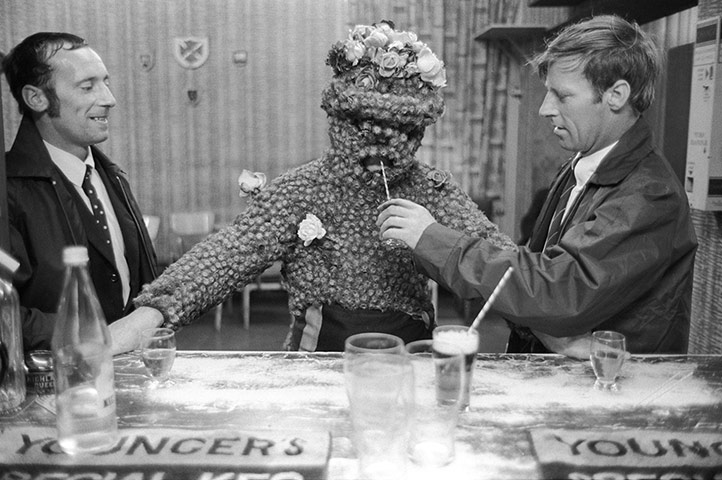
There’s more to British folk traditions than morris dancers and mummers, although this photography show has its share of both. It begins with the late Victorian founder of the National Photographic Record Association, Sir Benjamin Stone’s vintage, sepia-tinted archive of bygone pageants. There are local oddities in Homer Sykes’s images: cheese-rolling, meadow-mowing – the more eccentric, the better. Upping the bizarre factor as well as the past’s mystery and beauty, Matthew Cowan’s films capture a morris dancer leapfrogging solo on hilltops, while Tom Chick’s film The Fisherman’s Daughter is an eerie, atmospheric tale of a village girl’s secret life.
Towner, to 13 Jan
SS
The Burry Man, South Queensferry, Lothian, Scotland, August 1971 Photograph: Homer Sykes
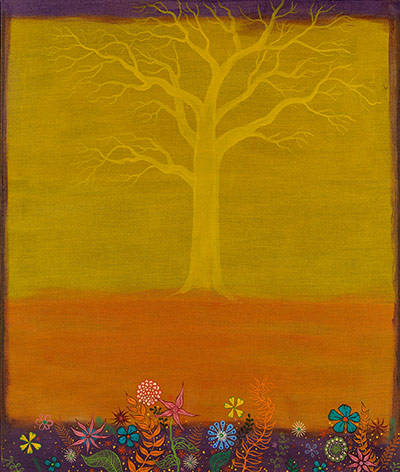
Abel Auer’s paintings are like a trippy Brothers Grimm. In hues so vivid they almost throb, he conjures cottages hunched under skies of tangerine, pink or purple; moonlit landscapes where trees dance, monsters pretend to be mountains, men have three eyes or pointed teeth, and kings wear coronets made from turrets. These creations take a playful, anything-goes approach to painting, with decorative curlicues and chequered patterns, more reminiscent of folk art and children’s-book illustration. Auer’s vision is a far cry from the macho, German art that preceded it. This exhibition charts his development as a painter from 2004 to now, from his densely detailed modern fairytales to recent works where colour dominates and figures and flora become lacier and free-floating.
Corvi-Mora, SE11, Fri 26 Oct to 21 Dec
SS
Untitled (2009), by Abel Auer Photograph: PR
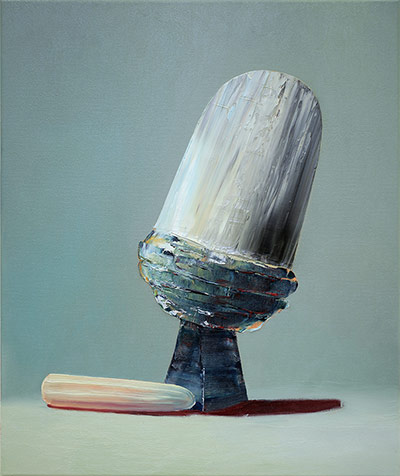
At first glance Ivan Seal’s paintings are unassuming: small canvasses in muted hues that depict a series of ordinary items. However, spend just a little while with them and things get strange. Perhaps the perspective doesn’t add up. Or those squat towers of lumpen objects turn out to be gravity-defying feats. Pencils stand up on their own and bow at daredevil angles. The rainbow layers of crystal rock appear to be both the face of something solid and paper-thin. Far from straightforward depictions, Seal’s creations are quietly self-contained fantastical painted worlds that the viewer enters into innocently, unprepared. Everything is typically set against an infinite blank of colour or pure black, a reference perhaps to the limitless expanse of our imagination.
Spike Island, from Sat 20 Oct to 9 Dec
SS
In Here Stands It, by Ivan Seal Photograph: PR
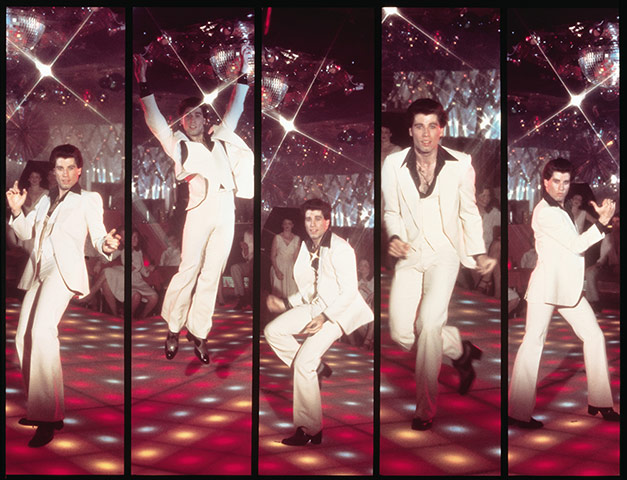
This show features one star turn after another: Dorothy’s gingham pinafore; Indiana Jones’s whip and hat; John Travolta’s suit. Its curators include Deborah Nadoolman Landis who created costumes for Raiders Of The Lost Ark, and it considers wardrobe’s role in cinema, as an actor’s tool for getting into character or filling in backstory. But costume’s impact reaches beyond the screen: Darth Vader’s helmet was supposedly an influence on headgear worn by Saddam’s private army. Hollywood Costume charts all this in a three-act structure, the grand finale of which is a nightclub filled with everyone from Spider-Man to Funny Girl.
Victoria & Albert Museum, SW7, from Sat 20 Oct to 27 Jan
SS
Saturday Night Fever (1977) Photograph: Paramount Pictures. All Rights Reserved
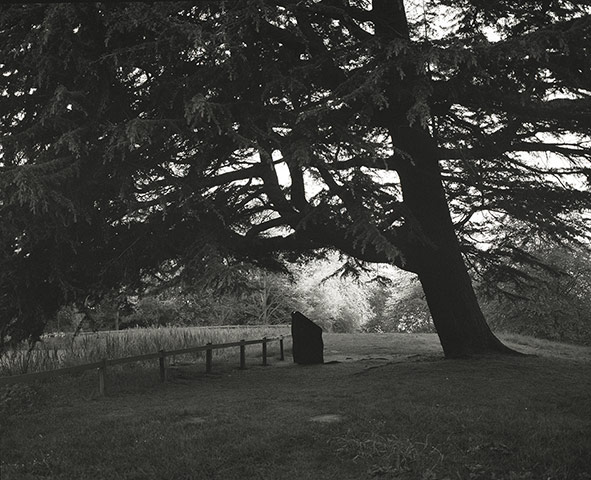
Tris Vonna-Michell’s past studies of the fragmentary vagaries of historical memory have haunted the back streets of Berlin and followed a trail to the temporary Essex residency of the French concrete poet Henri Chopin. Here he presents sound recordings and projected records of his time as artist-in-residence at the nearby National Trust property of Gibside, near Rowlands Gill. Today’s Gibside ruins were once grand 18th-century halls and landscaped gardens. Vonna-Michell’s story-telling collage of sound and image creates a resonant and evocative series of reflections on landscape garden design.
BALTIC, from Sat 20 Oct to 11 Nov
RC
Source material for Ulterior Vistas Photograph: PR
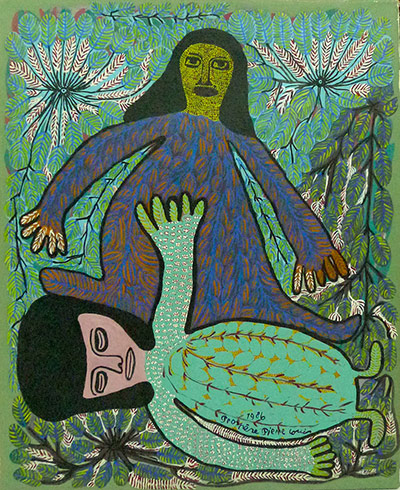
The Kafou of this exhibition’s title is the Haitian Vodou spirit of the ultimate crossroads, the intersection of the terrestrial and spiritual worlds. This extensive display reflects just such a crossroads: mixing memories of slavery, revolutionary pride, religion, magic, folktales and surrealist thought. A key figure here is the legendary Vodou priest (or hougan) Hector Hyppolite, represented in a large series of magical realist paintings from the 1940s that dominate quite an eye-opener of a show.
Nottingham Contemporary, from Sat 20 Oct to 6 Jan
RC
La Maternité (1986), by Prosper Pierre-Louis Photograph: PR
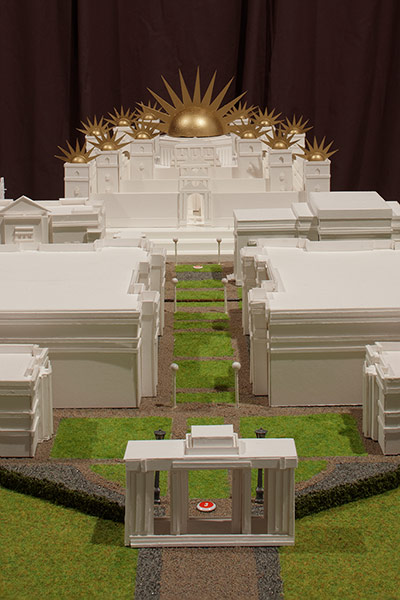
The third and final show of a series of exhibitions (the others were staged at Milton Keynes Gallery and Arnolfini, Bristol) by the Berlin-based Plender contains work as likely to be carried out as research in museum archives as it is in the studio. With a broad questioning of the hierarchies of education and the work ethic, Plender’s installations are a catalogue of allegorical architectural models, educational board games, embroidered banners, and videogames. The overall title Rise Early, Be Industrious is reflected in work including a banner called Britannia Receiving Her Newest Institution (Selfridges Department Store); a wicker beehive emblematic of a perfectly industrious society; and a replica Swedish Duck House (yes, recalling the 2009 MP expenses scandal).
CCA, to 15 Dec
RC
Aadieu Adieu Apa, by Olivia Plender Photograph: Matthew Booth
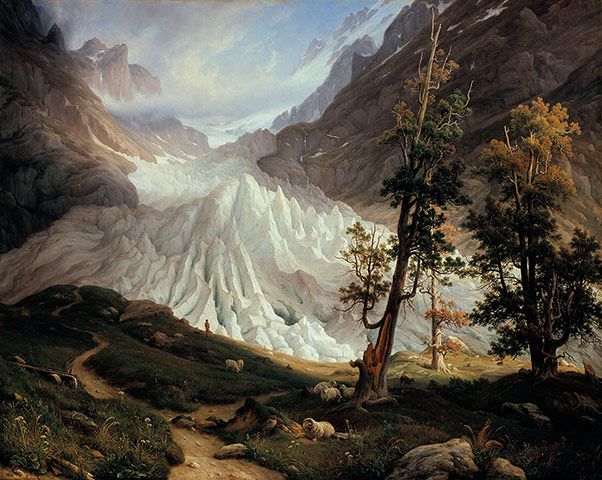
The early-19th century Norwegian landscape painter Thomas Fearnley is lauded in Scandinavia but almost forgotten in Britain, overshadowed by Turner. Yet, Fearnley’s is a chill intimation of the beyond. Witness his epic Grindelwald Glacier (work pictured). In the foreground there’s a cosy flock of sheep, yet the shepherd’s attention has been drawn towards the distant, massive, dramatic spikes of ice. The show also includes Fearnley’s parodic Turner On Varnishing Day, in which the great man is reduced to a diminutive dauber.
The Barber Institute Of Fine Arts, from Fri 19 Oct to 27 Jan
RC
The Grindelwald Glacier (1838), by Thomas Fearnley Photograph: Jacques Lathion