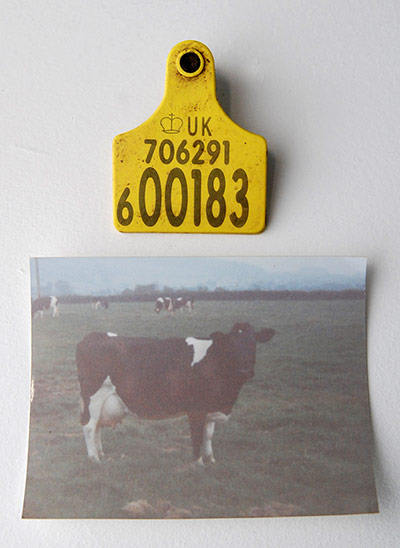
It’s about time the 76-year-old Yugoslavia-born Radovan Kraguly’s aesthetically subtle and thematically powerful art gained wider recognition, and these two shows might just do the job. Kraguly’s The Milky Way (starts 20 Oct) is an installation that tackles ecological concerns by focusing on dairy farming. Kraguly intensifies the focus to such an extent that the theme seems as vital and primal as humankind’s dysfunctional relationship with all of nature. In tribute, Fernando García-Dory, who is less than half Kraguly’s age, has built a dairy museum scaled-up from the master’s drawing and members of the local young farmers clubs have been invited to contribute their experiences.
Oriel Mostyn, to 6 Jan
RC
A Dairy Museum, by Fernando Garcia-Dory Photograph: Fernando Garcia-Dory
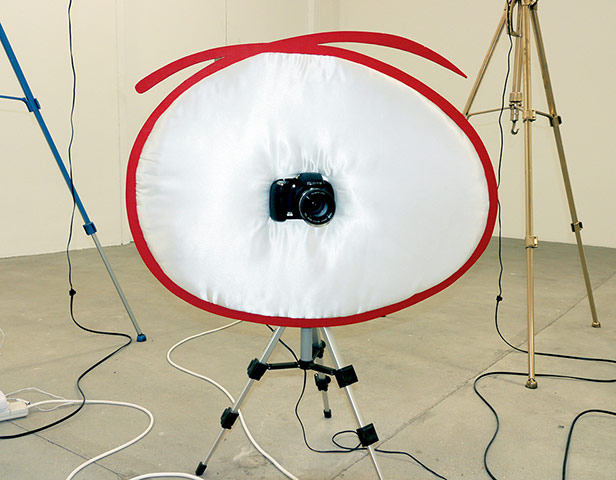
Emma Hart’s TO DO is a get-together of video cameras that appear to be conversing with each other in a cacophany of chattering. The cameras are mounted on tripods and decked out to look like long-legged cartoon birds in striped plastic and scrap polythene. Arrows point nowhere and signs increase the bewilderment by declaring Remember I Was Here First, This Is Really True I Promise and The Past Is Always In 2D. The menagerie of bird-headed cameras is set to record and playback in a continuous feedback of creation and documentation. It’s creepy stuff and reminds of William Burroughs’s call for artists to “Smash the control images. Smash the control machine.”
CIRCA Projects, to 1 Dec
RC
TO DO (2011-12) Photograph: Emma Hart
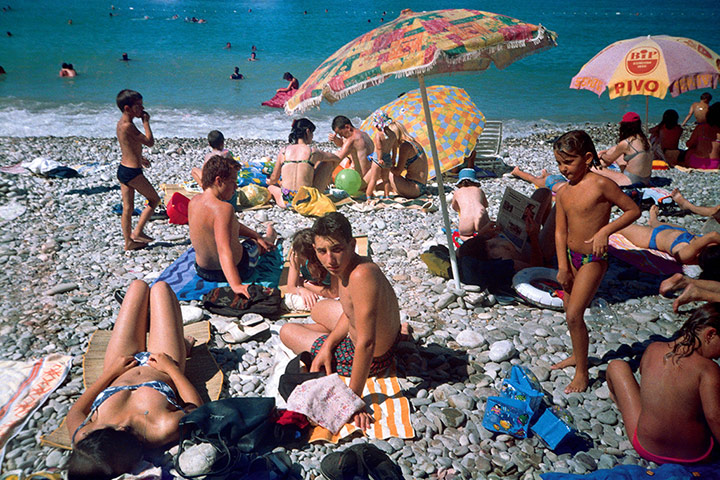
Though lesser known than the Turner Prize, with £40,000 at stake, the biannual Artes Mundi art prize is the biggest of its kind in the UK. Unlike the headline-grabbing Turner however, Artes Mundi singles out artists whose work has a strong political angle. This year’s six contenders include Phil Collins who tackles the dubious seductions of trash TV; Sheela Gowda looks at the impact of global trade and Theresa Margolles, who remembers the victims of the Mexican drug war.
National Museum Of Cardiff and Chapter, to 13 Jan
SS
Free Fotolab (2009), by Phil Collins Photograph: Phil Collins
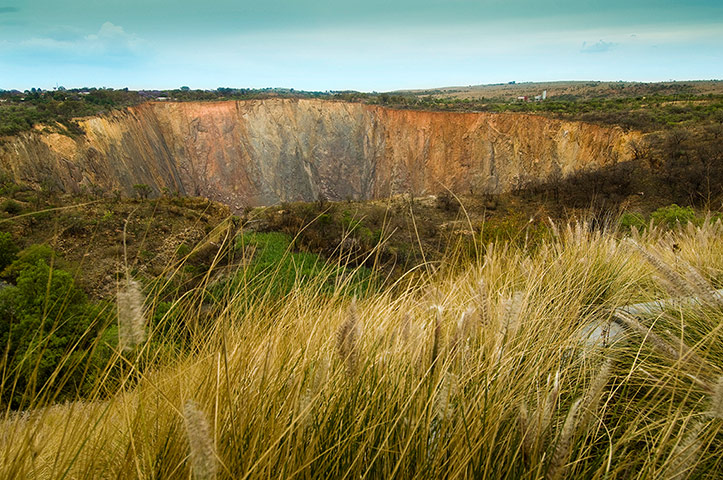
What’s the connection between Chislehurst Caves, the tunnels in south-east London that became an iconic gig venue, and South Africa’s Cullinan diamond mine, home of the largest diamond ever found? For Angela Ferreira, they’re both empty, inbetween spaces where western desires and post-colonial histories percolate – albeit in rather different ways. The secret histories wafting through these seemingly unrelated holes are the touch-point for Ferreira’s London debut. Her sculptures explore negative space as a way to monumentalise these invisible, subterranean inverted-landmarks.
Marlborough Contemporary, W1, Fri 12 Oct to 17 Nov
SS
Cullinan mine (2012) Photograph: Petra Diamonds Ltd
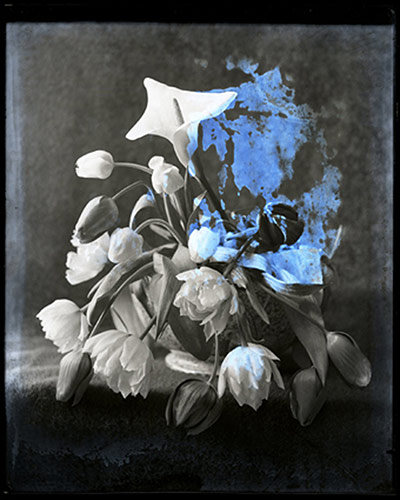
Jodie Carey creates sculptural installations that are as monumental in size and import as they are fragile in form. The central piece here – suspended from the gallery ceiling – is suggestive of a giant filigree bouquet. The towering form has been elaborately created by hand using a crochet technique known as Solomon’s Knot, also apparently referred to as The Lover’s Knot as it integrates two entwined forms. Carey’s deceptively simple and craft-like images create a hushed, melancholic and dreadfully vulnerable atmosphere.
New Art Gallery, to 30 Dec
RC
Elegy (2012) Photograph: Jodie Carey
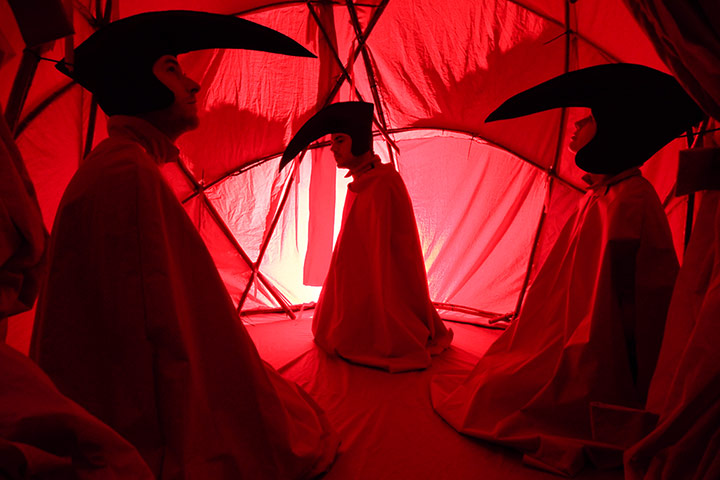
The collaborative duo Zoë Walker and Neil Bromwich’s new work gently and cheekily entices visitors into imagining living in a better world of ecological harmony and spirited, if not spiritual, contentment. Their post-apocalyptic synthetic Garden of Eden of sculptural inflatables would come on hopelessly simplistic and idealistic if it weren’t for Walker and Bromwich’s disarming sense of irreverent fun and their extensive programme of accompanying goings-on, which include a lecture and performance by a bona fide Mayan priestess. The fairytale naivety barely disguises a somehow very serious if somewhat absurdist and self-mocking attempt to face up to the terrible dilemmas of our time.
BALTIC, to 13 Jan
RC
The Encampment of Eternal Hope (2012) Photograph: Mark Pinder
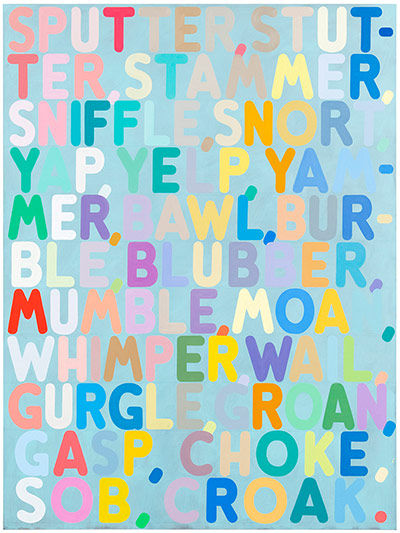
Mel Bochner started out making “portraits" of his friends, fellow 1960s-era innovators like Eva Hesse, Sol LeWitt and Robert Smithson, with words cribbed from the thesaurus. The last 45 years have seen him expand his repertoire of text-based works to include newspapers collaged like crazy-paving on gallery floors, their stories blocked out with blue paint, and huge paintings of brightly coloured rectangles. Yet literal language is in Bochner’s work and always seems to dodge or obscure the thing it describes. His most recent thesaurus paintings play games of word association with loaded figures of speech: like “Gotcha by the balls"; another one enthuses in textspeak: “Shut up! OMG! Yesss!”
Whitechapel Gallery, E1, Fri 12 Oct to 30 Dec
SS
Sputter (2010) Photograph: Mel Bochner
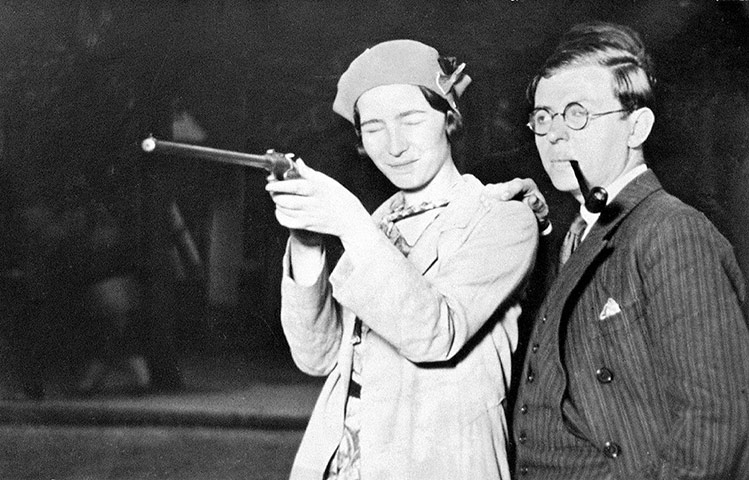
Cameras and guns go way back it seems. Punters for the fairground photo shooting galleries that emerged after world war one took aim at targets that triggered a camera and created a portrait. Artists and thinkers from Man Ray to Simone De Beauvoir and Jean-Paul Sartre, were apparently hooked on the phenomenon. Here, a collection of these vintage sideshow snaps provides the lift-off point for artists riffing on the theme. Plenty of these hinge on sexy climaxes where phallic guns and cameras conflate voyeurism, sexual aggression and death, like Christian Marclay’s riveting mash-ups of Hollywood movie clips. His film projections surround the audience with erotically-charged shots of guns firing straight at us.
The Photographer’s Gallery, W1, Fri 12 Oct to 6 Jan
SS
Simone de Beauvoir & Jean-Paul Sartre (1929) Photograph: Jazz Editions