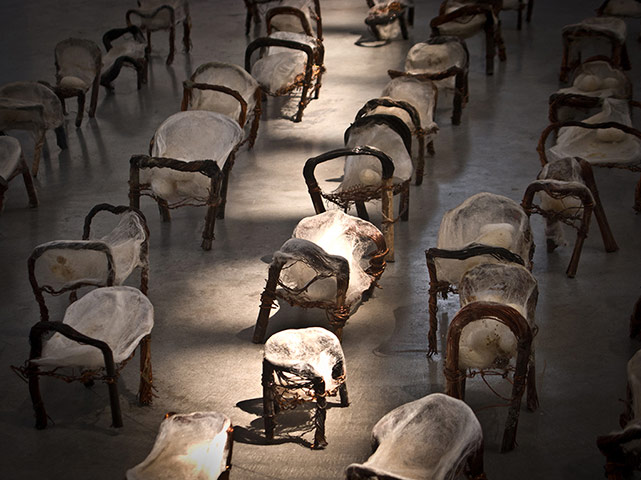
It’s perhaps no surprise that artists restrained by an oppressive regime would turn to performance and installation art, making the most of whatever they had to hand. The everyday materials Chinese artists have used include their own bodies, food and dirt, rarely to less than sensational effect. This survey eschews the shock-factor output of the 1990s for more meditative fare. There’s an emphasis on cycles of change and decay in work by older artists like Chen Zhen’s mud-caked furniture. The past decade’s young stars offer more high-tech magic, like Xu Zhen’s levitating human now-you-see-them-now-you-don’t sculptures that fly out of a big white box.
Hayward Gallery, SE1, Fri to 9 Dec
SS
Nature Series No.10/Bed (1993), Liang Shaoji Photograph: PR
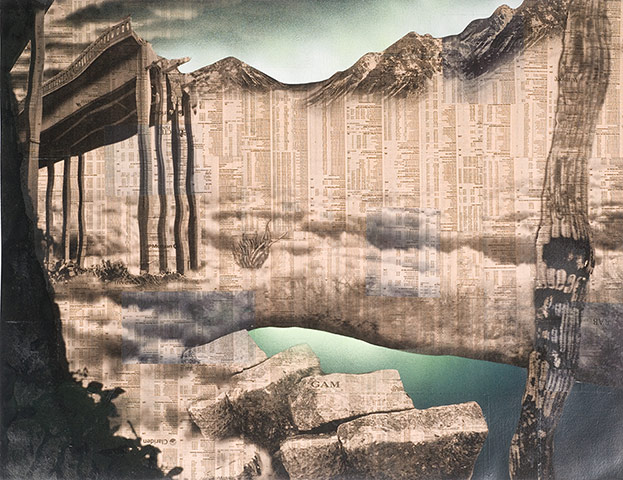
Subtitled Images Of Ruin And Renewal, this show looks back through history at artists’ perennial fascination with rot and wrecks. The show historically kicks off with the most haunting images of ruins ever created: Giovanni Battista Piranesi’s 18th-century Imaginary Prisons. Ostensibly visionary prints of dilapidated ancient Roman edifices, the Imaginary Prisons visually foresee Franz Kafka’s literary post-industrial alienation and paranoia, set out in novels like The Trial, by some 300 years. The show also takes in recent works such as Tacita Dean’s chilling photogravure prints of Berlin’s Alexanderplatz Fernsehturm tower and multimedia artist Cyprien Gaillard’s rethinkings of the tradition of the picturesque ruin.
Whitworth Art Gallery, to 6 Jan
RC
Brueghel's Highway (2004), by Gordon Cheung Photograph: PR
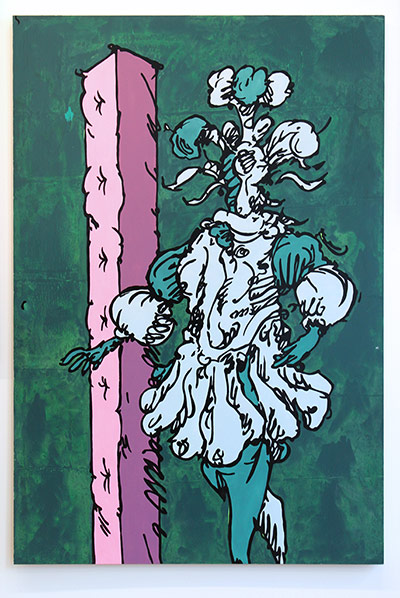
There’s what you might call a very fluid quality to Edwin Burdis’s work. In his paintings and drawings he conjures bodily bits that melt and merge on the page. His latest include mint green arms clutching a tangerine-hued bulge that might be a torso, cock or a lung and a pneumatic turquoise babe with a cloud for a head bending over a brown car that drips like chocolate or poo. The drawings are just the beginning. Here they’ve set in motion a creative chain reaction, inspiring poetry by another artist and poet Heather Phillipson which is accessible as a recording on smartphones or as a vinyl record. Burdis is giving an opening night performance with the drawings, conceived as characters in an opera, generating song and noise-making.
Max Wigram Gallery, W1, Thu to 29 Sep
SS
Toothpaste Wuss (2012), by Edwin Burdis Photograph: PR
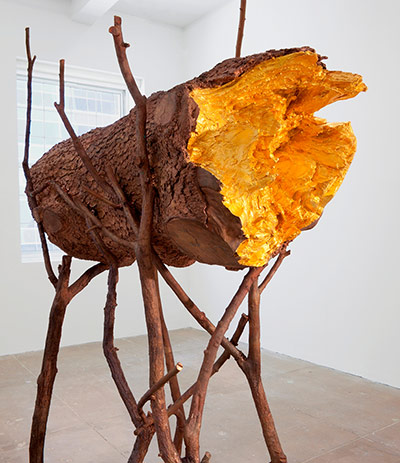
A tree’s life is written in its skin and flesh. Hack through its bark and you’ll find a calendar of the years, accumulated, ring upon ring. The Italian artist Giuseppe Penone has long explored how trees make the passage of life, its knocks and shocks, visible and touchable, in a way it rarely is with people. His contribution to the Bloomberg Commission is truly dazzling: a bronze tree made with the age-old technique of lost wax casting, laid in sections on its side and suspended on skeletal branches, with its innards covered in glittering gold leaf. It’s a spectacular testament to the change and encounters defining art-making and life.
Whitechapel Gallery, E1, Wed to 1 Sep 2013
SS Photograph: PR

Leeds plays host to a small but enchanting exhibition charting the creative trajectory of Helen Chadwick’s early-90s Wreaths To Pleasure series. Chadwick, throughout her career, balanced disparate and often contrasting elements to highly sensuous and seductive effect. She reinvented romanticism for an age that was highly suspicious of its more cliched indulgences. The Wreaths are iconic arrangements of delicate flowers suspended in toxic chemicals. Chadwick’s creations are arranged in patterns of almost hypnotic charm, like Christian icons or Buddhist mandalas given a distinctly obscene aura. Chadwick sadly died at the age of 43 soon after this series was made, but her spirit resonates in the artworld to this day.
Henry Moore Institute, Sat to 21 Oct
RC Photograph: www.bridgemanart.com
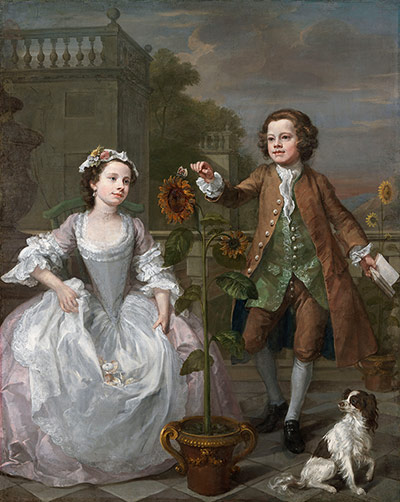
While being one of the greatest satirical artists of all history, the 18th-century English painter and printmaker William Hogarth’s range wasn’t all ragingly sarcastic. Indeed, he can be seen here as a surprising celebrant of familial harmony in paintings such as The Western Family and The Mackinen Children with their muted tones and silken surfaces. Neither are as convincing though, as the acidic disgust of the print series The Four Stages Of Cruelty. Hogarth illustrates how cruelty to little animals can lead inexorably to extremes of moral degeneration.
National Gallery Of Ireland, to 18 Nov
RC
The Mackinen Children (1747), by William Hogarth Photograph: National Gallery of Ireland
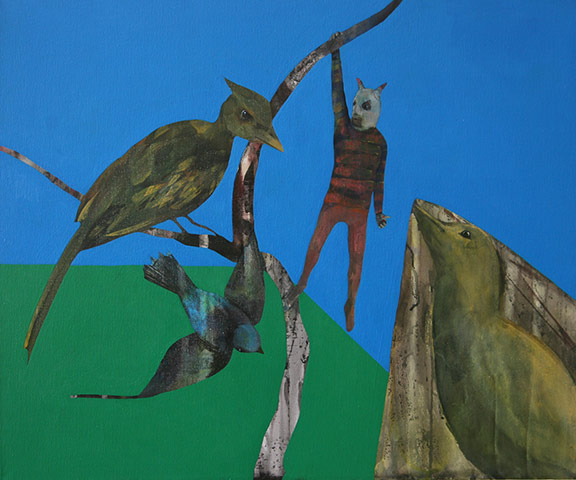
Key’s pictures are somnambulistic; dreamily wandering through inter-zones populated by a cast of metamorphic animal/human hybrids. Against theatrical backdrops of primary-coloured screens, people sprout antlers and mount giant birds. It’s fairy stories for adults stuff, of course, or maybe rather for fantasy-fixated adolescents going through a bit of a difficult stage. This is territory well established with more emotionally ambivalent frisson by artist Paula Rego and novelist Angela Carter. Key’s imaginative tone is admittedly less extensive yet, at her best, it does conjure reveric scenarios that have the atmospheric conviction of private worlds made touchingly public.
Derby Museum And Art Gallery, to 28 Oct
RC
On The Last Sunday, by Sarah R Key Photograph: PR
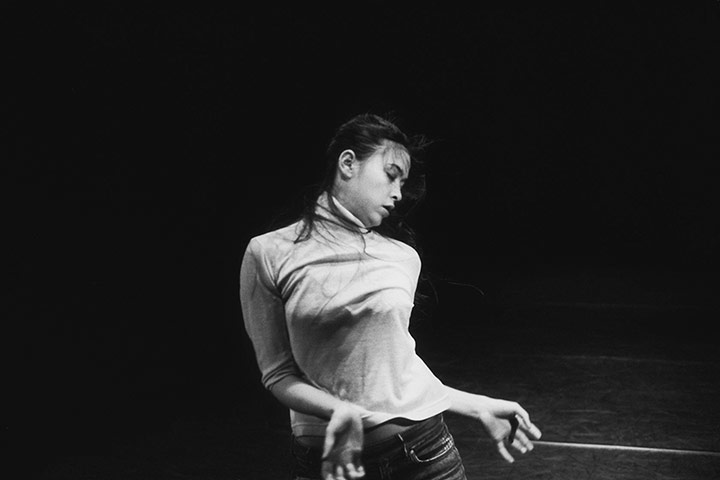
These days it seems no seaside town on the south-east coast is without a gallery or art festival. Whitstable got in early and its biennale has been going strong since 2000. Alternative community get-togethers are the theme of this instalment, which sees performances in diverse locations as boats at sea and the town’s bowling alley. Highlights include Jesse Jones exploring radical group therapy of the 60s and Emma Hart’s spin on role-playing games, with an installation featuring puppets. An artist’s film programme exploring dance and possession includes Maya Deren’s voodoo-infused work and Joachim Koester’s terrific Tarantism. If you fancy jumping around, Jeremy Deller’s Stonehenge bouncy castle is making an appearance.
Various venues, to 16 Sep
SS
Tarantism, by Joachim Koester Photograph: PR