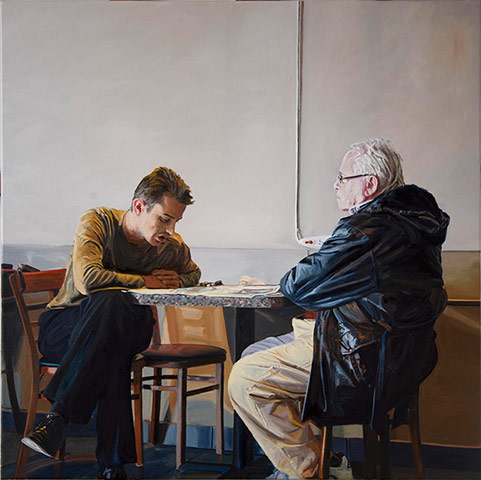
There are distinct shades of Paris, Texas and the urban alienation of Edward Hopper about the collaborative couple Boyd & Evans’s photo-works and photo-based paintings. This first major survey of their work from the last 40 or so years cements their reputation as masters of the lone road. Shifting from spraypainted super-smooth gradations through to super-realist brushwork, they freeze their isolated somnambulists and deserted landscapes within a frame of seeming petrifaction. A girl turns her back to us and gazes off into the distance; train tracks and steaming asphalt roads run off over the horizon of the movie-mythologised American south-west. What awaits them and us there is, of course, a mystery.
Ikon, Wed to 2 Sep
RC
Pale Cafe (2008), by Boyd & Evans Photograph: PR
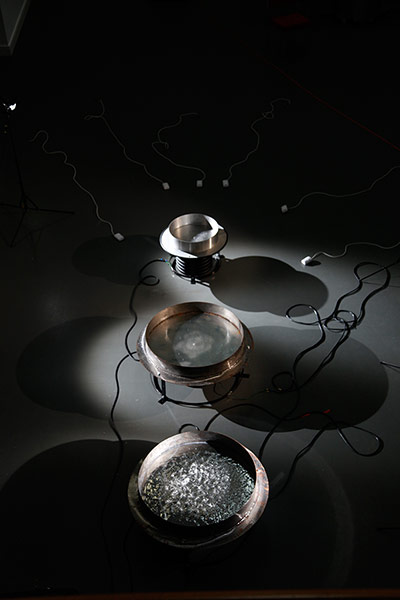
Locke appears to have been transfixed with the movement of water for a couple of decades now. Her Sound Fountains (which close on Sunday) produce intricate and elaborate patterns as visitors trigger sensors that send sound waves through tanks. Sound Inventory meanwhile, continuing until the end of September, is a series of stereo-microscopic photographic images of the patterned effect on water caused by various sounds collected by the artist from around the world, including the heartbeat of her unborn child. It’s work that can make you stop and drop everything for some precious moments of simply listening and gazing.
Yorkshire Sculpture Park, to 30 Sep
RC
Sound Fountains, by Caroline Locke Photograph: PR
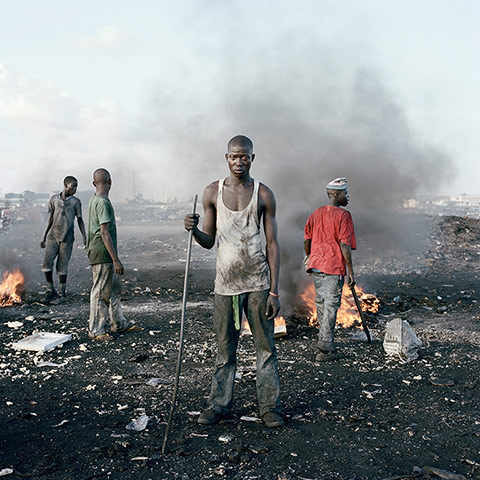
The lineup for this year’s Deutsche Börse prize should please those who’ve criticised its recent conceptual bent. Pieter Hugo’s dramatic images record a dumping ground on the outskirts of Ghana as a hellish, coal-black wasteland. Rinko Kawauchi’s work is a beguiling play on “illumination”. Her camera freezes and transforms fleeting moments into something transcendental: a bead of water on a leaf becomes a precious gem; a school stairwell flooded with light, a heavenly ladder. Christopher Williams’s brightly coloured still lifes probe the depthless illusory pleasures of advertising images, while John Stezaker pierces photography’s smooth surface, collaging old postcards and forgotten movie actor portraits.
The Photographers’ Gallery, W1, to 9 Sep
SS
Image by Pieter Hugo Photograph: Pieter Hugo
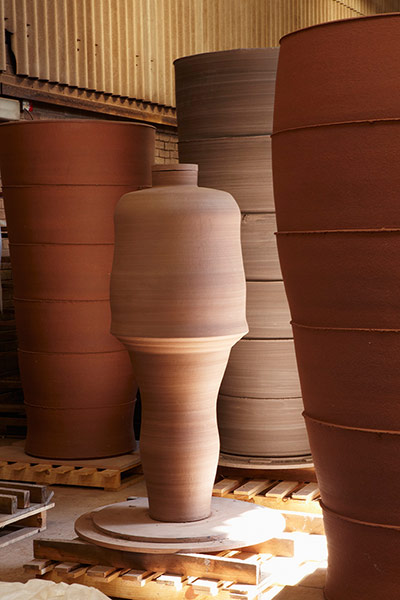
Where and when does pottery become sculpture? Perhaps when it’s exhibited in a prestigious gallery? Perhaps when its presumed practical purpose is effectively annulled by its size, fragility or downright uselessness? Some of self-defined potter Julian Stair’s ceramic creations here are on a monumental sculptural scale, but their utilitarian function is intriguingly left open to question. This exhibition, Quietus, consists of variations on a funerary theme. There are ostensibly cinerary jars to store the deceased’s ashes after cremation, plus sarcophagi for the full-scale corpse, all constructed from muted clay. Yet the viewer must take it for granted that Stair isn’t displaying these things for potential use; perhaps they’re best viewed as sculptural set-ups for a rite of passage.
MIMA, to 11 Nov
RC
Photograph: Jan Baldwin
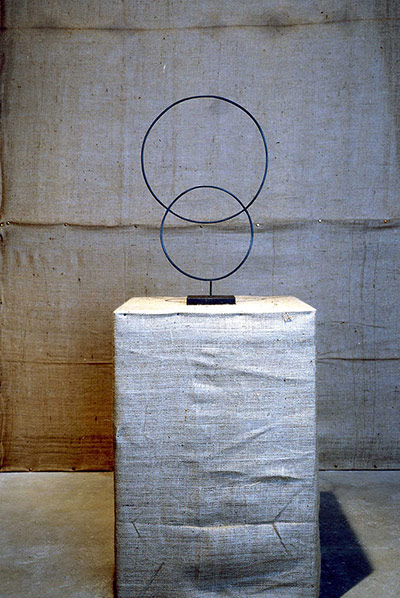
Black Bronze: White Slaves is Keith Coventry’s first solo exhibition of the bronze sculptures he’s continued to work on since he achieved some degree of renown as a painter through Charles Saatchi’s blockbuster show Sensation in 1997. The creative formula for the sculptures is very much the one we have become familiar with from Coventry’s paintings: art historical scenarios brought up to date through a restaging, in accord with such present-day themes as post-pub crawl takeaways and backstreet dope smoking. There’s a looted shop front, a (kind of) Kate Moss statue, and a series of truly pathetic stunted trees lashed to equally pathetic supports.
The Bowes Museum, Sat to 16 Sep
RC
Supermodel (Kate Moss), by Keith Coventry Photograph: Hugo Gleninning
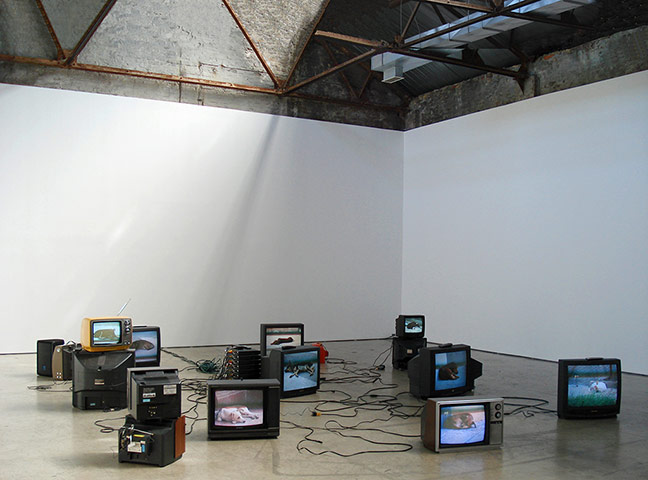
The seven artists in this group show find rich pickings in places that are all too easily overlooked. George Shaw’s enigmatic paintings of forsaken suburbia have made him a British art star in recent years. Sam Denniston offers a nine-channel video installation, and Ugo Rondinone casts cardboard in bronze. Francis Alÿs, meanwhile, tackles the workaday world with absurd acts such as pushing a giant melting ice cube through Mexico’s streets. There’s a similarly cryptic sense of futility to Ben Rivers’s haunting film The Coming Race, where hordes of people clamber mountainous terrain on a mysterious pilgrimage.
Chapter Gallery, to 2 Sep
SS
Los Sonadores (detail), by Stan Denniston Photograph: PR
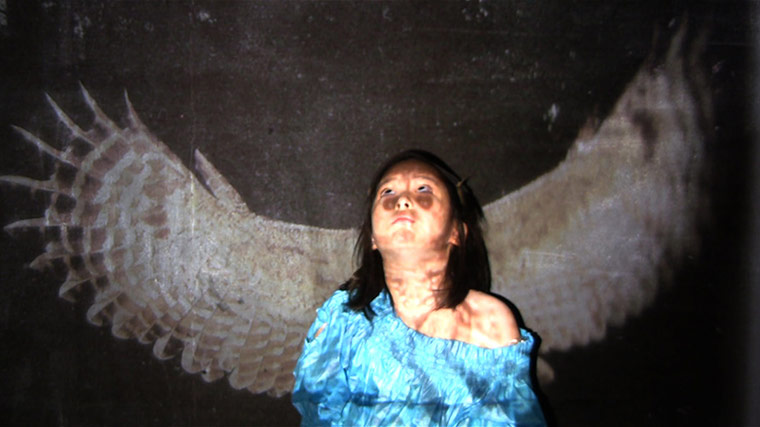
Tate Modern has opted for something magical to inaugurate the Tanks, its rather ominously named new subterranean galleries uniquely dedicated to live art, film and installation. The young Korean artist Sung Hwan Kim is transforming one of these 30m-wide concrete oil storage spaces with videos, music, sculptures and drawings, which offset whimsy with political insight (Wed to 28 Oct). Kim’s work lightly marries childhood memories with tales of secret agents or people with headless snakes stuffed down their throats. From next week (24-29 Jul), the south tank’s evolving programme will kick off with a ballet and painting conflation from Japanese artist Ei Arakawa and German artist-musician Jutta Koether.
The Tanks, Tate Modern, SE1
SS
Washing Brain and Corn (2012), by Sung Hwan Kim Photograph: PR
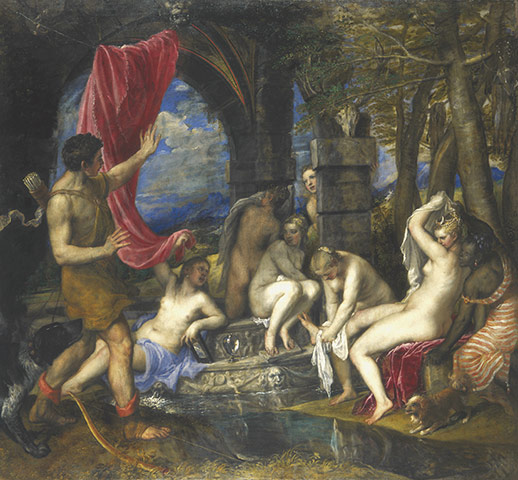
Titian’s Diana And Actaeon painting cycle is his masterpiece, a blackly comic tragedy inspired by Ovid’s cautionary tale of Peeping Tom coming a cropper. Diana is the virgin goddess of the hunt, and Actaeon the man who stumbles on her bathing (she turns him into a stag so that he’s torn to bits by his dogs). With its gorgeous nymphs, ill-fated hero and layered allegory, the series seems perfect material for art and ballet, and both complement this presentation of all three paintings. Responding to Titian, Chris Ofili, Conrad Shawcross and Mark Wallinger have created sets for new ballets at the Royal Opera House (to 20 Jul). This exhibition includes their studies and new works for the project.
National Gallery, WC2, to 23 Sep
SS
Diana and Actaeon (1556-59), by Titian Photograph: PR