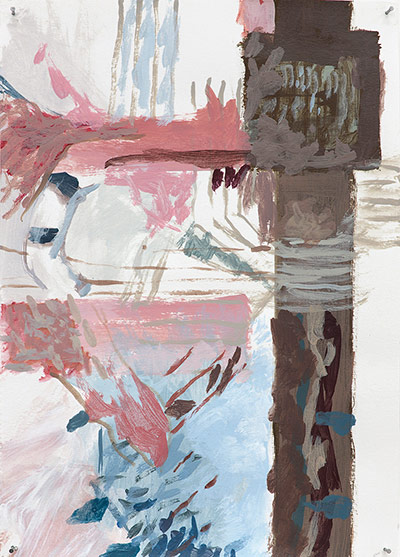
Andrew Kerr’s modestly sized paintings take you in and lead you on. They’re full of enticing evocations and come to Glasgow after a solo show in Berlin. The gestural route of one tentative brushstroke sets the scene for the next. There are hints of the light of dawn or dusk. One image could well be a close-up hillside, another an untidy interior, another a garden seen through an iridescent mist. It seems Kerr stops painting just at the exact moment that a recognisable image begins to emerge, avoiding at all costs finishing the picture off. His small scraps of acrylic smeared paper come across as embodiments of becoming, dreams half-realised or memories half-recovered. They look improvised and spontaneous yet sensitively conjure a compositional suspense and atmospheric grace.
The Modern Institute, Sat to 20 Oct
RC Photograph: Ruth Clark
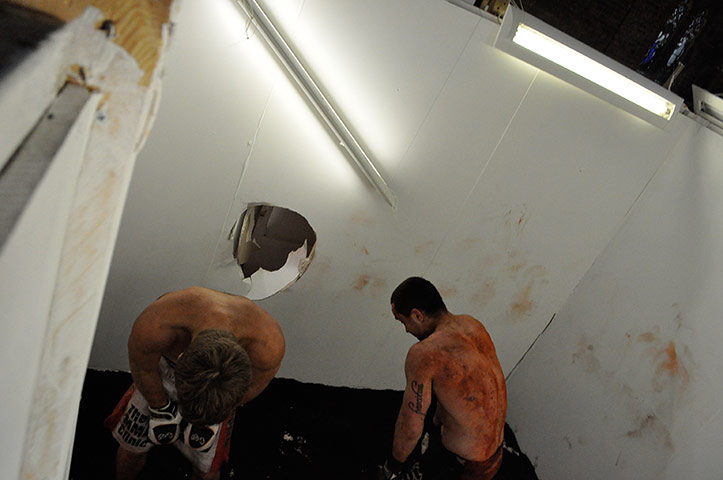
Jem Finer, the former Pogues member-turned-sound artist, has transformed water dripping in a hole in the ground into a potentially infinite score and, famously, created a millennia long, computer-generated composition. He’s currently fashioning Supercomputer, a musical sculpture that looks back to the big mainframe computers of the 1970s. Alongside Finer, young artist-duo ATOI are building a huge installation of wooden chambers with films and photography for a potentially raucous series of “destructive performances”. In the past they’ve staged boxing and wrestling matches, with both their structures and performers taking a pummelling.
Aid & Abet, to 6 Oct
SS
Foist by ATOI Photograph: PR
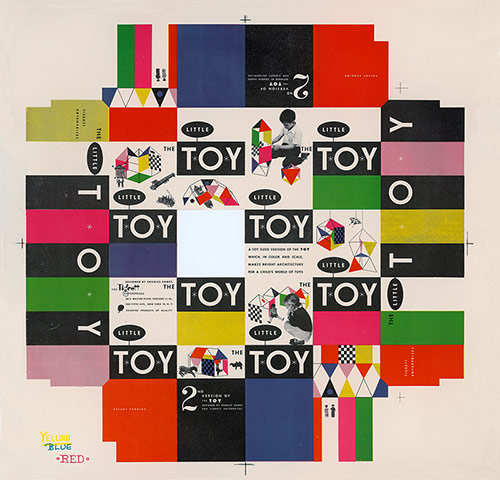
The husband and wife team of Charles and Ray Eames were arguably the most significant American designers of the 20th century. They opened their studio in Venice, California in 1943 and over four decades led the way in creating homes and furniture that made modernism liveable and likable. The Eames lounge chair and footstool is one of their many classics, but there’s more to their studio’s output than the iconic furniture. This show gives us the halo of ad campaigns and posters, as well as photography, film and exhibition design.
PM Gallery And House, W5, Fri to 3 Nov
SS
Little Toy Box Cover (1952), by Charles and Ray Eames Photograph: PR
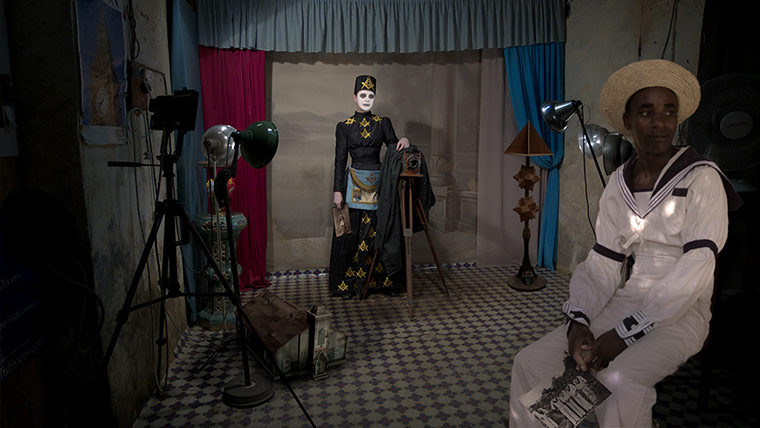
You have to tread carefully with Lindsay Seers. Her video installations can feel like a hall of mirrors at midnight, reflecting and refracting memories, eccentric family history, famous figures and occult lore, into shadowy, darkly glinting tales. Set within Kilburn’s Tin Tabernacle, a 19th-century corrugated iron chapel, her Artangel commission – Nowhere Less Now – promises to be her most ambitious project yet. It’s seen her follow in the footsteps of her seafaring great-great-uncle George, to an East African archipelago notorious in the region as the seat of witchcraft, where she discovered his name carved into an ancient tree.
The Tin Tabernacle, NW6, Sat to 21 Oct
SS
Nowhere Less Now (2012) by Lindsay Seers Photograph: PR
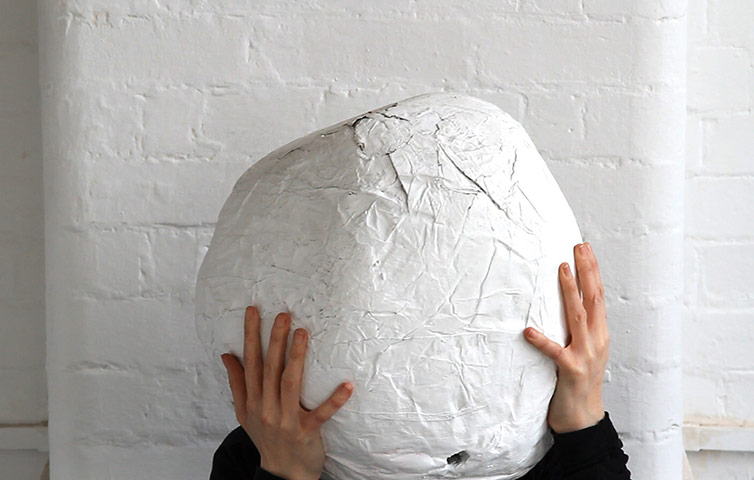
Rebecca Lennon’s video, collage and performance installation is titled after the reported last words of the assassinated Mexican revolutionary general Pancho Villa: Don’t Let It End This Way Tell Them I Said Something. The title gives some idea of the deliberately absurdist and heavily ironic nature of Lennon’s mixed-media scenarios. Materials tend to be scrappy and techniques botched. Her silhouetted protagonists are blocked out in white paint. Hysterical texts confuse any tendency towards coherent sense. A smoke machine puffs out a mushroom cloud. In something like a joke-shop version of TS Eliot’s “not with a bang but a whimper”, it’s dada’s anarchist nihilism brought up-to-date in an age of eBay shopping and internet sampling.
Bloc Projects, to 22 Sep
RC
Uncomfortable Silence iiii, by Rebecca Lennon Photograph: PR
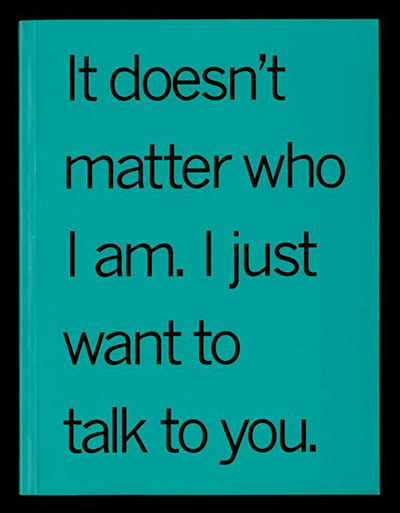
It’s a rare thing for a graphic designer to be honoured with a solo exhibition in a renowned gallery but Tony Arefin’s work has been involved with the artworld from the outset. Arefin designed catalogues for a host of the Young British Artists including Damien Hirst. Compositionally bold and inventive, he was one of the first graphic designers to recognise the full potential of computer desktop publishing. In a contrasting show, the Israeli artist Yael Bartana stages her video triptych And Europe Will Be Stunned. Following the campaigns of a utopian Jewish Renaissance Movement in Poland, the videos question such nationalist concepts as “homeland”, “return” and “belonging”.
Ikon, Wed to 4 Nov
RC
The Sociable Art of Douglas Gordon catelogue, Glasgow Tramway (1993), by Tony Arefin Photograph: PR
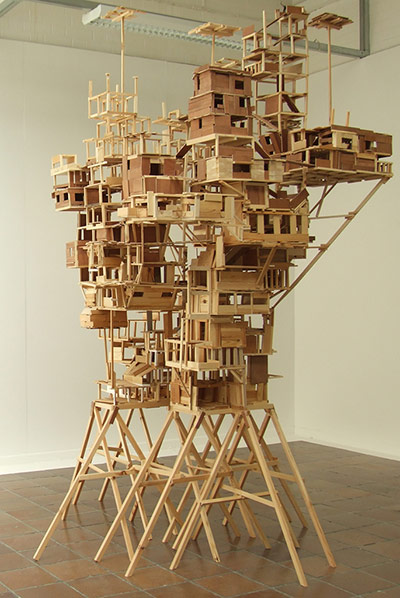
While the annual Wirksworth Festival admittedly suffers artistically from its locally focused something-for-every-appetite remit, there are always a few more wide-ranging surprises. This year, St Mary’s Church, the Town Hall, Memorial Hall, Vicarage Gardens, various folks’ living rooms and a string of shop windows including the bakers and vets, are infiltrated. A highlight, sited within the council chamber, will be Neil Dixon’s precariously constructed sculptural reflection on the town’s architectural charms. But the festival star is bound to be the young artist Alasdair Evans who will be staging his wonderfully unnerving sculptural installation.
Various venues, to 23 Sep
RC
Sculpture by Neil Dixon Photograph: PR
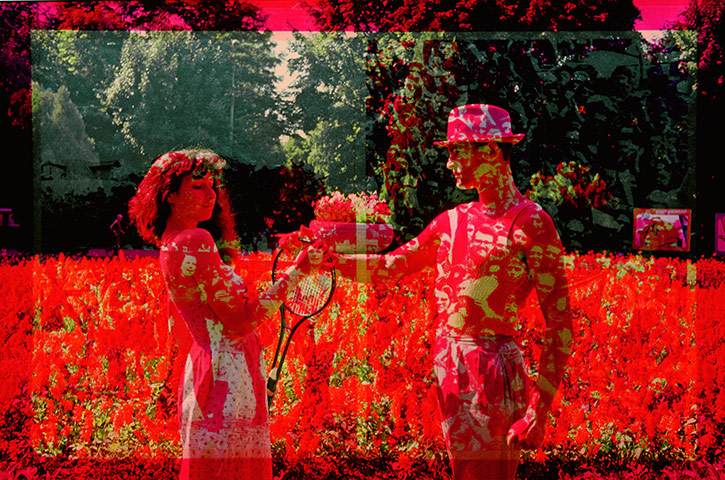
This show’s scope is dizzying. The change it attempts to chart isn’t limited to photography’s transition as an art form in the 1960s and 1970s, though William Eggleston’s shots of everyday American life, or Boris Mikhailov’s superimpositions transforming USSR drabness into something surreal are testament to that evolution. The exhibition offers nothing less than a history of the world through two decades of concentrated upheaval, as explored through over 400 works by international photographers, including Raghubir Singh and David Goldblatt. Most astonishing are the images of the Chinese Cultural Revolution, captured secretly by photojournalist Li Zhensheng.
Barbican Art Gallery, EC2, Thu to 13 Jan
SS
Yesterday's Sandwich/Superimpositions, by Boris Mikhailov Photograph: PR