We often experience the natural landscape with the most powerful intimacy when when it moves all around us and seems to seep into the naturalness of our own senses. This is the stuff of what is known as the romantic sublime and is often associated with weather that engulfs us and obscures topographical objectivity. Photo artist Mary McIntyre tends to take her landscapes in somewhat inclement or quite often downright drenched conditions. As a result, the dividing lines between earth, sky, water and woodland dissolve and the picture becomes one of mood and atmosphere. Such misty-eyed sublimities verge dangerously close to romantic cliche, a risk one might think no artist can take at a time when our relationship to the natural environment is such a serious cause for widespread concern. McIntyre intrepidly takes the risk nevertheless.
The MAC, to 20 Jan
RC Photograph: PR
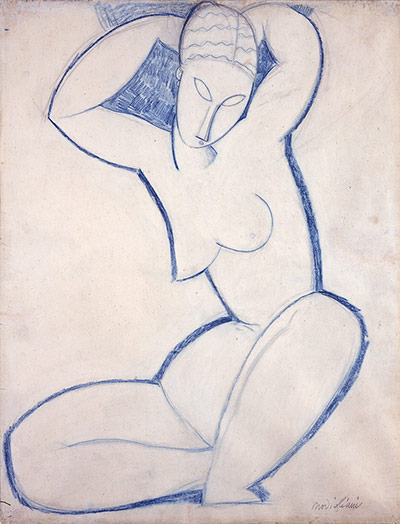
This show is as much a theoretical proposition as a display of creative work. Yet the thesis – that the year 1913 marked a time of immense change – is far from groundbreaking. In 1913, Diaghilev staged The Rite Of Spring and Marcel Proust started to publish Remembrance Of Times Past. The dynamism of cubism shattered our perception of space for all time; while time itself was accelerating, driven by communication technologies and weapons of warfare. Taking all this for granted, many of the works here – which include Modigliani – can seem surprisingly staid. Yet Picasso still charms with a glass of wine and Duchamp astounds by being a century ahead of his time.
Henry Moore Institute, to 17 Feb
RC
Caryatid (1913), by Amedeo Modigliani Photograph: The Garman Ryan Collection, The New Art Gallery, Walsall
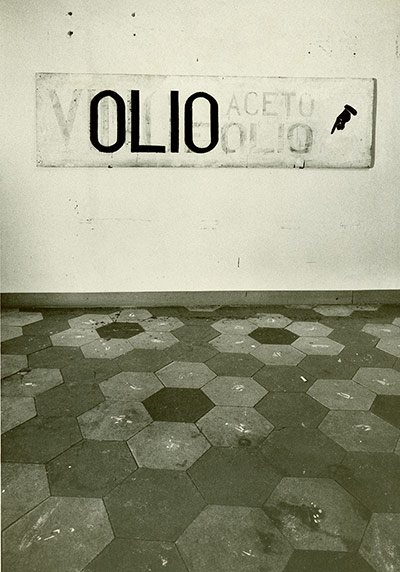
The sculptural world that Jannis Kounellis has built since the 1960s is earthy and brutal. Its collision of ancient and modern has included the dry stone walls and grain sacks of agriculture, as well as propane torches and shrines of machine fuel. Where people fit in between dying ways of life and a 20th-century world devoted to industry is the pricking question in this survey, giving a taste of the octogenarian Greek artist’s 50-year career to date. In her sculpture from the 1970s there’s a sense of foreboding that feels majestically mournful and creepily Kafka-esque.
Parasol Unit, N1, Wed 28 Nov to 17 Feb
SS Photograph: Claudio Abate
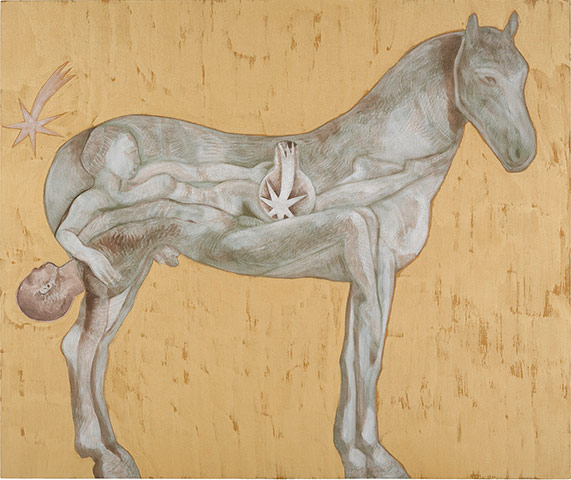
Like his sometime collaborator Jean-Michel Basquiat, Francesco Clemente was one of the young star turns who put painting centre stage again in 1980s New York. Long based between the Big Apple and India, his work is peripatetic, moving from references to ancient cultures to the fleeting peccadillos of the modern world. Taking symbolism from Buddhist and Hindu mandalas, classical and renaissance art, his first London show since 2006 has plenty of sex and spirituality: in one work a Holy Ghost seen as a dove spreads wings full of clouds, in another a red curtain parts to reveal a demon mid-orgy, while in another it-girl Chloë Sevigny and Warhol starlet Candy Darling feature, as a golden curtain frames a pink and aqua sky.
Blain Southern, W1, Fri 30 Nov to 26 Jan
SS Photograph: Eric Vigil
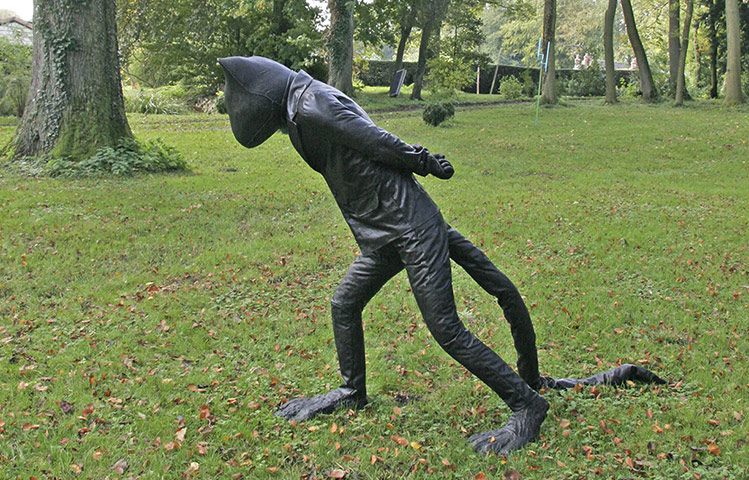
Fans of early Renaissance art will find Laura Ford’s latest series of animal sculptures unnervingly familiar. These giant faceless and suited black cats pace around the gallery with stooped backs, hands clutching heads that are bent with remorse and long tails trailing. This is the artist’s take on Masaccio’s famed fresco of an agonised Adam and Eve expelled from Eden, with more than a hint of the darkness of Bulgakov’s devilish talking cat from his seminal Stalinist-era novel The Master And Margarita. An accompanying troupe of rumpled, child-sized penguins, or rather contemporary sculpture dressed up as people dressed up in penguin costumes – as she has it – appear to provide some light relief from all the existential angst on display.
New Art Centre, Roche Court, Sat 24 Nov to 3 Feb
SS Photograph: PR
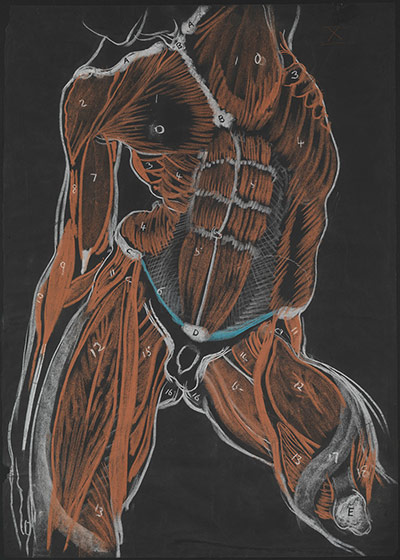
Neither this exhibition’s title nor its subtitle – Drawing As A Catalyst For Change – give a fair indication of the fascinating focus of the abstract 20th-century and contemporary works here. While there is a focus on the human figure, there are more pictures of how it feels to inhabit or be a body. Julie Mehretu’s fine traceries evoke dynamic scenarios that could be psychic maps or futuristic landscapes. The human form might be more recognisable with Matthew Monahan, yet even he tends to chart its topographies with contours of quite hypnotic grace.
Tate Liverpool, to 20 Jan
RC
Anatomical Study, Male Torso (1906), by William Orpen Photograph: PR
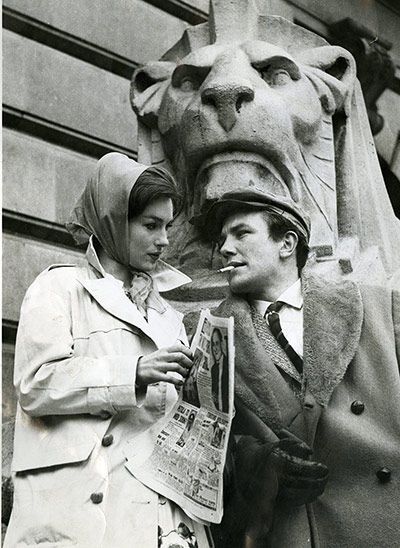
Around 200 images from the late-1950s and 60s represent what the show’s subtitle claims was The ‘Authentic Moment’ In British Photography. We don’t use grandiose words such as “authentic” in art these days, and Karel Reisz’s film of Alan Sillitoe’s Saturday Night And Sunday Morning could not come from any time other than that era of cultural shift. The film established quiffs and headscarves as fashion statements and the exhibition features stills from it beside social documentary studies by the so-called Young Meteors, John Bulmer and Graham Finlayson.
Lakeside Arts Centre, to 10 Feb
RC Photograph: PR
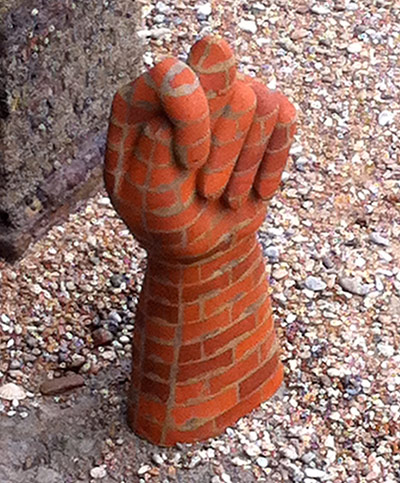
Life’s brevity is one of the big subjects in Tonico Lemos Auad’s disarmingly playful sculpture. The Brazil-born artist is best known for stuff that disintegrates before your eyes: a bunny made of dust; drawings on decaying bananas; a chalky Madonna melting into the sea. Initially, his latest works seem more solid: white chalk blocks strewn with charms and fine gold chains; a windowless brick house hung with ropes. It’s all inspired by the annual Cirio de Nazaré parade in his hometown of Belém, where a procession gives offerings to the gods. As with scratchcards or saintly icons, these are symbols of faith that hold a promise of redemption in an unstable world. A bit like art, in fact.
Stephen Friedman Gallery, W1, to Fri 23 Nov to 19 Jan
SS Photograph: PR