Exclusive: Study suggests dengue may provide some immunity against COVID-19
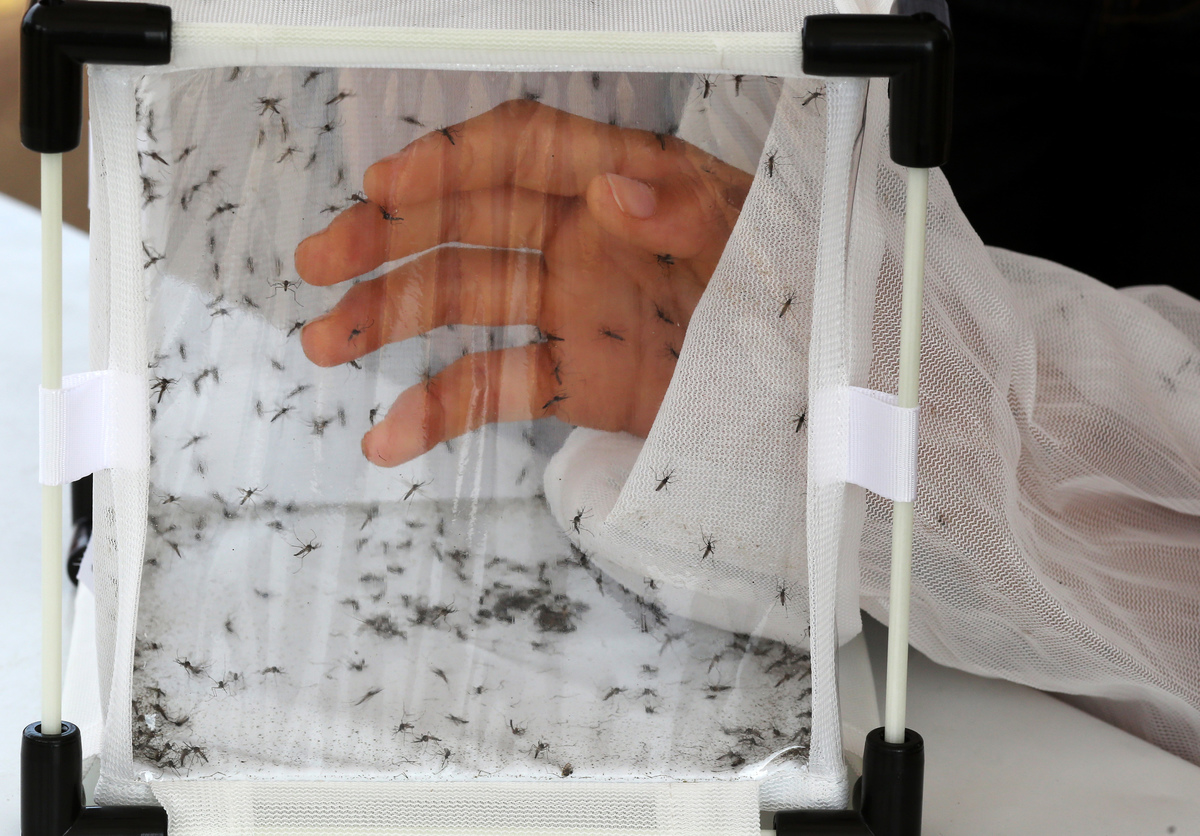
A girl puts her hand in a box with male genetically modified Aedes aegypti mosquitoes at an educational exhibition by British biotechnology company Oxitec in Piracicaba March 5, 2015. REUTERS/Paulo Whitaker
A new study that analyzed the coronavirus outbreak in Brazil has found a link between the spread of the virus and past outbreaks of dengue fever that suggests exposure to the mosquito-transmitted illness may provide some level of immunity against COVID-19.
The not yet published study led by Miguel Nicolelis, a professor at Duke University, and shared exclusively with Reuters, compared the geographic distribution of coronavirus cases with the spread of dengue in 2019 and 2020.
FILE PHOTO: A man wearing a protective face mask walks past an illustration of a virus outside a regional science centre, as the city and surrounding areas face local restrictions in an effort to avoid a local lockdown being forced upon the region, amid the coronavirus disease (COVID-19) outbreak, in Oldham, Britain August 3, 2020. REUTERS/Phil Noble
Places with lower coronavirus infection rates and slower case growth were locations that had suffered intense dengue outbreaks this year or last, Nicolelis found.
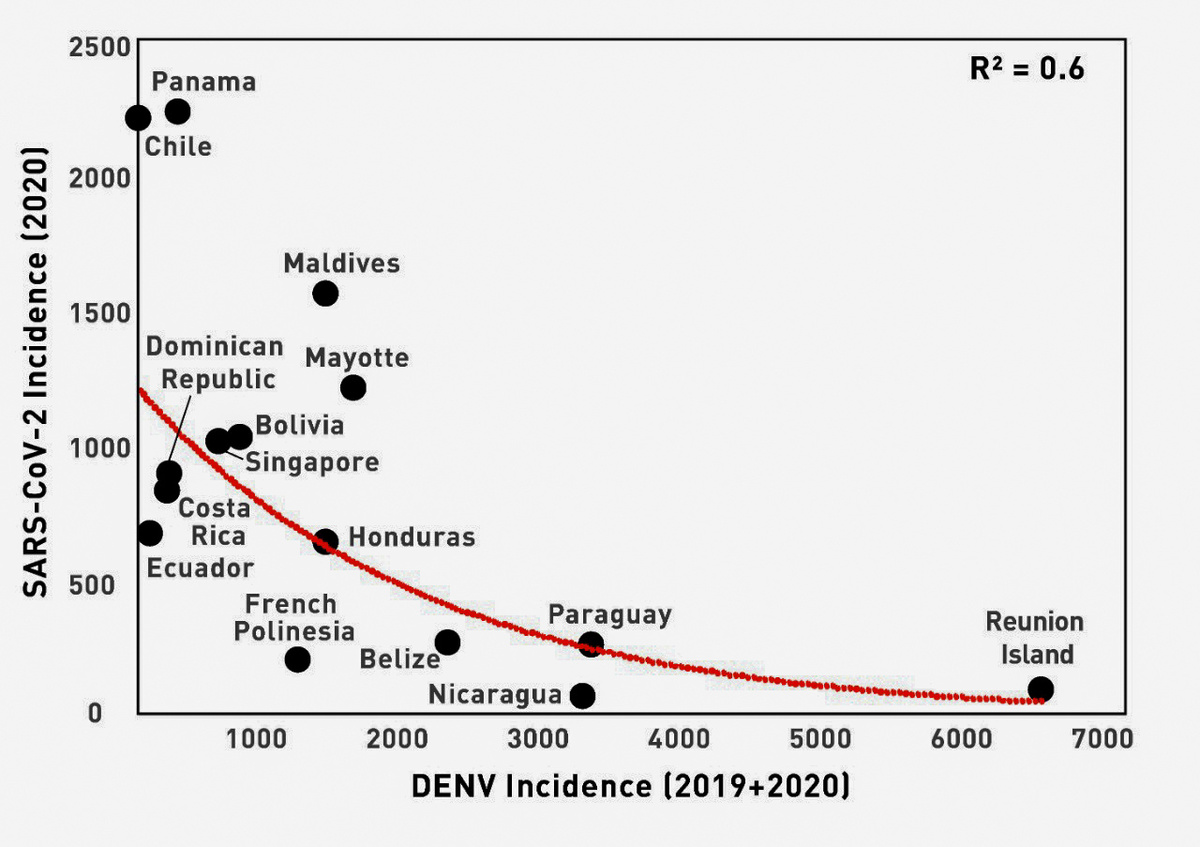
"This striking finding raises the intriguing possibility of an immunological cross-reactivity between dengue's Flavivirus serotypes and SARS-CoV-2," the study said, referring to dengue virus antibodies and the novel coronavirus.
"If proven correct, this hypothesis could mean that dengue infection or immunization with an efficacious and safe dengue vaccine could produce some level of immunological protection" against the coronavirus, it added.
The inverse exponential correlation between COVID-19 case incidence as a function of the dengue fever incidence for a sample of countries in Latin America, Asia, and a few islands in the Pacific and Indian Oceans is seen in this undated handout image. UFPB/Handout via REUTERS
Nicolelis told Reuters the results are particularly interesting because previous studies have shown that people with dengue antibodies in their blood can test falsely positive for COVID-19 antibodies even if they have never been infected by the coronavirus.
"This indicates that there is an immunological interaction between two viruses that nobody could have expected, because the two viruses are from completely different families," Nicolelis said, adding that further studies are needed to prove the connection.
The study was being published ahead of peer review on the MedRxiv preprint server and will be submitted to a scientific journal.
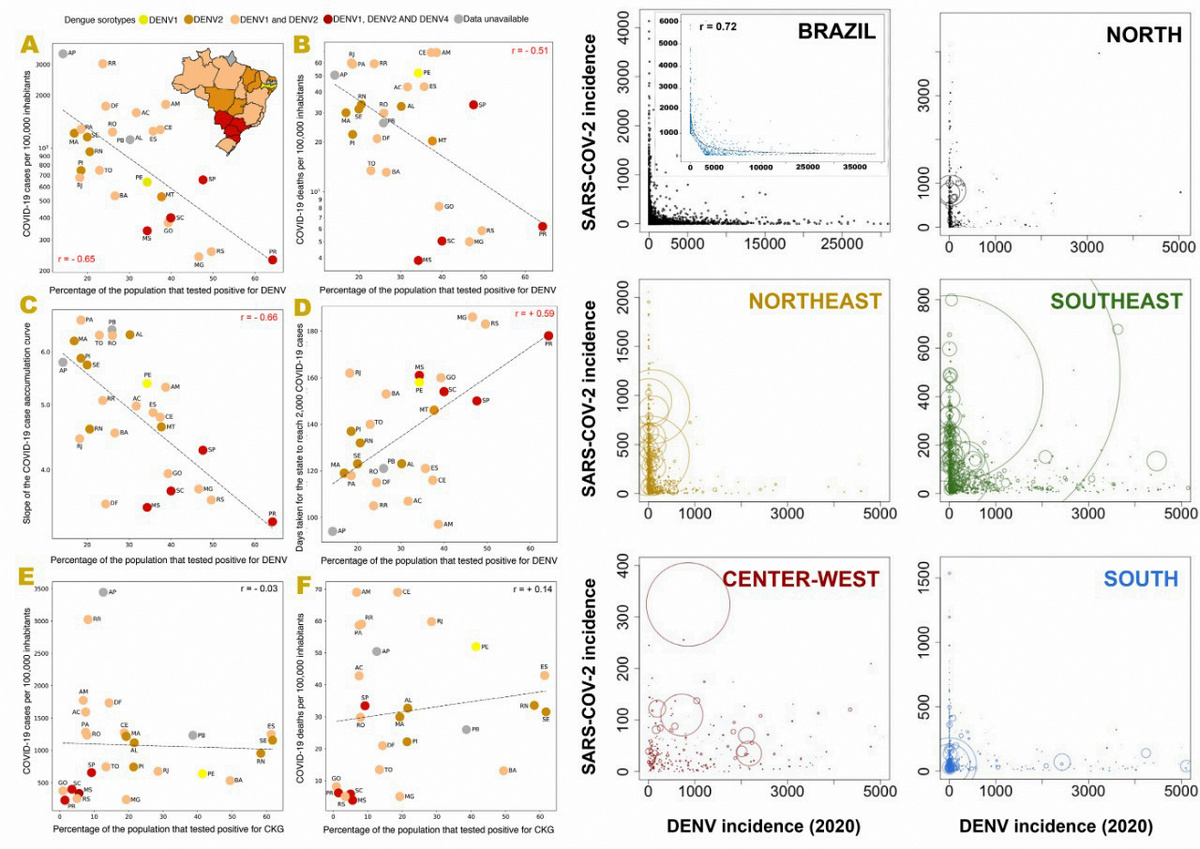
The inverse exponential correlations between COVID-19 case incidences per 100 thousand inhabitants, COVID-19 death incidence, rate of growth of COVID-19 cases against the percentage of state population with positive IGM for dengue fever (A-F) , the positive correlation between number of days to reach 1000 COVID-19 cases per 1000 thousand inhabitants and percentage of state population with positive IGM for dengue fever (D), the lack of correlation between COVID-19 cases (E) and death incidence (F) as a function of the percentage of state population with IgM for chikungunya virus (E and F), and the scatter plots depicting the inverse interaction between the COVID-19 incidence and the 2020 dengue fever incidence for all 5570 Brazilian municipalities (G) and divided per the North (H), Northeast (I), Southeast (J), Center-West (K), and South (L) regions (G- L), are seen in this undated handout image. UFPB/Handout via REUTERS MANDATORY CREDIT NO RESALES. NO ARCHIVES THIS IMAGE HAS BEEN SUPPLIED BY A THIRD PARTY.
It highlights a significant correlation between lower incidence, mortality and growth rate of COVID-19 in populations in Brazil where the levels of antibodies to dengue were higher.
Brazil has the world's third highest total of COVID-19 infections with more than 4.4 million cases - behind only the United States and India.
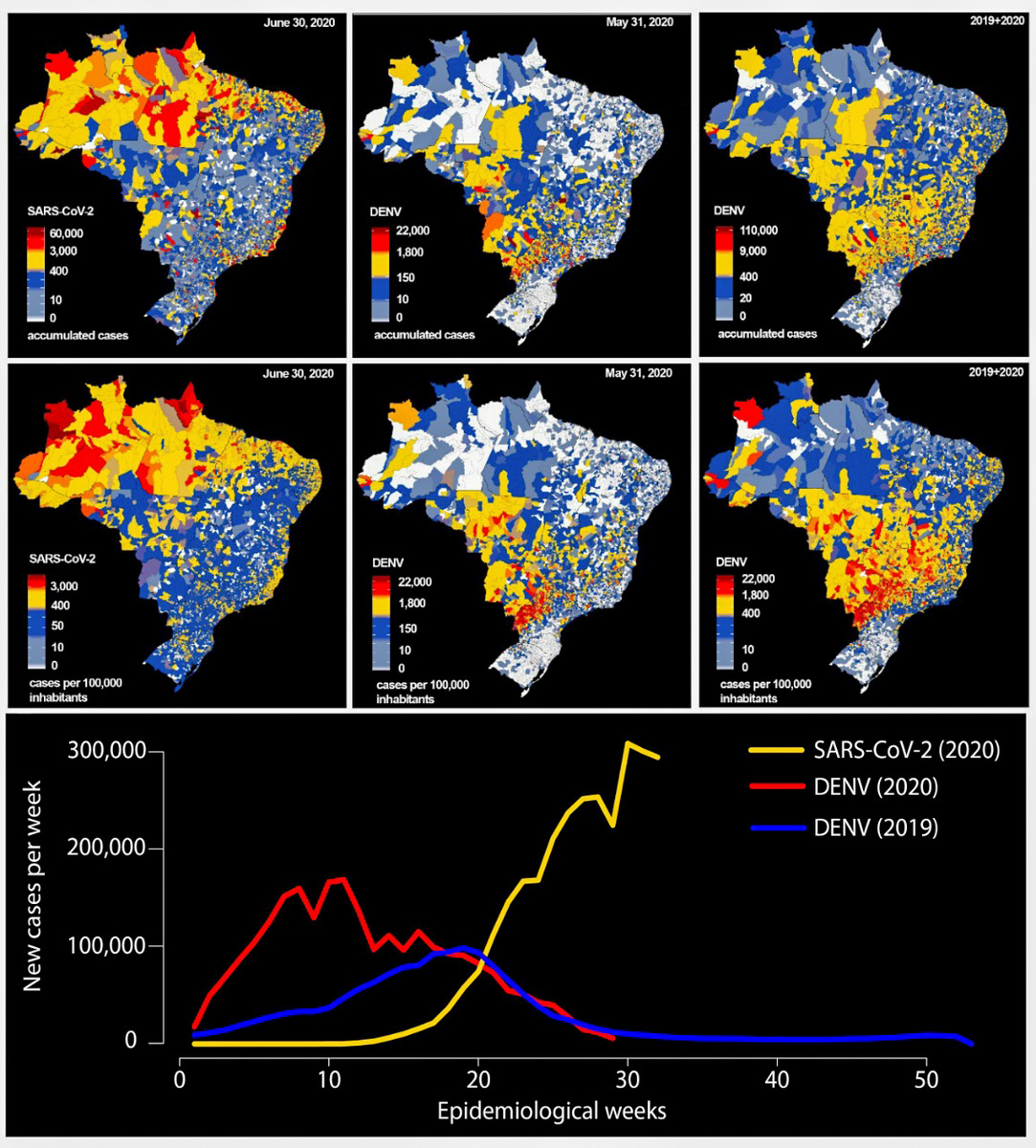
In states such as Paraná, Santa Catarina, Rio Grande do Sul, Mato Grosso do Sul and Minas Gerais, with a high incidence of dengue last year and early this year, COVID-19 took much longer to reach a level of high community transmission compared to states such as Amapá, Maranhão and Pará that had fewer dengue cases.
The comparison between the geographic distribution of COVID-19 cases and their incidence until June 30, 2020, and that of dengue fever cases and their incidence in Brazil until May 31, 2020, and for dengue fever cases and incidence summing all data from 2019 and until May 31, 2020, is seen in this undated handout image. UFPB/Handout via REUTERS MANDATORY CREDIT NO RESALES. NO ARCHIVES THIS IMAGE HAS BEEN SUPPLIED BY A THIRD PARTY.
The team found a similar relationship between dengue outbreaks and a slower spread of COVID-19 in other parts of Latin America, as well as Asia and islands in the Pacific and Indian Oceans.
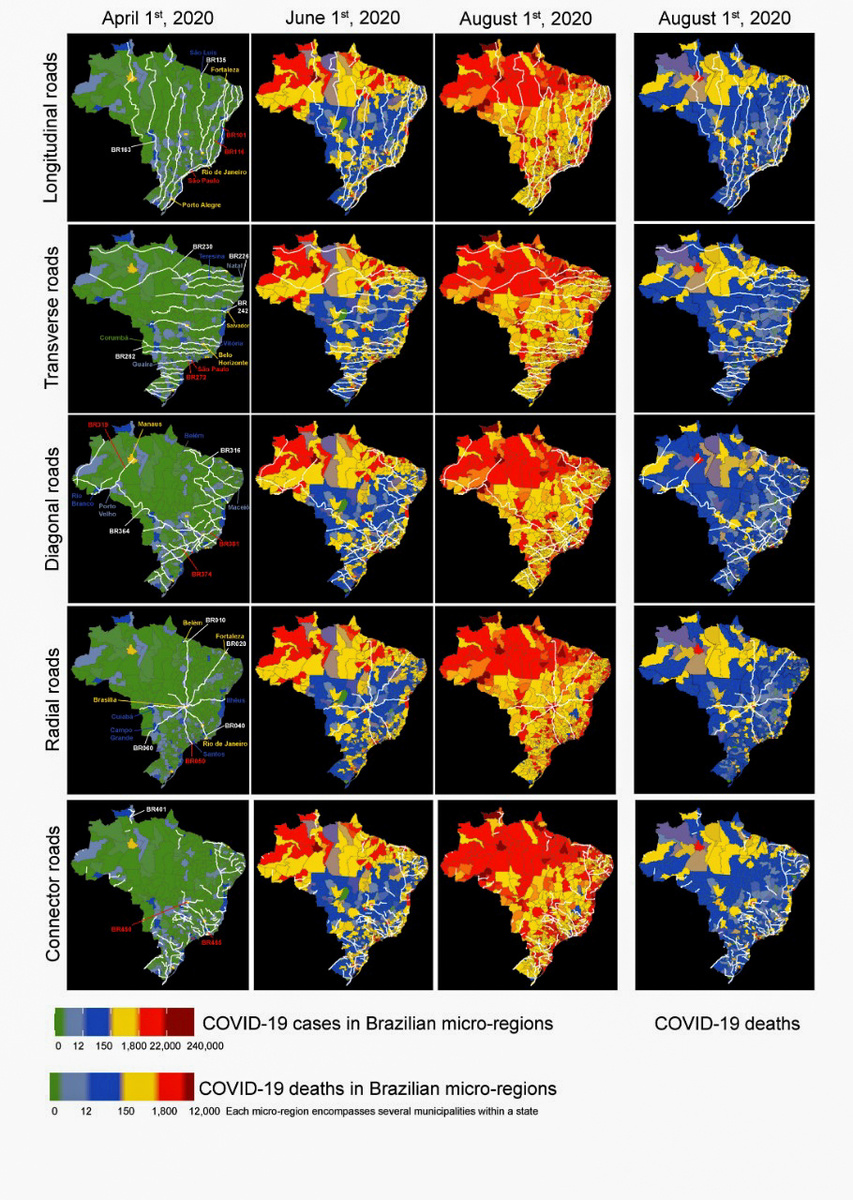
Nicolelis said his team came across the dengue discovery by accident, during a study focused on how COVID-19 had spread through Brazil, in which they found that highways played a major role in the distribution of cases across the country.
After identifying certain case-free spots on the map, the team went in search of possible explanations. A breakthrough came when the team compared the spread of dengue with that of the coronavirus.
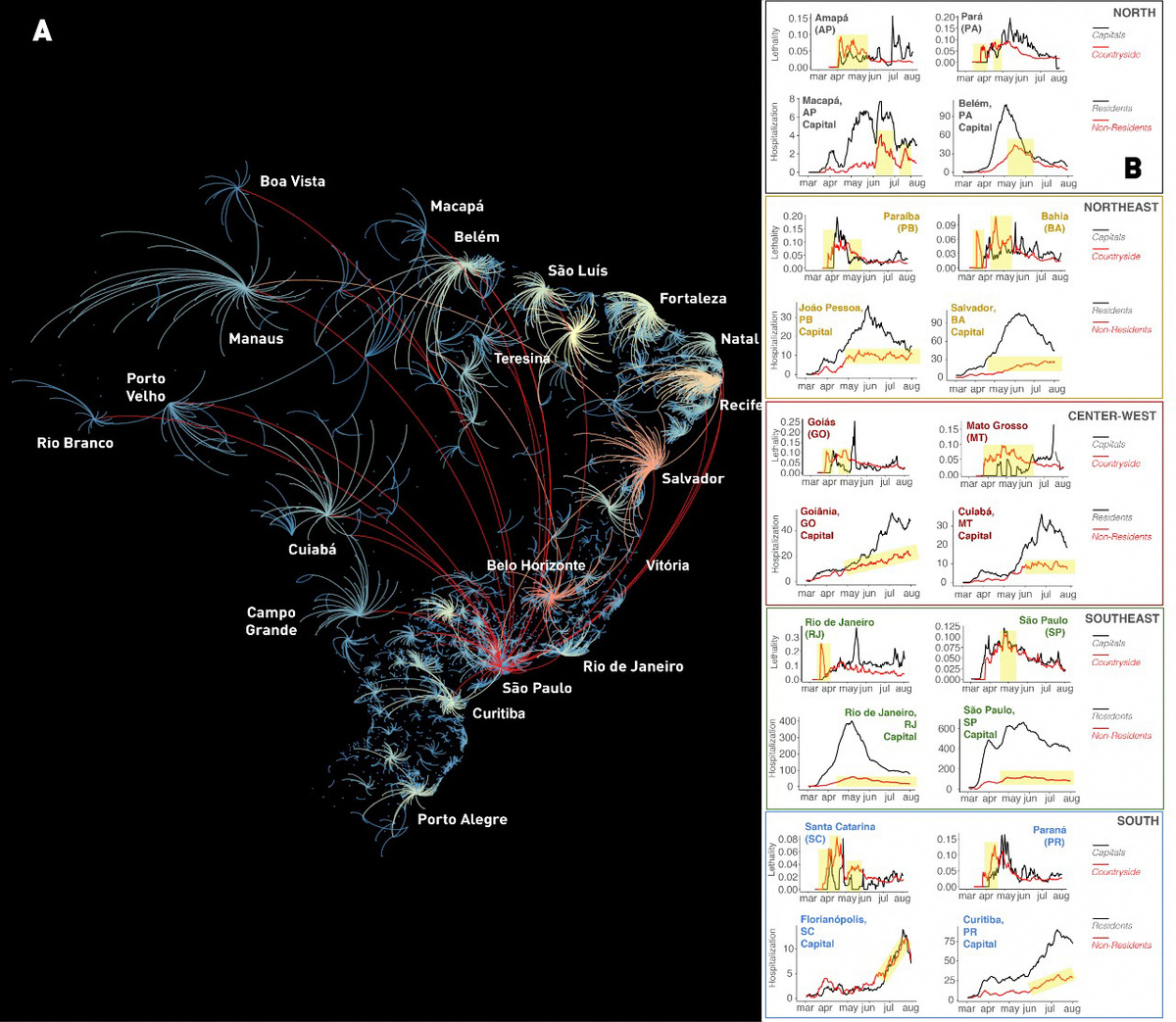
The representation of all COVID-19 "boomerangs" that occurred around major Brazilian state capitals and mid-size cities across the whole country, where arcs represent people flow from the interior towards the capital and the arc color code represents the number of interior cities that sent severely ill patients to be admitted in hospitals in a capital or mid-size town; red being the highest number of locations, orange and yellow next, while smaller number of locations are represented in light blue (A) and the lethality and hospitalization data, divided for residence source (interior and capital), for a sample of state capitals in all five regions of Brazil (B) are seen in this undated handout image. UFPB/Handout via REUTERS MANDATORY CREDIT NO RESALES. NO ARCHIVES THIS IMAGE HAS BEEN SUPPLIED BY A THIRD PARTY.
"It was a shock. It was a total accident," Nicolelis said. "In science, that happens, you're shooting at one thing and you hit a target that you never imagined you would hit."
(Reporting by Pedro Fonseca; writing by Stephen Eisenhammer; Editing by Bill Berkrot)
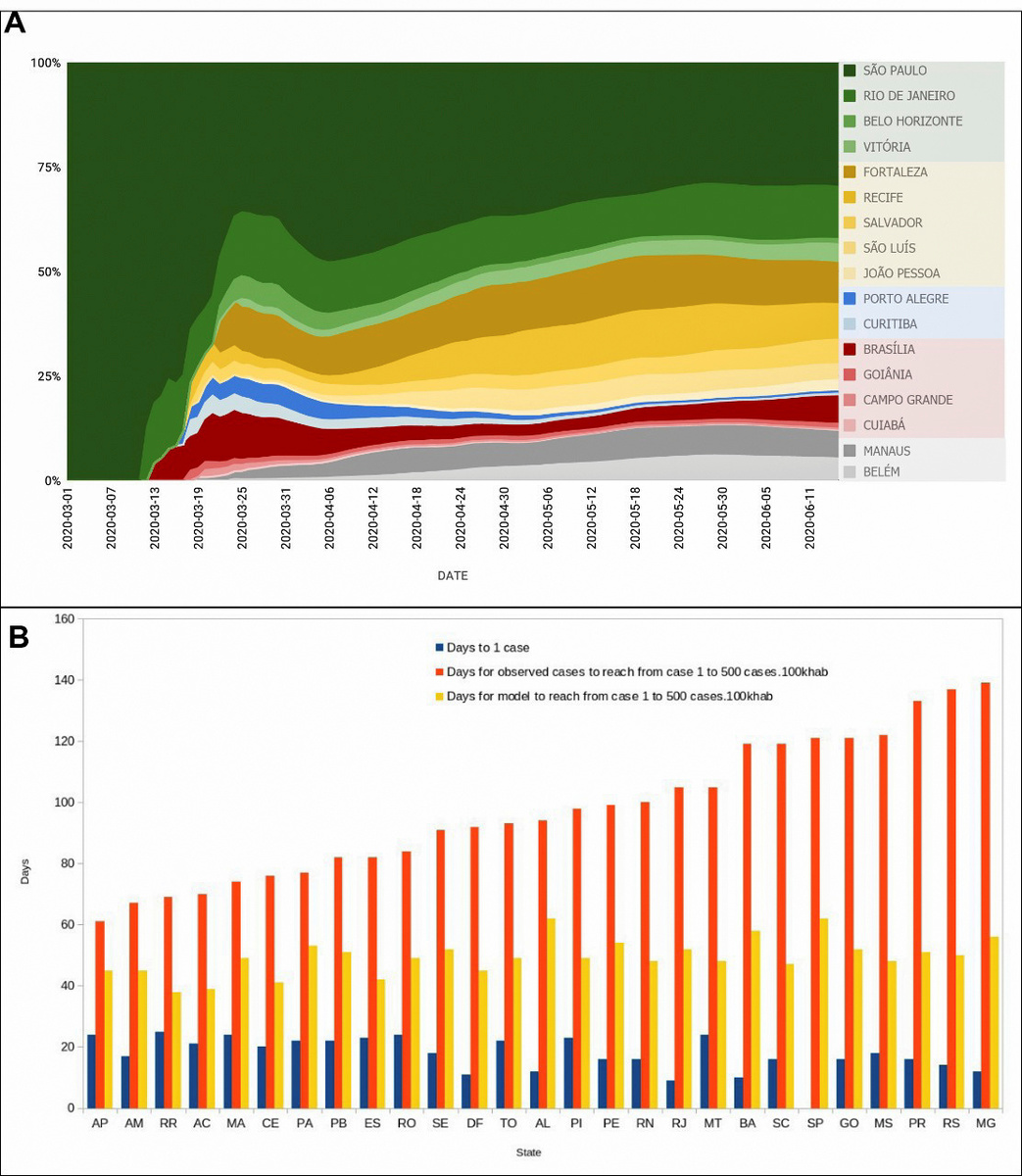
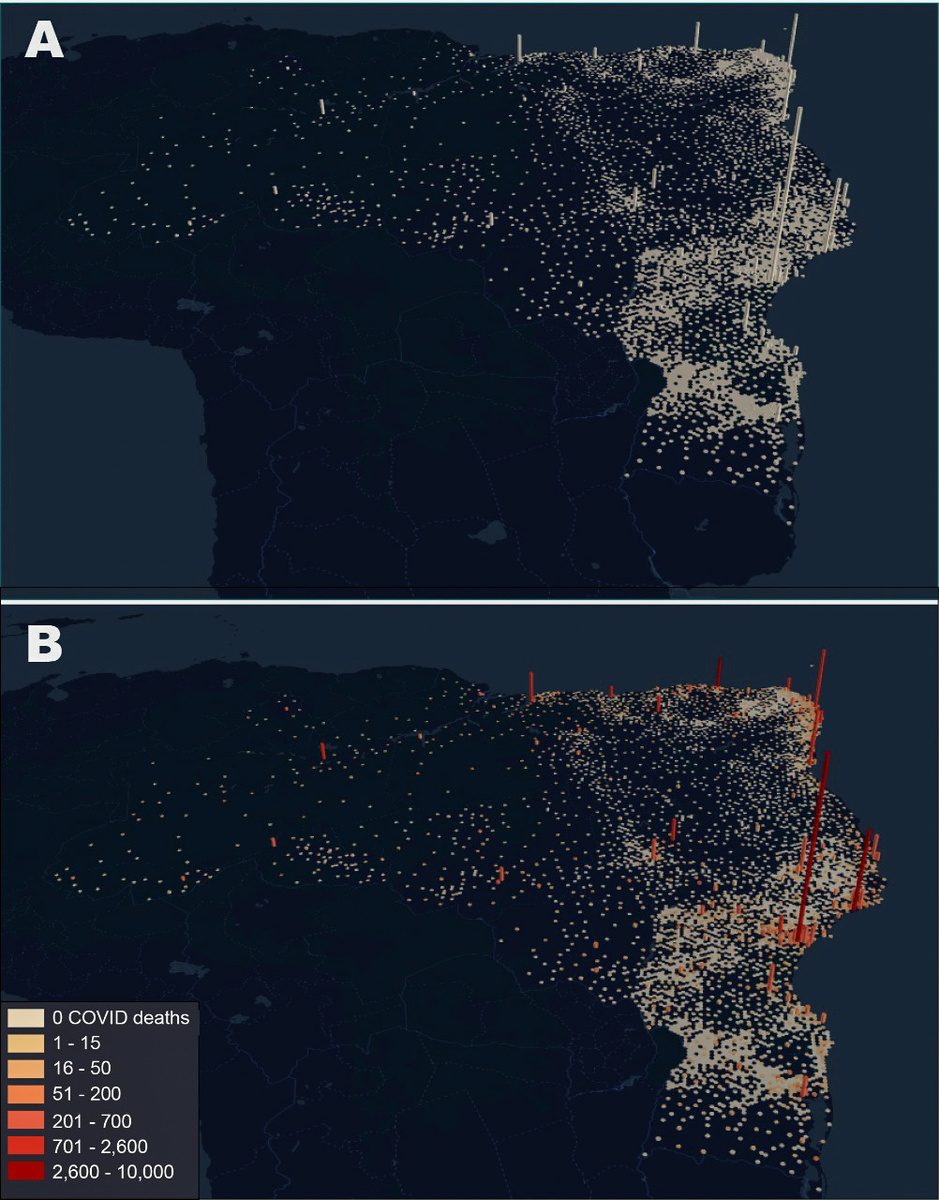
Graphs show the individual contribution of the Brazil's 17 state capital cities that were responsible for 98 percent of spreading of COVID-19 cases for the 5570 Brazilian municipalities, from March 1st to June 11th (above), and the day of identification of the first COVID-19 case in each state (using Sao Paulo'S first case on February 26, 2020 as the 0 reference), and the number of days estimated by a mathematical model for each state to reach 500 cases per 100 thousand inhabitants and the days in which each of Brazilian states actually reached the mark of 500 cases per 100 thousand inhabitants (below) in this undated handout image. UFPB/Handout via REUTERS MANDATORY CREDIT NO RESALES. NO ARCHIVES THIS IMAGE HAS BEEN SUPPLIED BY A THIRD PARTY.The distribution of ICU beds across all Brazil (above), and the superimposition of the COVID-19 death distribution (color code legend on the left lower corner) on top of the ICU bed distribution (below) are seen in this undated handout image. UFPB/Handout via REUTERS MANDATORY CREDIT NO RESALES. NO ARCHIVES THIS IMAGE HAS BEEN SUPPLIED BY A THIRD PARTY.Maps of Brazil representing the routes of the main federal highways, the evolution of the geographic distribution of COVID-19 cases on three dates (April 1st, June 1st and August 1st), and the distribution of COVID-19 deaths on August 1st are seen in this undated handout image. UFPB/Handout via REUTERS MANDATORY CREDIT NO RESALES. NO ARCHIVES THIS IMAGE HAS BEEN SUPPLIED BY A THIRD PARTY.
Sign up to read this article
Read news from 100’s of titles, curated specifically for you.