HONG KONG/BEIJING (Reuters) - High-resolution satellite images show that the construction of China's first full-sized aircraft carrier is progressing steadily alongside expansive infrastructure work that analysts say suggests the ship will be the first of several large vessels produced at the site.
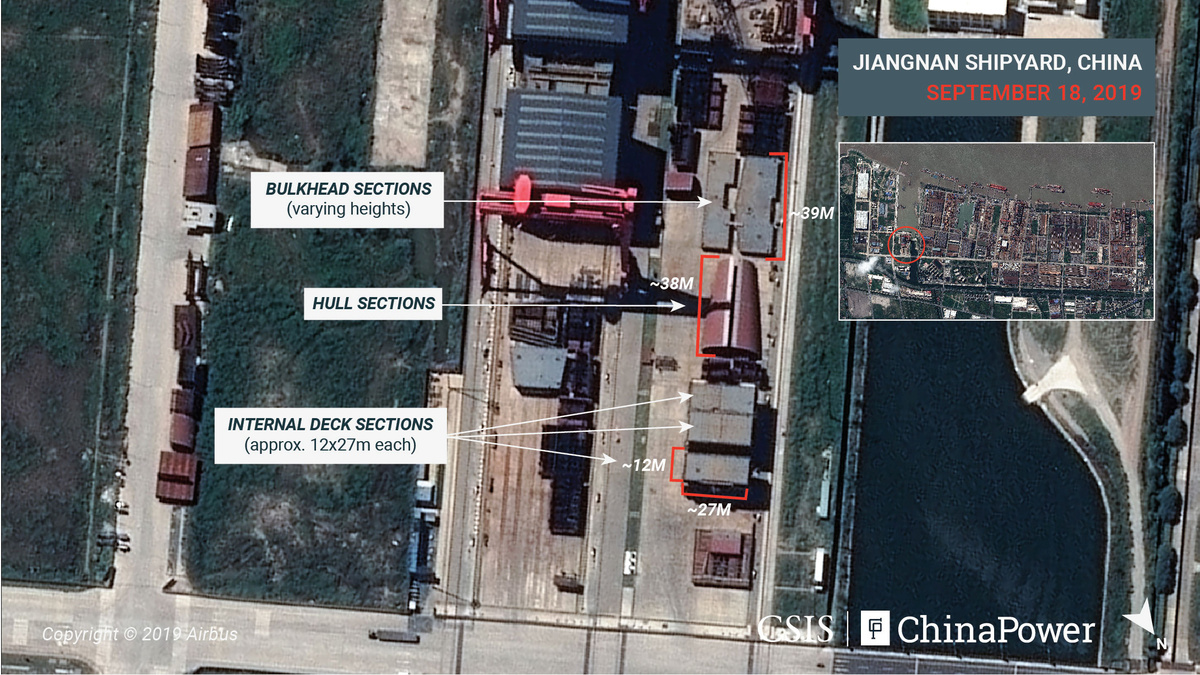
The images of the Jiangnan shipyard outside Shanghai were taken last month and provided to Reuters by the non-partisan Centre for Strategic and International Studies (CSIS), building on satellite photos it obtained in April and September last year.
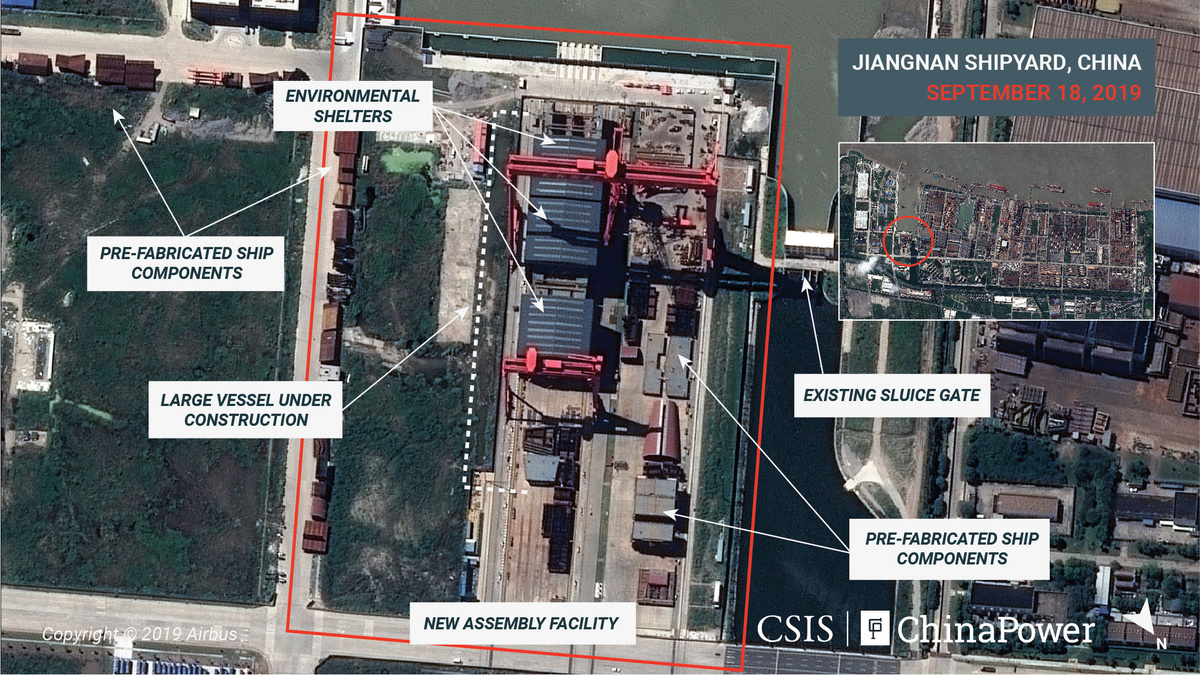
Noting a series of pre-fabricated sections, bulkheads and other components stacked nearby, CSIS analysts say the hull should be finished within 12 months, after which it is likely to be moved to a newly created harbour and wharf before being fitted out.
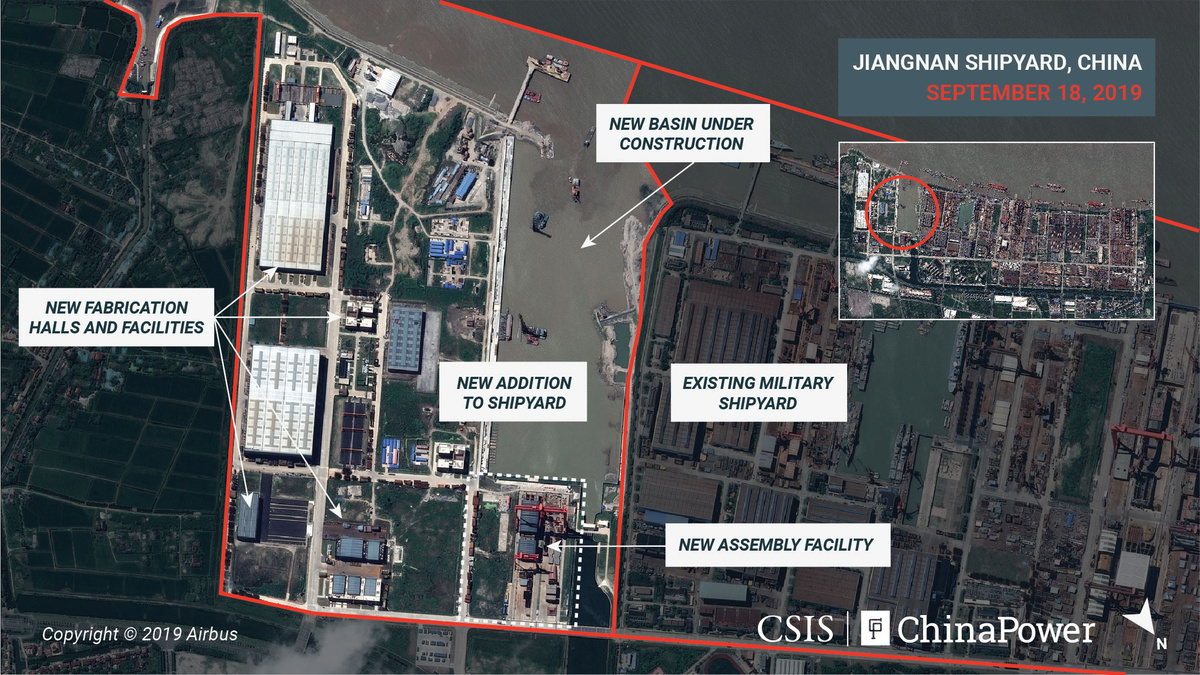
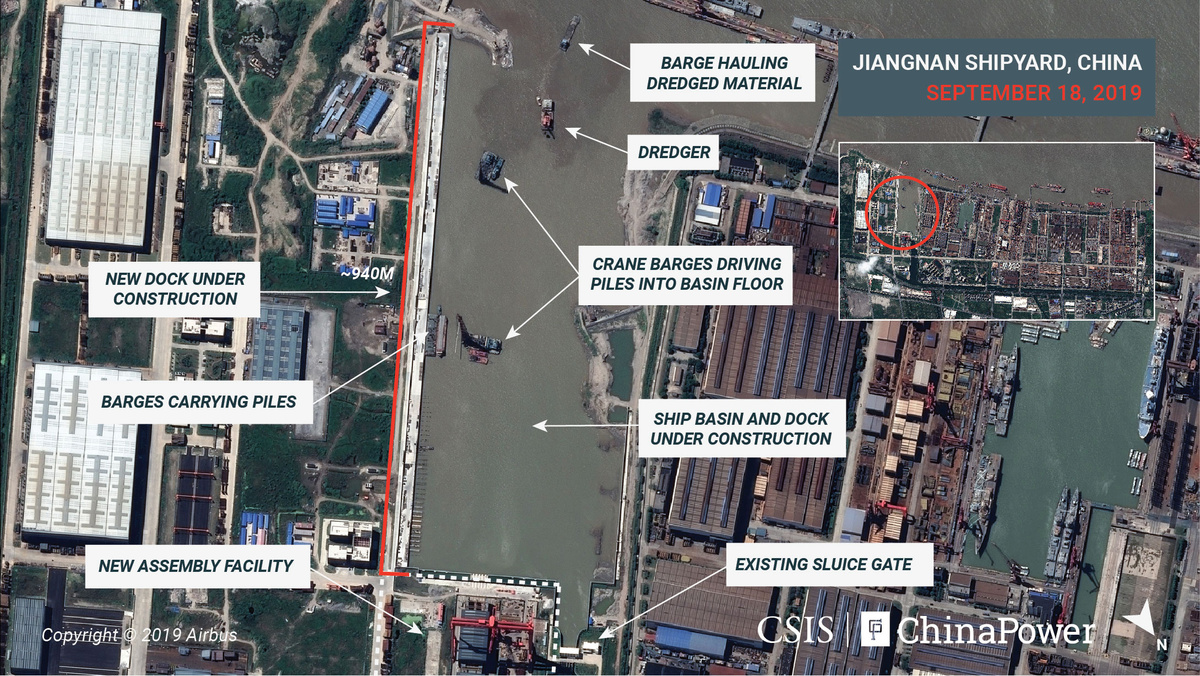
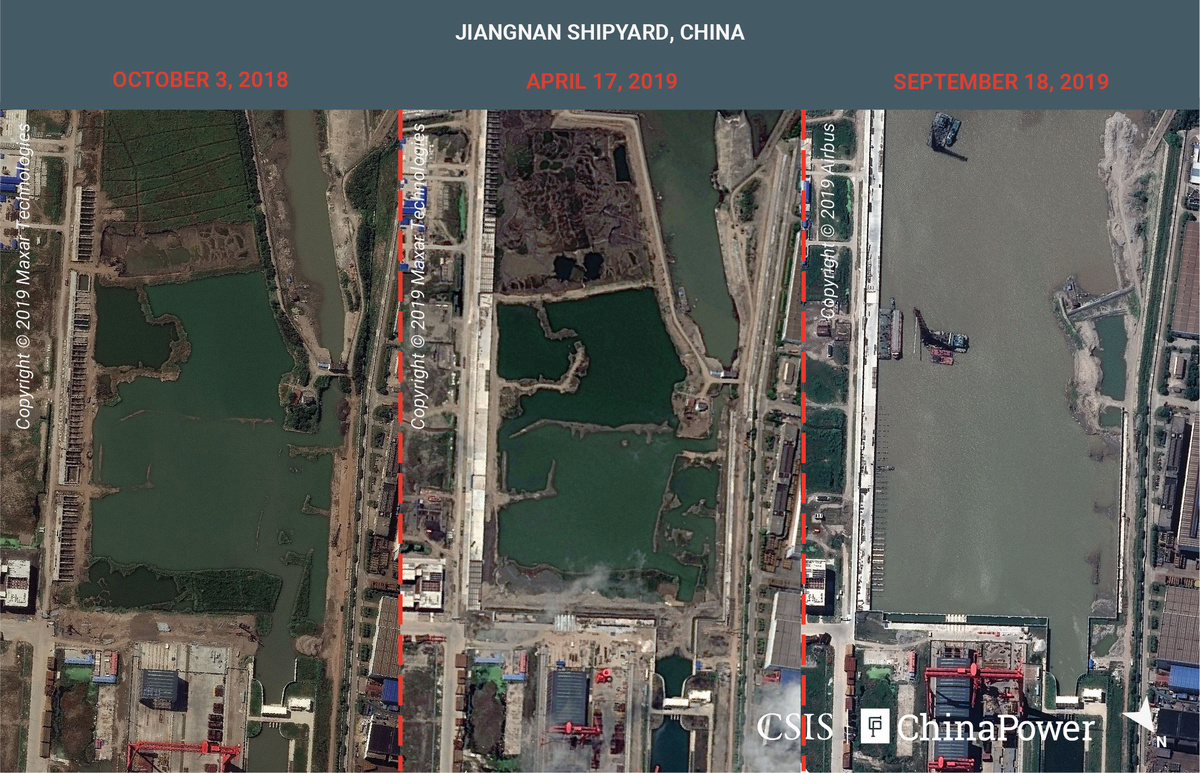
The vast harbour on the Yangtze River estuary, including a wharf nearly 1 kilometre long and large buildings for manufacturing ship components, is nearly complete. Much of the harbour area appeared to be abandoned farmland just a year ago, according to earlier images CSIS analysed.
It dwarfs an existing harbour nearby, where destroyers and other warships are docked.
"We can see slow but steady progress on the hull, but I think the really surprising thing these images show is the extensive infrastructure buildup that has gone on simultaneously," said CSIS analyst Matthew Funaiole.
"It is hard to imagine all this is being done for just one ship," he added. "This looks more like a specialised space for carriers and or other larger vessels."
Singapore-based military analyst Collin Koh said the modern, purpose-built facility on a sparsely populated island in the Yangtze may provide better security than the congested shipyards of Dalian in northern China. It could also help deepen co-operation between commercial and military shipbuilders.
The London-based International Institute for Strategic Studies noted this year that China's military shipyards were focusing increasingly on larger surface warships, "adding to the sense that Chinese naval-capability development may be entering a new phase."
China's navy has recently launched four large Type 055 cruisers and its first large helicopter carrier, known as the Type 075.
China's military has not formally announced the plans for the third carrier, designated Type 002, but official state media have said it is being built.
The Pentagon said it in its annual survey of China's military modernisation, published in May, that work on the third carrier had begun.
China's Ministry of Defence did not respond to questions from Reuters.
Funaiole said the latest images appeared to confirm the earlier photos, which suggested the latest carrier would be somewhat smaller the 100,000-tonne "supercarriers" operated by the U.S. but larger than France's 42,500-tonne Charles de Gaulle.
The images are due to be released by the CSIS China Power Project later Thursday.
Asian and Western militaries are tracking developments closely. They say this carrier would represent a vital step in China's ambitions to create a far-ranging navy that can project power around the world to serve Beijing's expanding global interests.
A series of recent Reuters Special Reports showed how that effort is challenging decades of U.S. strategic superiority in East Asia. (Click this link to read the series: https://reut.rs/2Uzr9z4)
It is expected to be China's first carrier with a flat deck and catapult launch system, allowing the use of a wider range of aircraft and more heavily armed fighter jets.
China's first two carriers, which it has dubbed Type 001-class, are relatively small, accommodating only up to 25 aircraft that are launched from ramps built onto their decks. U.S. carriers routinely deploy with nearly four times the number of aircraft.
Foreign military attaches and security analysts say the Type 001 ships are expected to essentially serve as training platforms for what they believe will be fleet of up to six operational carriers by 2030.
They say the construction and deployment of aircraft carriers is considered exceptionally difficult to master. Protecting such a large and vital surface target with escort ships, submarines and aircraft is a core part of the problem.
"The PLA navy is not saying much in detail about its plans now, but we can see from their building works that their ambitions are vast," said one Asian military attache, who declined to be named because of the sensitivity of the matter. "And they will get there."
Koh, a research fellow at Singapore's S. Rajaratnam School of International Studies, said the new Jiangnan facilities looked permanent and reflected China's long-held ambitions to bulk up its fleet with more carriers and other large vessels.
"We are talking about infrastructure being built quickly and on a large scale. It could well be the start of a 'factory,' if you like, for carriers and other very large vessels," he said.
(Reporting By Greg Torode and Michael Martina. Editing by Gerry Doyle)