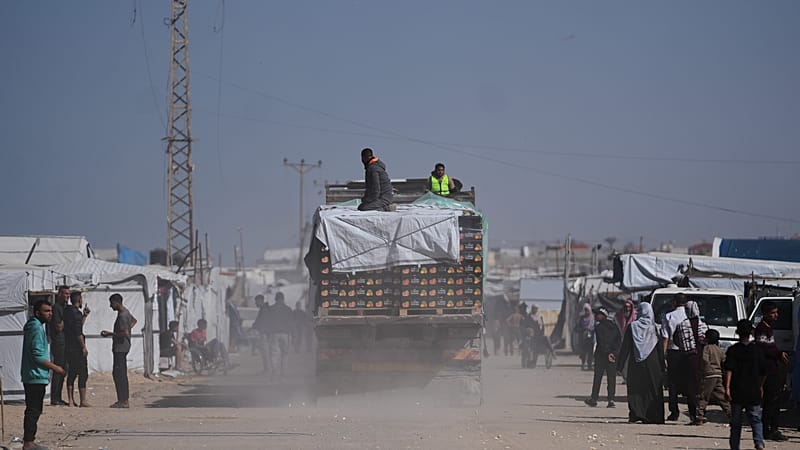
Jadallah Masran is 86 years old. Every morning at dawn, he leaves his tent in a displacement camp in eastern Al-Bureij and joins the queue at the nearest bakery.
As an older person, he used to have bread brought to him, but now he has to queue for it.
"All that comes is pasta, beans and lentils," Masran told Euronews. "They used to bring bread but stopped completely."
"I'm an old man. Every day at 5:30 in the morning I go stand in line to get a loaf of bread instead of having it delivered to the tent," he said.
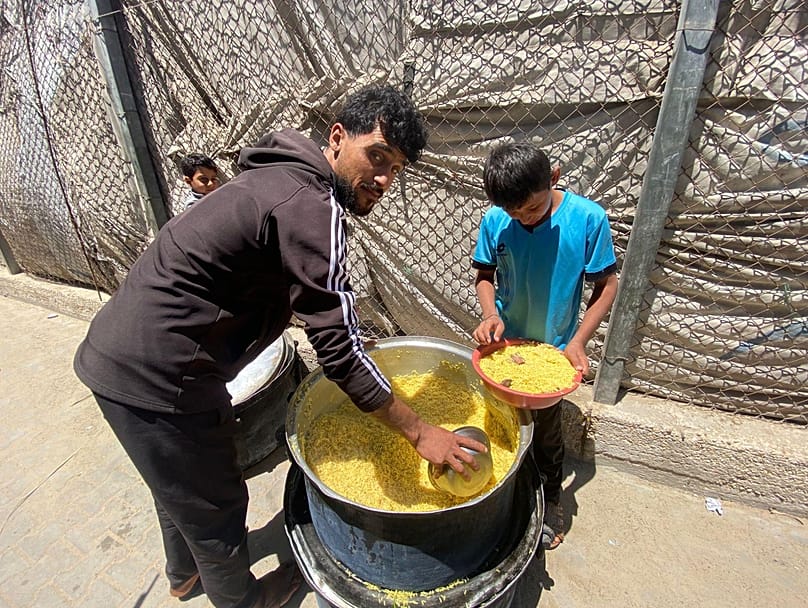
Masran is one of hundreds of thousands of displaced people in Gaza who now depend on charity kitchens — known as takaya — as their primary source of food.
Around 1.6 million people in the Strip — roughly 77% of the population — are facing high levels of acute food insecurity, according to the latest estimates by the World Food Programme and the Integrated Food Security Phase Classification covering April and May 2026.
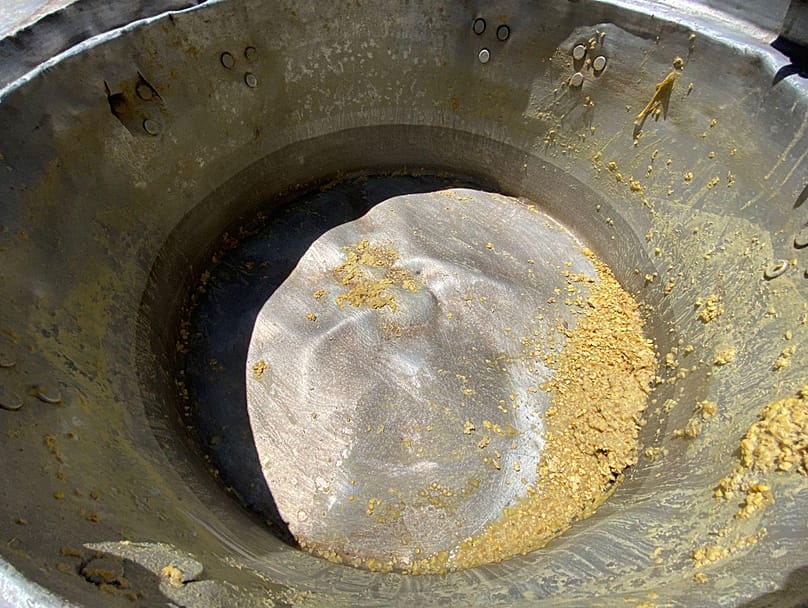
The kitchens that keep people alive operate only once or twice a week in many areas, serving meals of lentils, pasta and mashed beans. Meat and fresh vegetables have almost entirely disappeared.
"The charity kitchen brings rice and meat maybe one or two days a week, but mostly it's lentils and beans," Abdullah Zagout, displaced from Al-Shati Refugee Camp, said.
"If they came two or three times a week and the food was cleaner, that would be better. What can people do? We're sick of lentils," he told Euronews.
Aid falls short
Hassan al-Azzazi, displaced from eastern Al-Bureij, said the monotony had pushed some people to stop eating entirely.
"They bring lentils, pasta, mashed beans and bulgur. Maybe once every week or two they bring meat and rice. People get sick of legumes, to the point where food gets thrown away."
Even so, some see lentils as a lifeline. "Lentils are a blessing, thank God," said Luay Sahmoud, displaced from eastern Gaza.
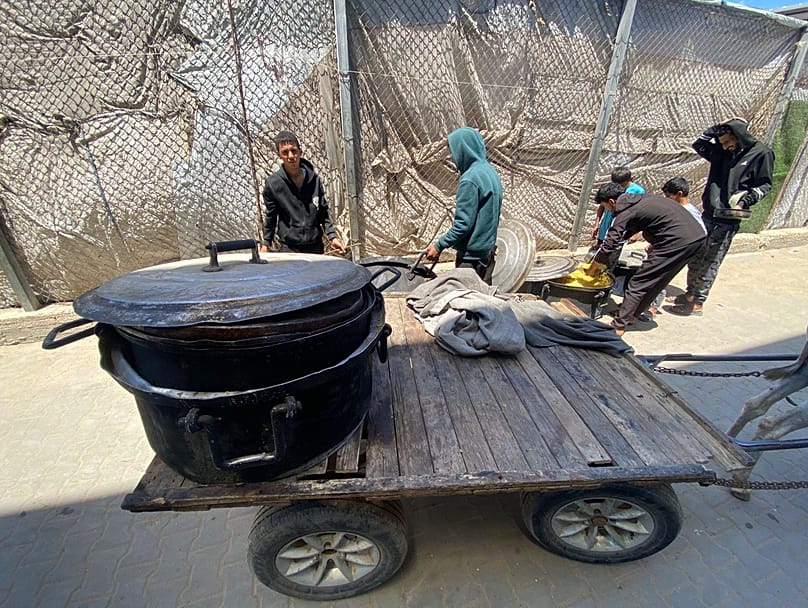
"There was a time we couldn't even find them, and we risked death just to feed our children. It's mercy for us, but couldn't they at least add some meat on top of the rice in the big pot?"
Once affordable, bread has now tripled in price and requires hours of queuing to obtain.
"When the charity kitchen comes, it comes with suffering," said Nasser Farwana from Rafah. "Sometimes it only comes once a week. Before, we paid 1 shekel for bread. Now we pay 3 shekels and struggle at the bakery just to get it."
What are the humanitarian agencies saying?
Aid deliveries fell 37% between the first and second periods following the October 2025 ceasefire — from more than 167,600 metric tonnes in the first three months after the truce to fewer than 105,000 metric tonnes between January and April of this year.
The UN's humanitarian coordination office OCHA attributed the decline to reduced crossing operations, increased cargo returns, scanning malfunctions and other impediments.
In August 2025, the agency also documented the role of "armed gangs" in obstructing distribution inside Gaza, diverting supplies away before they reached warehouses.
Four months into this year, only 10% of the funding required for critical humanitarian operations this year has been secured.
According to WFP, more than 400,000 hot meals are being served daily through community kitchens across Gaza.
The agency says it is reaching more than 1 million people each month through all food channels combined — including parcels, bread bundles and school meals — but that still falls short of the needs of a displaced population of 1.5 million.
According to a joint assessment by the UN's Food and Agriculture Organisation (FAO), UNICEF, the World Food Programme (WFP) and the World Health Organisation (WHO) published in December 2025, more than 100,000 children under five are projected to suffer acute malnutrition through April 2026 — up from an earlier estimate of 71,000 issued in May 2025.
No child between six and 23 months old is currently receiving the minimum required dietary diversity, according to UNICEF. Around two-thirds of children are suffering from severe food poverty, consuming food from two food groups or fewer, the same joint UN assessment found.
Disputed responsibility
Israel has accused Hamas of stealing aid convoys intended for civilians. Israeli military statements have alleged that Hamas used aid to finance fighters, imposed levies on merchants and ran a parallel distribution market. Hamas has not publicly responded to those specific claims.
The allegations have been independently corroborated in part by non-Israeli sources. In August 2025, the BBC reported citing Gazan sources that significant portions of humanitarian aid had been diverted by Hamas and sold at inflated prices or distributed to loyalists.
Palestinian Authority leader Mahmoud Abbas also stated that Hamas-affiliated gangs were "primarily responsible" for looting from aid warehouses.
However, the picture is not uniform. Senior IDF officials told the New York Times in July 2025 that they found no evidence Hamas had regularly stolen from UN operations, which provided the largest share of aid. USAID also found no evidence of Hamas significantly benefiting from US-funded supplies.
Other witness accounts said that criminal gangs and other competing armed groups also took part in aid theft, including some of Gaza's more powerful families. Further media reports claimed the families were regularly recruited by Hamas to assist in their aid management operations, pointing to profiteering amid chaos rather than systematic wholesale theft.
FAO, UNICEF, the WFP and the WHO warned that humanitarian gains achieved after the ceasefire remain fragile, and that ongoing funding shortfalls and access restrictions could rapidly push Gaza back toward famine.