In early January 2017, when the Cuban government was looking for insights into the newly elected President Donald Trump, his former campaign chief, Paul Manafort, traveled to the island to meet with "Castro's son," according to a U.S. Senate report.
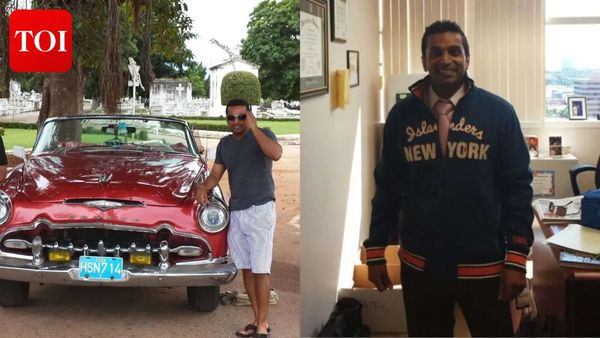
The recently released Senate Intelligence Committee report on Russia's interference in the 2016 presidential election states that Manafort claimed the meeting was arranged by Brad Zackson, the former exclusive broker for the properties of Trump's late father, Fred Trump.
Manafort left the Trump campaign in August 2016, mired in scandal over his undisclosed work as a lobbyist for a pro-Russian political party in Ukraine. As a result of special counsel Robert Mueller's investigation into the Trump campaign's ties to Russia, Manafort was sentenced to more than seven years in prison for tax and bank fraud. He is currently serving his sentence under house arrest.
But in early January 2017, Manafort did not know that the FBI was investigating him.
On Jan. 15, just days before Trump's inauguration, Manafort emailed Kathleen T. McFarland, about to be confirmed as the deputy national security adviser in the new administration, the Mueller report says.
"I have some important information I want to share that I picked up on my travels over the last month," wrote Manafort, who later told the FBI that the email, never answered by McFarland, had to do with Cuba.
The Senate report adds that Manafort told the FBI that the email was related "to an effort that Manafort undertook with Brad Zackson, who had arranged a meeting between Manafort and 'Castro's son' in Havana." The report refers to a redacted source, "showing Manafort and Zackson on same flight booking to Havana."
A sentence in the Mueller report offers the only detail about the trip's possible dates: "On January 8, 2017, hours after returning to the United States from a trip to Cuba, Manafort flew to Madrid, Spain."
It is not clear if the meeting with one of the Castros ever took place nor his intentions for visiting a country under a U.S. embargo. Neither Manafort's attorneys nor Zackson responded to questions sent by the Miami Herald. But the Mueller report notes that after Trump's victory, Manafort said he preferred not to take a job in the new administration and "monetize his campaign position to generate business given his familiarity and relationship with Trump."
"Manafort appeared to follow that plan, as he traveled to the Middle East, Cuba, South Korea, Japan and China and was paid to explain what a Trump presidency would entail," the report adds.
The timing of the Cuba trip seemed about right. Worried about the prospects of the fragile "thaw" sought by President Barack Obama, Cuban officials began to discreetly communicate with their contacts in the United States to understand what Trump might do about Cuba and how to get his ear.
The Intelligence Committee report does not clarify the identity of "Castro's son," but it is most likely Col. Alejandro Castro Espin, the son of former President Raul Castro. Castro Espin was in charge of the secret negotiations with the Obama administration to exchange prisoners and reestablish diplomatic relations.
The sons of Fidel Castro, who died in 2016, do not have such political influence, although one, Antonio Castro, is known for his lavish lifestyle and foreign connections.
At the end of 2016, Castro Espin seemed like the man Americans should talk to. His father, Raul Castro, had put him at the head of a nebulous Commission for Defense and National Security as a cover for his secret meetings with Obama's aides and to control the Cuban counterintelligence services. And despite his public "anti-imperialist" rhetoric, Castro-Espin had even dined on roast pork in Havana with the then director of the CIA, John O. Brennan, who traveled to Cuba in 2015, according to The New Yorker.
But after the scandal of the alleged attacks on U.S. diplomats in Havana, still an unresolved mystery, Castro Espin disappeared from public view, and the commission appears to have been dismantled. The incidents, which caused multiple health ailments to a score of intelligence agents, diplomats and their families, began after Trump's election in November 2016.
It is unknown if Manafort wanted to get paid by the island's government to work as an intermediary or strike a real estate deal, as suggested by Zackson's presence, despite the standing embargo prohibitions.
The latter would not be entirely surprising. Even President Trump, who dismantled Obama's engagement policies on Cuba while at the White House, previously explored business opportunities on the Caribbean island.
Jason Greenblatt, the executive vice president and head of the legal team for the Trump Organization, who later became Trump's special envoy to the Middle East, traveled to Cuba between 2012 and 2013 to study the possibility of building a golf course, Bloomberg reported. An email obtained by el Nuevo Herald showed that Cuba's tourism ministry invited Greenblatt to the 34th Havana International Fair, which took place in late October 2016.
And according to Miguel Fluxa, chief executive of the Iberostar Group, a major Spanish chain that runs several hotels in Cuba, the Trump Organization was looking into the possibility of establishing hotels on the island while Trump was a presidential candidate in 2016.