Former quarterback Todd Marinovich, the one-time college star widely regarded as one of the biggest busts in NFL history, is attempting a comeback at age 48.
Marinovich, whose career was derailed time and again by substance-abuse issues, will compete for a starting job with the SoCal Coyotes of the World Developmental Football League, returning to football for the first time since an abbreviated stint with the Los Angeles Avengers of the Arena Football League more than a decade and a half ago.
“It’s the greatest game on the planet and I’ve been away from it for so long, and I can’t think of anything more fun,” he told the Desert Sun newspaper on Friday. “Recovery has changed every aspect of my life and made it better so why wouldn’t that carry over to the football field?”
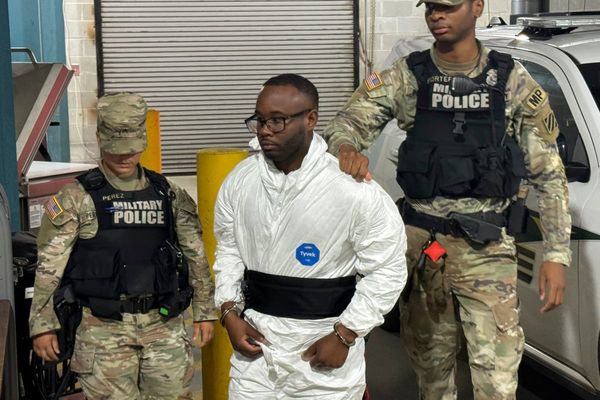
Marinovich, who turned 48 on Tuesday, said Friday he’s been sober since he was arrested last year while naked and holding a brown bag containing marijuana, methamphetamine and syringes. He was cited for trespassing, possession of a controlled substance, possession of drug paraphernalia and possession of marijuana. He will be spared jail time if he avoids legal trouble for 36 months.
Substance-abuse issues follow Marinovich back to his days as a star quarterback at the University of Southern California, where he led the Trojans to a Rose Bowl victory over Michigan as a freshman. He was booked for cocaine possession shortly after the 1990 Sun Bowl and entered the NFL draft, where he was chosen in the first round by the Los Angeles Raiders and signed to a three-year, $2.25m contract. He failed a series of drug tests and was cut by the Raiders ahead of the 1993 season.
Now Marinovich, who served as an assistant coach with the Coyotes last year, will compete for the starting quarterback job with 25-year-old Jacob Russell, who threw 35 touchdowns and led the team to a perfect season in 2016. He will be drug-tested once a week, according to the Desert Sun, and continue to speak with young athletes at schools and juvenile halls about the perils of drug use.
“When I made several attempts at recovery, I said ‘I’m going to go get treatment and then I’m going to go back to my life,’ and that never worked,” he said. “Now my recovery is my life. I’ve meshed the two, so there’s no separation and really what I’ve found to be driving the illness that I suffered from was separation. I was separated from the source (points up), I was separated from you, and I was separated from me. And that’s no way to live.”