When word got out that the Trump administration wanted to end government funding of the International Space Station by 2025, resistance to the idea was swift and forceful.
In a rare sign of just how unpopular it was, two senators from opposing parties _ Democrat Bill Nelson of Florida and Republican Ted Cruz of Texas _ immediately came out against the proposal, which was contained in the president's 2019 budget blueprint.
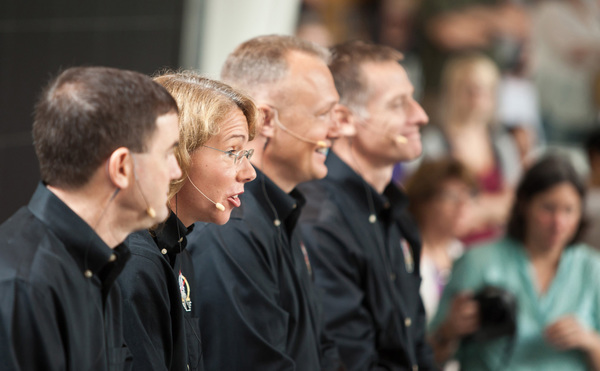
But former NASA astronaut Sandy Magnus said that stepping away from the space station could be seen as a sign of progress toward the eventual goal of sending humans out into the solar system. By transferring management of the ISS to private industry, she said, NASA still could lease space to continue its research in low Earth orbit while focusing more efforts on places such as the moon and Mars.
"It's a question of, does NASA own the building or is it leasing the building?" said Magnus, who lived on the space station for 4 { months in 2008 and 2009. It's "neither a good or a bad thing. It is the next stage in the evolution. But we've got to do it well."
After leaving NASA, Magnus became executive director of the American Institute of Aeronautics and Astronautics, a position she held until January. She spoke with the Los Angeles Times about the pros and cons of having NASA stop operating the space station.