Feb. 7 is designated as "Northern Territories Day," a date that stirs up nostalgic feelings for former residents of the four islands -- Shikotan, Kunashiri, Etorofu and the Habomai group of islets. They remember their hometowns and the relatives and others who died there, and harbor a strong desire for negotiations over the territories to be concluded successfully.
Unlike previous years, this year Japan and Russia marked the day amid efforts to advance negotiations toward signing a bilateral peace treaty. That has raised hopes among the former islanders for a breakthrough in the talks.
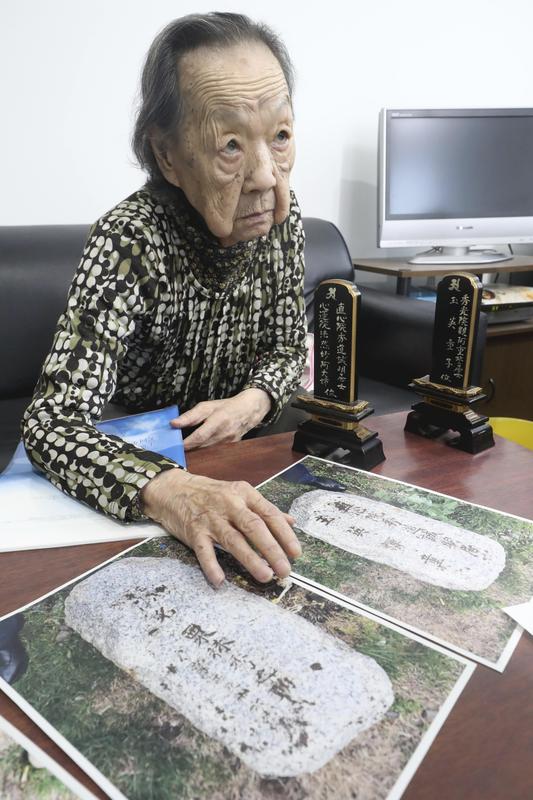
Kiyo Kaneda from the village of Tomari on Kunashiri Island marked the day, the last in the current Heisei era, at her home in Sapporo. She was 15 years old when the Soviet Union invaded the islands in September 1945. Unable to find a boat to escape, Kaneda had no choice but to stay on Kunashiri with her parents and others.
"We hid in kombu kelp piled up in a warehouse. I was so scared," the now 89-year-old Kaneda recalled.
Under the supervision of Soviet forces that occupied the island, she was forced into such labor as constructing roads. The following winter, her father died.
However, things were not all bad. "Some Russians were friendly, and one senior government official cared about me, saying, 'You're like my grandchild.'" Kaneda still remembers how the official saw her off at a port when she was forcibly taken to Karafuto, which is now Sakhalin, in 1947.
After moving from Karafuto to Hokkaido, she married a tax accountant and had three children. Amid her busy daily life, her feelings for Kunashiri faded away. But since a program to allow bereaved family members to visit graves in the northern territories without a visa began in 1989, her desire to " bring back my father" has grown in her.
Kaneda stunned when she visited Kunashiri in 1992, as the island had changed dramatically. A canning factory near her house had fallen into ruin, and Western-style houses lined a hill that used to hold farm fields.
"Nearly 50 years have passed. The scenery of my hometown won't come back," she told herself. On a later visit to the island, she confirmed the location of the gravestones of her father, grandfather and other relatives in land overgrown with weeds.
As Kaneda has grown older, however, her legs and lower back have gotten weaker. As a result, her last visit to the graves was in 2016.
She feels like her energy has flagged since her husband of many years died in September 2018. "The Showa era has passed, and the Heisei era will come to an end as well. I think I won't be able to visit the island anymore," Kaneda said.
Prime Minister Shinzo Abe and Russian President Vladimir Putin have agreed that negotiations over a peace treaty will proceed based on a 1956 Japan-Soviet Joint Declaration specifying that two of the four northern islands -- the Habomai islets and Shikotan -- would be handed back to Japan.
Kaneda, who will turn 90 in December, has high hopes for the current moves.
"It's okay for Habomai and Shikotan to be handed over to Japan first," she said. "But I want the public to remember that after that lies the issue of all four islands' handover, including Kunashiri."
Read more from The Japan News at https://japannews.yomiuri.co.jp/