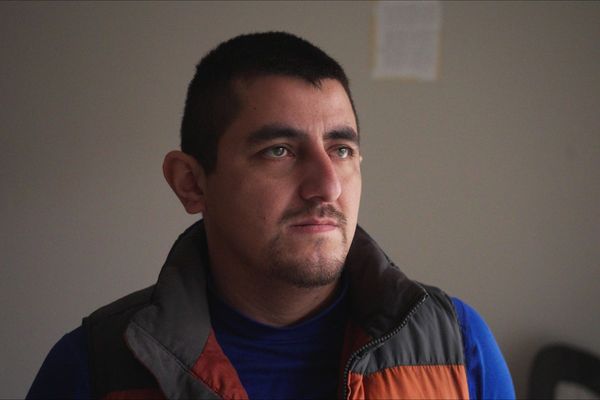
Adam Rickwood and Gareth Myatt both died in youth custody. Photographs: PA
In July I introduced a debate in the House of Lords, seeking to reverse a disturbing change in the rules regarding the use of painful physical restraint on children in custody. As a result of pressure I was able to apply, with the aid of the Howard League for Penal Reform and other concerned organisations, the government conceded an inquiry that is now looking into the usage of physical restraint in the entire juvenile secure estate, writes Lord Carlile.
The use of restraint in the four privately-run secure training centres (STCs) in England is the secret shame of our overstuffed prisons. There are only some 250 children housed in the STCs, yet those children - some as young as 12 - and their treatment at the hands of the state goes to the very heart of the failure of youth sentencing policies that breed crime not cure.
The STCs were originally designed for those children who are too young or too vulnerable to be in Prison Service-run young offenders' institutions. The STC Rules 1998 are clear that restraint should only be used when children are attempting to escape custody; injuring themselves or others; damaging property; or when inciting another child to a violent act. Yet physical restraint using "distraction techniques" - which involve up to 10 staff restraining children and inflicting pain by bending the thumb forwards or down, hitting the nose from underneath and using the knuckles to hit into the child's ribs - is used disproportionately. Often against the same children several times a day.
During the recent inquests into the death of 15-year-old Gareth Myatt during restraint at Rainsbrook STC, and the suicide of 14-year-old Adam Rickwood, who hanged himself with his shoelaces after being restrained by staff at Hassockfield STC, it became clear that restraint was routinely being used to secure compliance. In Gareth's case, because he refused to clean a sandwich toaster; and in Adam's case, because staff wanted him to go to his room. Once the lawyers for Adam Rickwood's mother raised this clear breach in the STC rules, the Youth Justice Board (YJB) signalled that the rules would receive "clarification".
In June, without any consultation beyond the private companies running the STCs, the Ministry of Justice used a parliamentary back door to scrap the previous provisos for restraint and replaced them simply with the phrase to ensure "good order and discipline". During the debate in the Lords, the Lord Bishop of Worcester, bishop to her majesty's prisons, called the use of the phrase "clarification" in relation to this change in the rules as "positively Orwellian". He was correct. The original STC rules were specific and clear on when physical restraint should be applied, whereas the ultra-vague condition of maintaining "good order and discipline" gives staff carte blanche to use this painful restraint on children whenever they like. Behaviour is being sanctioned that in any other setting would be considered abusive to the child and unlawful.
The inquiry I chaired for the Howard League into the treatment of children in custody was told of staff who baited children into situations that would result in restraint for their own gratification. For those children who have been past victims of abuse, there may even be perverse gratification which they too receive from engineering situations in which they are restrained. The children housed in STCs are, in the accurate words of the interim chair of the YJB himself, "the most troubled and damaged young people in society". Yet apparently the way to deal with these troubled and damaged children is not to constructively engage with them but instead to systematically apply painful restraint to punish and control.
We await to see whether the government's review of restraint has been a genuine effort to tackle the issue or merely a delaying tactic. The Howard League for Penal Reform is contributing to the review and will publish a dossier of evidence shortly.
This argument over the use of painful restraint is not about human rights, although that has a part to play. It is about public safety and the effective prevention of crime. Over two-thirds of children reoffend within a year of release. For male boys aged 15-18, the reoffending rate stands at 82% - rising to a staggering 96% for those with more than seven convictions.
Removed from their families and communities, children in STCs with inadequate education, mental health provision, physical activity or life skills training return to our streets burning with resentment. Often they are more anti-society than ever before. They reoffend, most likely more seriously, and are then returned to custody. The cycle goes on. With the state unwilling to treat them as the vulnerable children they are, it is no surprise that any trace of the child within is eventually effaced.
As Auden wrote: "those to whom evil is done do evil in return". These are words the government's inquiry must take heed of.
· Lord Carlile of Berriew, QC, is president of the Howard League for Penal Reform