At Motorsport.com, you can find expert analysis, on-site reporting and breaking news from all around the racing world, but this article is tailored specifically for those who are just wading into the waters of the NASCAR world. This is your comprehensive overview of what you can expect, and many answers to the pressing questions you are likely to have. We'll try not to get too in-depth, offering a basic understanding of some of the most important aspects of the sport:
Which NASCAR series is the main one?

You may have noticed that there is more than just one division of NASCAR -- the National Association for Stock Car Auto Racing. There are actually quite a few divisions, but we're going to focus on the three primary national divisions.
NASCAR Cup Series (NCS): The premier level of stock car racing. It doesn't get any higher than this. It has been around since 1949 and is the pinnacle of the NASCAR world, with 36 to 40 cars racing every weekend and a total of 36 points-paying events.
NASCAR O'Reilly Auto Parts Series (NOAPS): Formerly known as the Xfinity Series, this is the secondary level of the sport that has existed since 1982. It is the final step for rising stars before they reach the top, but several drivers have made a career for themselves as full-time drivers here. Some Cup teams also run teams in this division, but there are various independent operations as well. They hold 33 races during the year, the majority of which take place as companion events to the Cup Series.
NASCAR Craftsman Truck Series (NCTS): The third of the three national divisions, founded in 1995, and there is one distinct difference here as they are racing trucks. Here you will find both older veterans and teenagers just getting their start, and the races are shorter than the higher levels. They hold 25 events during the year, and like the O'Reilly Series, the majority of races are held as companion events on Cup weekends.
What kind of tracks does NASCAR race on?

NASCAR is oval-focused, but there are a handful of road and street courses on the schedule. At one point, there were as many as seven road/street course events, but in 2026, there are three road courses and one street course. In the past, they even raced on dirt tracks. Here's the difference between the track types:
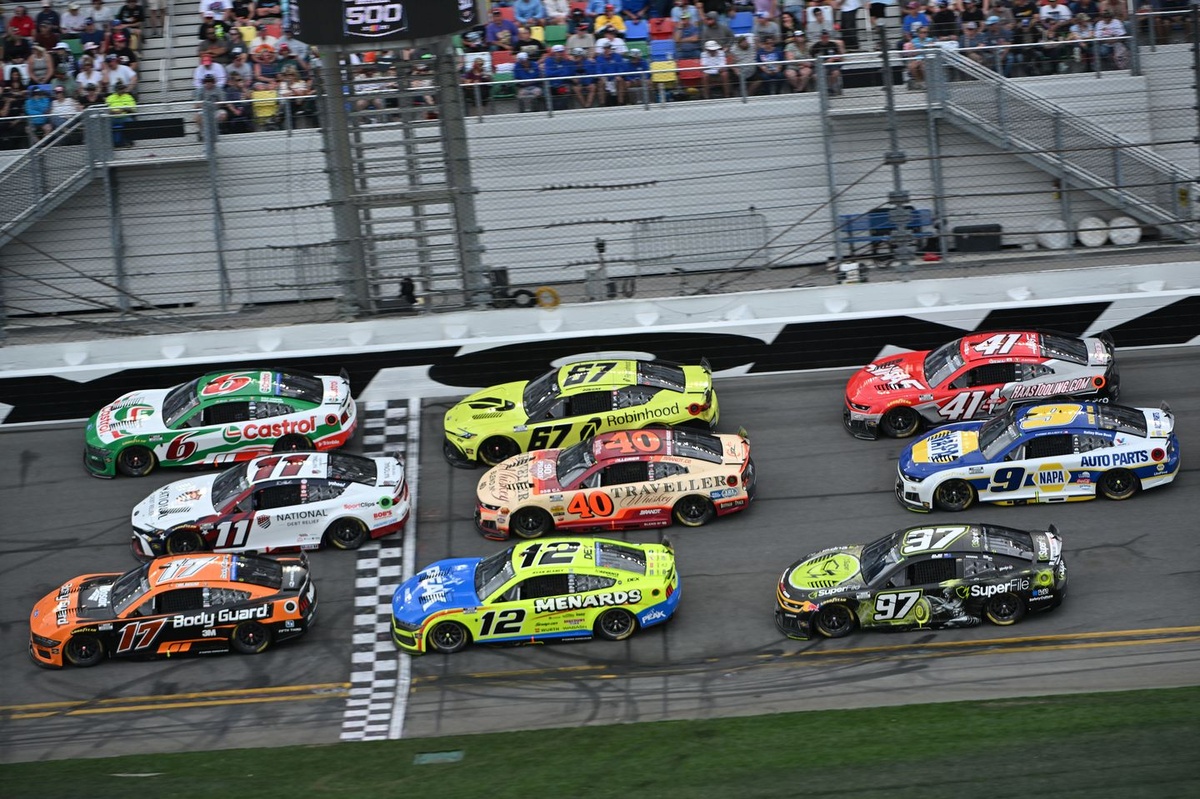
Superspeedway: The biggest and fastest tracks on the schedule, exceeding two miles in length. And due to the aggressive banking at superspeedways like Daytona and Talladega, NASCAR has restricted the car's power there due to safety concerns, creating packs where the entire field stays together for the entire race. The end result is close finishes and big wrecks.
Intermediate: Between one and two miles in length. This covers a wide range of tracks that can look very different, but the majority are 1.5-miles in length with some progressive banking. But while tracks like Darlington, Las Vegas, and Atlanta are all technically intermediates, they couldn't be more different with how they were designed and how they race.
Short track: Under one mile in length, featuring more laps than any other track on the schedule, and with lap-times around or even 20 seconds. Drivers fall a lap down quickly at these tracks, and traffic is constant.
Road/Street courses: This is what you can expect to see in the majority of racing series around the world. Right and left turns with unique characteristics that separate each venue, making them truly unique. NASCAR will go from historic road courses such as Watkins Glen to Formula 1 circuits like COTA, while also hosting an event on an active military base in San Diego.
Who gets to race and what are charters?
In Cup, there are 36 chartered teams, and beyond the monetary benefit they provide, these coveted charters guarantee teams a spot on the grid every weekend. They can be sold and leased, and the value of these charters are well into the tens of millions. There are four additional spots for 'open' or unchartered teams on the grid, and if even more show up, than the fastest four in qualifying get to join the chartered teams in the race. The rest have to pack up and go home. There is also an Open Exemption Provisional (OEP), which is a rarely used, but can be utilized only by notable racing stars to add a 41st spot on the grid.
Who owns the race teams?
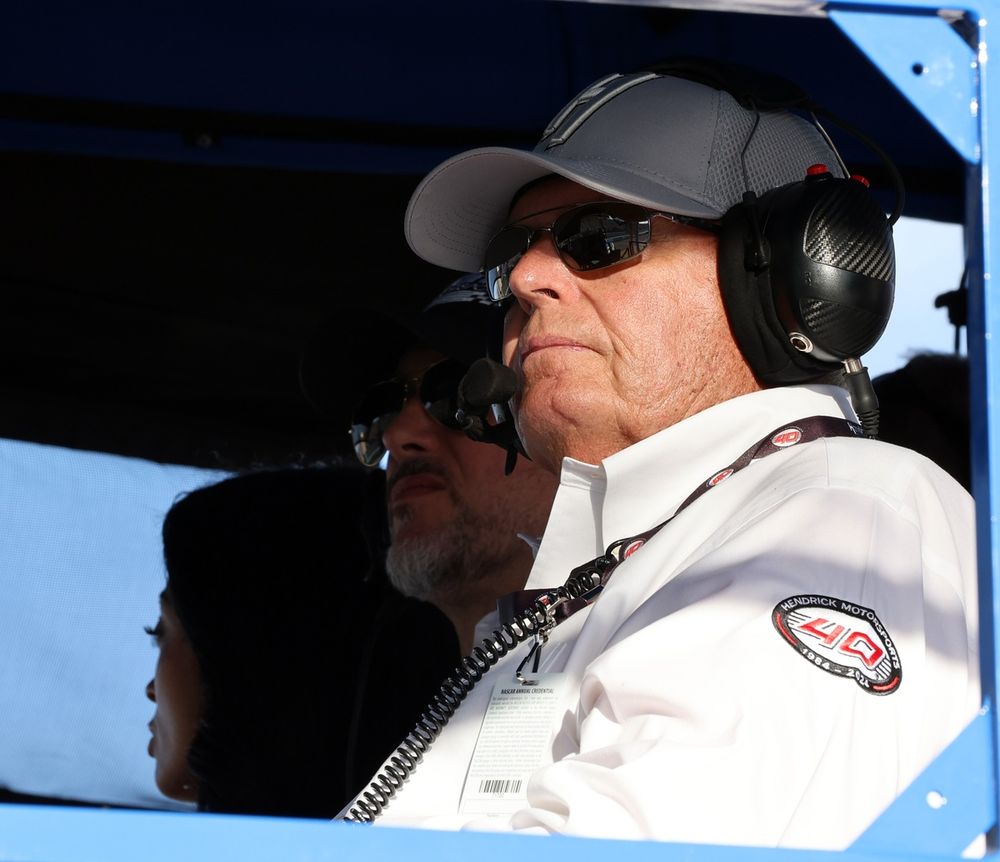
In Cup, there are 15 chartered organizations, and while some own just one car, the biggest own up to four and have technical alliances with other teams. For example, Joe Gibbs Racing owns four cars, but is also aligned with the three-car 23XI Racing team. At the other end of the spectrum, you have single-car teams like the Haas Factory Team, which has a technical alliance with larger team from the same manufacturer -- Hendrick Motorsports. These teams are owned by all kinds of individuals from former and current racers to business leaders, celebrities, and even sporting legends beyond the racing world (like Michael Jordan). Some teams have a single owner, while others have several with each holding a stake in the company.
Manufacturers and engine programs in NASCAR?
In the Cup Series, there is currently Chevrolet, Ford, and Toyota represented as manufacturers. This is the same in the lower divisions, except Ram also competes in the Truck Series. They have their own championship, with the top-finishing car from each OEM accumulates points for them as the year progresses. Teammates and drivers from the same manufacturer will often work together and share information, but it varies throughout the field.
There are four engine programs as well, with Hendrick Engines (Chevrolet), ECR (Chevrolet), Roush-Yates (Ford), and TRD (Toyota).
How are race weekends structured?
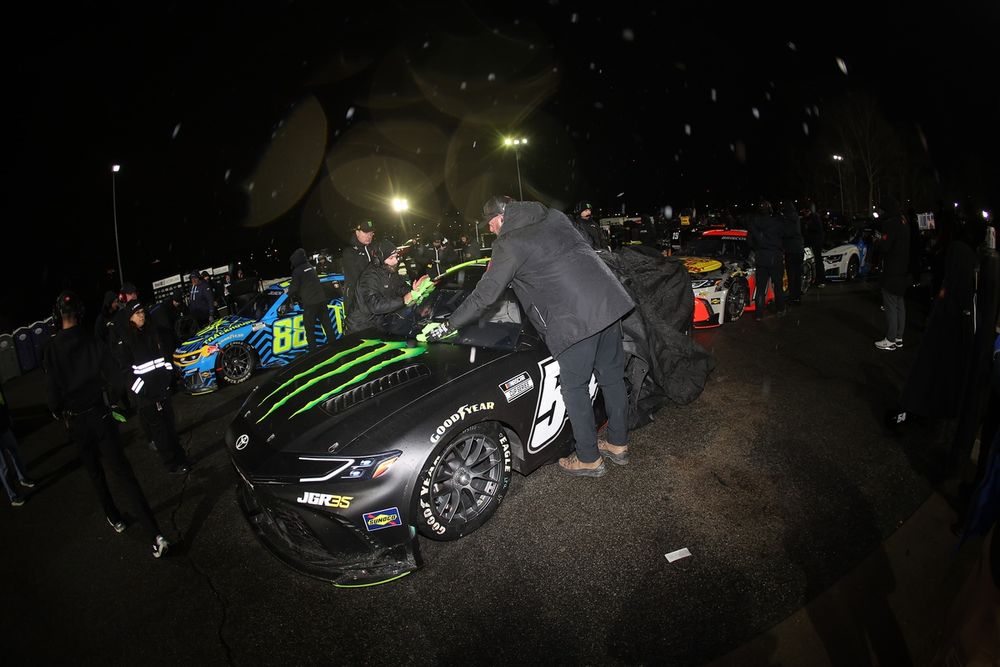
The modern NASCAR weekend is much more condensed than in the past, and for Cup, it's normally a two-day show with practice/qualifying on Saturdays and the race on Sunday. However, this isn't always the case and it does vary depending on the event.
Practice: The field is split into two equal groups ahead of every weekend, with half of the entries taking part in the first 25-minute practice as part of Group A, and then another 25-minute practice for Group B. Your group is decided partly by last weekend's finish but also the team's current position in the championship standings.
Qualifying: Those aforementioned groups also decide the order in which cars go out for qualifying. For most ovals, it is a single-car qualifying with one car out of a time. The best performing drivers from the previous race who are also high in the standings always go out last, when conditions are normally more advantageous. On road/street courses, NASCAR adopts a group qualifying format where it operates more like a practice session, with the two groups getting equal time to go out and run as fast as possible. However, you can NOT change tires.
Race: Most Cup races take around three hours, and the majority fall between the 400 to 500 mile range. The race itself is broken into three stages. At the end of Stage 1 and Stage 2, a competition caution is thrown, bringing the field back together and giving the entire field an opportunity to pit before they go back racing. We'll get into more of the specifics of the races themselves shortly...
What happens during cautions and how do restarts work?
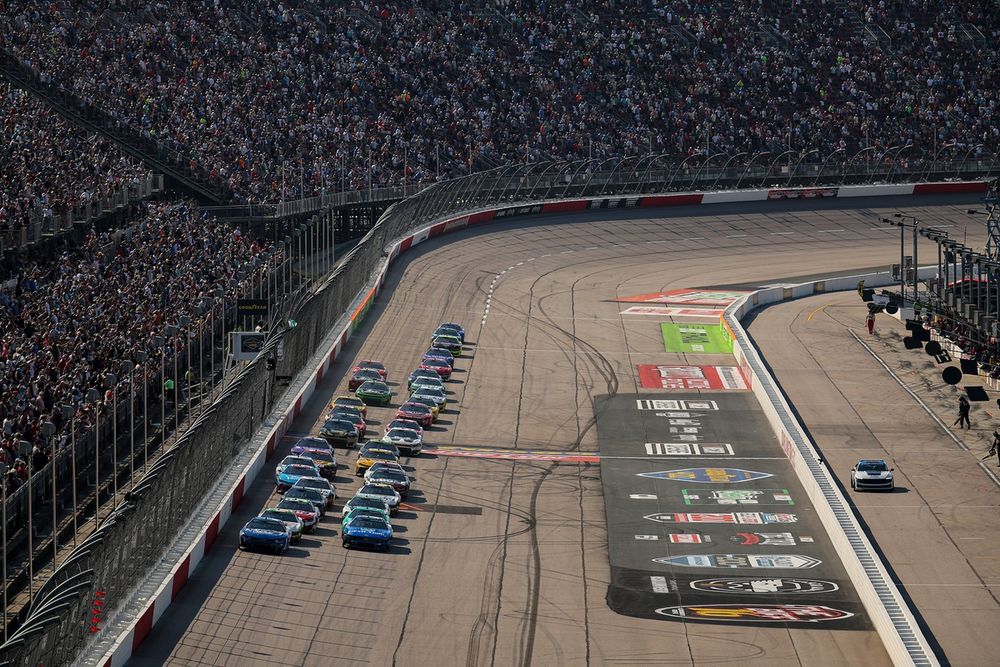
When the yellow flag is displayed, the entire field has to slow down to a reasonable speed and follow the pace car (or safety car) around the track. Once race control chooses, pit road will open (signified by a green light at the entrance) and all lead lap cars can pit. Any cars that were lapped by the leaders have to wait and pit the following lap. The highest running car not yet on the lead lap will be awarded a free pass, allowing them to get back on the lead lap. Other cars can choose to stay out and if the leaders pit, they become eligible for a wave-around. They catch back up to the tail-end of the lead lap, but unlike the free pass recipient, they cannot pit for fuel or tires.
At the end of the caution period, the field lines up double-file. There is a 'choose rule,' which a orange symbol painted on the track. Drivers will move to either the left or right of it to decide which lane they prefer to start in. There is also a designated restart zone, and the leader can choose to go at any point within that zone, but never before and definitely not after. Doing so before will result in a penalty, and doing so after will at best cost them the lead, or at worst trigger a major pileup crash.
How do pit stops work?
In NASCAR, pit stops take around 8-12 seconds for top Cup Series teams. Before the race, everyone gets to pick a stall based on where they qualified, and there are definitely stalls that are highly sought after. The pole-sitter will often pick the No. 1 stall, as it's a clean way out with no cars blocking their path and the end of pit road directly ahead of them.
Coming down pit road, there is a strict speed limit that must be obeyed, and since drivers don't have speedometers, they have to rely on the RPMs on their tachometers to make sure they aren't speeding.
But once in the box, they have the option to take two fresh right or left sides, four fresh tires, fuel or not, and other minor adjustments. These often include removing tear-offs from a dirty windshield, cleaning debris from the grille, and providing the driver with whatever they need inside the car. It's also the perfect time to make repairs.
There is a jackman, a tire carrier, two tire changers, a fueler, a sixth member for serving the driver, and several people on the other side of wall providing assistance during these stops. The crew chief, who is basically like a coach in the stick-and-ball world, oversees it all and makes the critical calls that can win or lose the race.
A modern Cup car takes up to 20 gallons of fuel, and there is one center lug nut on the wheels. This is a recent change, and the lower two national divisions still use five smaller lug nuts. A lot of race-ruining penalties can also happen on pit road, and while most result in end-of-line or pass-through penalties, the worst is a detached wheel. If you leave the pits with an unsecured wheel and it comes off, then the car is held for two laps, with the jackman/tire changer facing a two-race suspension.
If you crash or stop, is your race over?
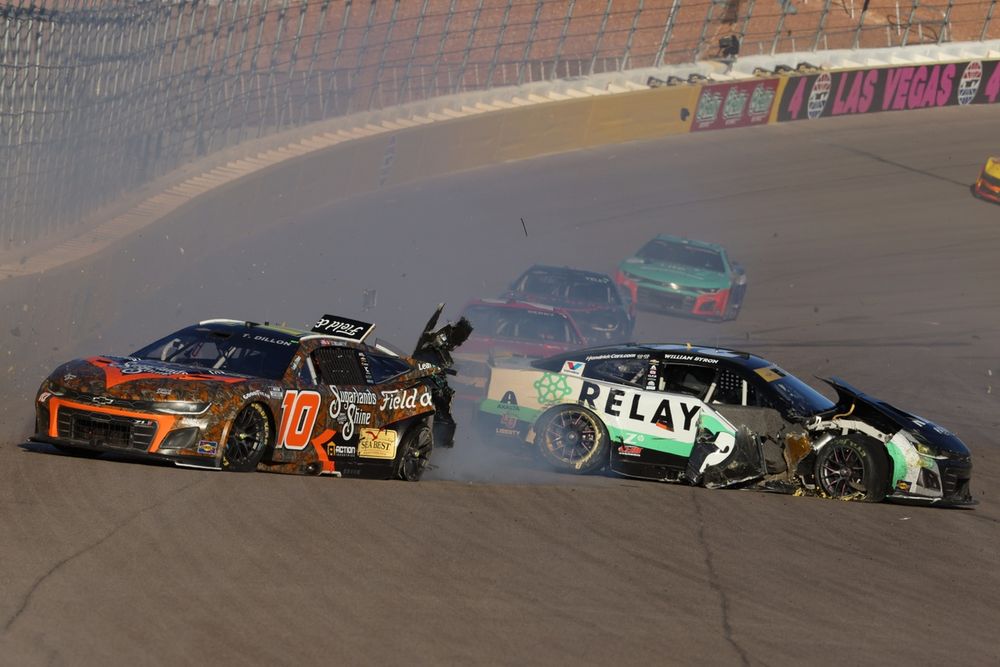
Not necessarily. If the damage is repairable and NASCAR determines that the chassis is safe, a car can return to any race eve. while several hundred laps down. Stopping on track will get you a push or tow back to the pits/garage, where the team can work to re-fire the car and rejoin the race. If a car fails to return to the race, that is recorded as. DNF, but there is no penalty in that. A driver who finishes the race in 35th or falls out halfway through and places 35th with DNF will still score the same amount of points.
What is overtime?
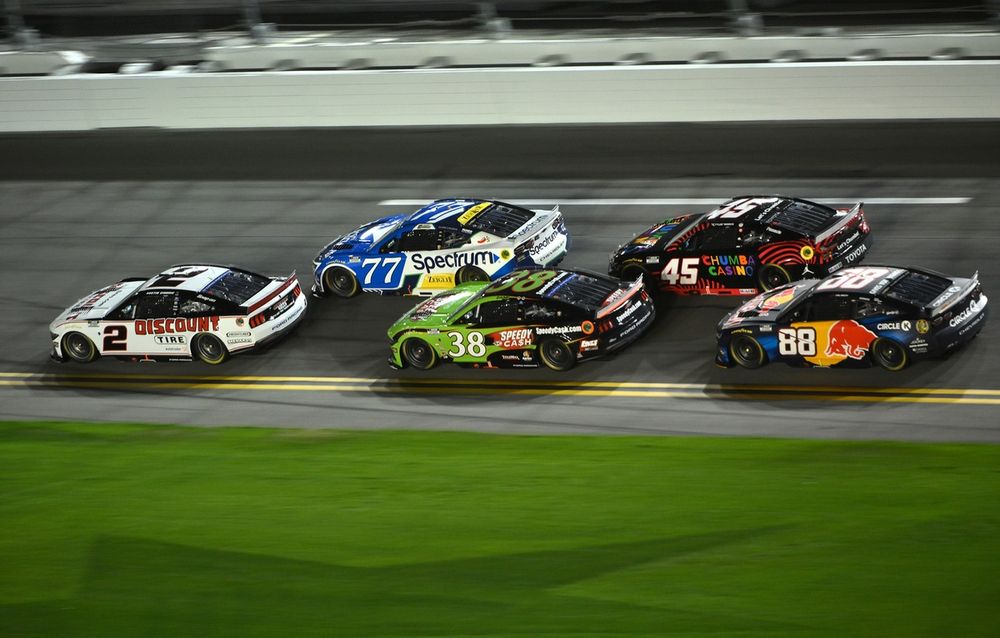
Unlike most other motorsports out there, when NASCAR says a race is 200 laps long, there is always an asterisk there. That is because NASCAR has overtime. If something happens before the last lap that necessitates a caution, NASCAR will extend the race to give the fans an opportunity to see a green-flag finish. They will do unlimited overtime restarts if need be, which are two-lap dashes to the checkered flag. But once the white flag flies and the leader has begun the last lap, any incident that forces a yellow flag will end the race. The field will be frozen at the time of caution and NASCAR will review video footage to make sure they get the final results correct.
What is the points system?
The points system has changed a lot over the years, but at the moment, it goes like this:
Race winner: 55pts
The rest of the field: 35pts for 2nd, then decreasing by one for every position until 36th place earns one point. Positions beyond 36th all earn exactly one point as well, so no one goes home with zero points scored.
Stage points: As we said before, NASCAR races are also broken into stages -- mandatory cautions twice per race on most weekends. (Three for the Coca-Cola 600, NASCAR's longest race) At the end of Stage 1, the leader earns ten points, and it then decreases by one until the driver running tenth earns a single point. They same things happens at the end of Stage 2.
What is the Chase/playoffs and how does it work?
In 2026, the championship format was changed and made simpler. At the end of the 26th race, the top 16 drivers in points will be part of the 'Chase' for the championship. The points are reset, with predetermined intervals based on where each driver is in the standings. The points leader will reset with 2100, second 2075, third 2065, and then five-point drops until 16th in points has 2000. Then, the driver among the top 16 who scores the most points in the final ten races is champion.