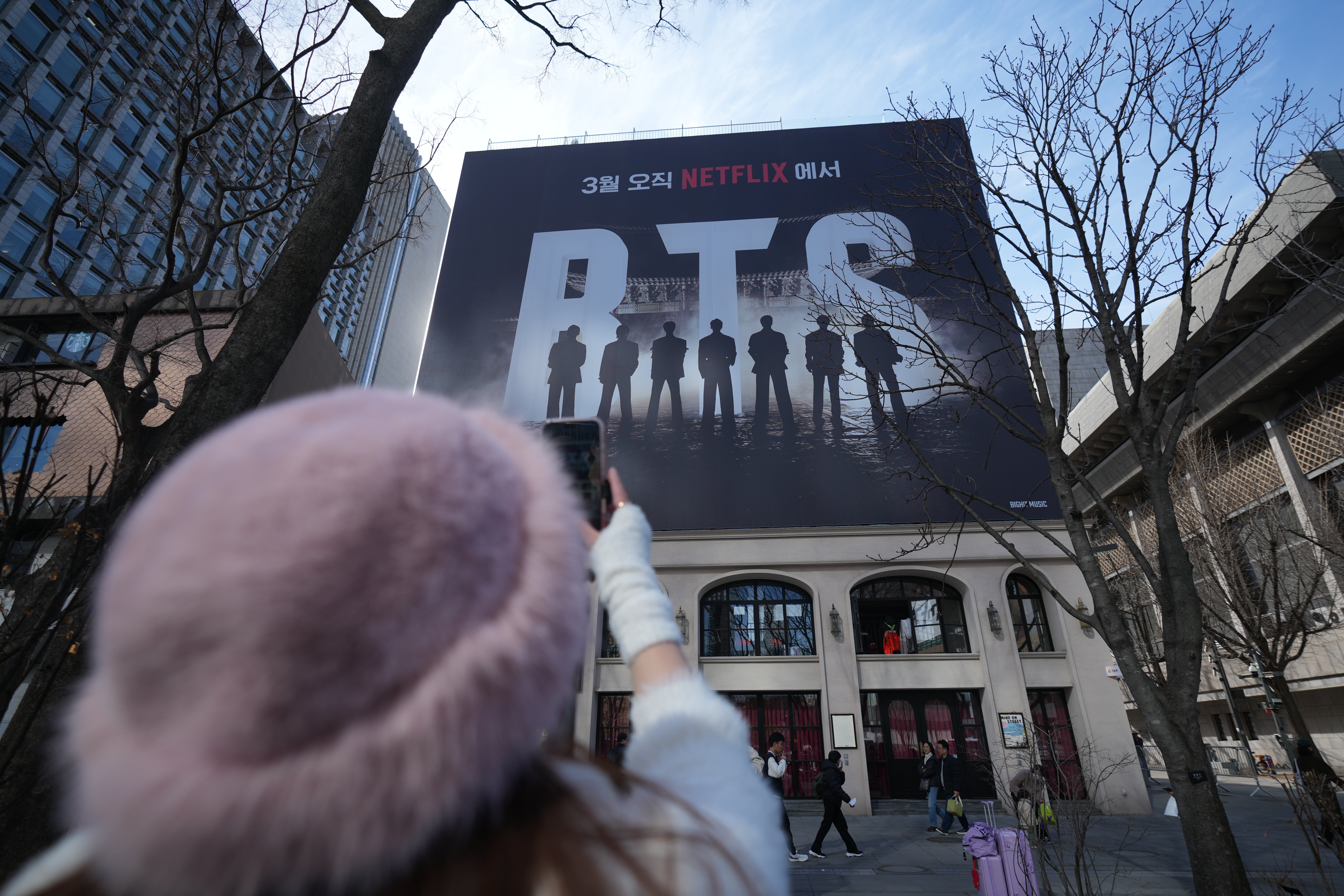
A new Netflix documentary, BTS: The Return, offers an intimate glimpse into the K-pop phenomenon BTS as they navigate their highly anticipated comeback following a nearly four-year hiatus from full-band activities.
The film, produced by This Machine and HYBE, captures the seven members – RM, Jin, Jimin, V, Suga, Jung Kook, and j-hope – as they reunite and prepare for their latest album, ARIRANG, released this Friday.
The documentary immediately addresses a significant chapter in the band's life: South Korea's mandatory military service.
South Korea's mandatory military service comes up fast
All able-bodied men aged 18-28 are required to serve 18-21 months, a conscription system designed to deter aggression from North Korea.
The film opens with a livestream from a beach, where RM reflects on having "learned to hustle" in the military. This is swiftly followed by footage of the members getting their heads shaved and donning uniforms, before quickly transitioning to their reunion, underscoring the reality of their separation since September 2022.

The road to ARIRANG was swift
Upon completing their service, the band swiftly decamped to Los Angeles in the summer of 2025 to commence work on ARIRANG, their 14-track fifth studio album and first in almost four years. Living together in tight quarters, the production timeline was equally compressed. Jin, for instance, joined the group in Los Angeles the day after concluding his 2025 solo tour, missing some initial writing and recording sessions.
RM acknowledged the precarious nature of K-pop group longevity, referencing the "seven-year curse" where groups often disband or lose members. However, BTS has defied this trend, remaining one of the world's most popular bands. The central question for them became: "Where does their sound go from here?" RM stated, "We're doing a lot of experiments, trying to find out, like, what makes us special. What makes us BTS?" Jimin echoed the urgency, adding, "We've been out for too long. Now that we're finally out of the military, we don't want to extend this break."
Los Angeles was a creative hub
Los Angeles proved to be a significant creative hub, with the documentary showcasing the members in the studio alongside notable producers such as Diplo and South Korean songwriter Pdogg.
The film also captures their in-studio dynamics, from Suga's focused guitar playing to V comforting an anxious Jin, as they grappled with selecting a lead single. The band later returned to South Korea to finalise the album.
The album really started to connect when they had a story
A pivotal moment in the album's development came when Boyoung Lee, executive creative director at Big Hit Music, shared a historical narrative. In 1896, a group of Koreans arrived in the US for education and met music producer Alice C. Fletcher, with whom they recorded the first-ever Korean-language song in the US: "Arirang."
This traditional folk song, dating back to the 1400s, inspired the album's title and underscored BTS's commitment to celebrating Korean culture. Suga advocated for changes to the song "Normal," feeling it contained too much English, while RM affirmed, "For this album, authenticity matters."
Preparing for their comeback was daunting
The preparations for their comeback were daunting, with members expressing reservations about how they would be received after such a long absence and in an industry demanding constant reinvention.
Their dedication was evident in surprising ways, such as V practising baseball throws in a car park before throwing a pitch at Los Angeles' Dodgers Stadium, clearly aiming to impress fans. Even during their downtime, enjoying pork belly, soju, and beer at their shared Los Angeles home, discussions invariably turned to music, reflecting on past choices and future aspirations. Jung Kook openly pondered, "I wonder if we've done a good job here."

They were unsure about ‘Swim’ as the first ARIRANG single
A point of contention arose regarding "Swim" as the potential lead single, with some members questioning its energy level, much like their initial doubts about "Dynamite" in 2020, which went on to become a global smash and their first all-English single to debut at No. 1 on the Billboard Hot 100.
Suga, however, was an early proponent of "Swim," envisioning fan excitement: "'Oh, they can come back with a song like this?' I think it'll be cool." RM concurred, stating, "It's a cool, mature song for us. It's time we give off a grown-up vibe." The desire to present a more adult image and create music reflecting their current lives was a clear priority. Suga articulated this, saying, "We've all gotten older in general. We tried to express more about being an adult."
The media has unmasked Banksy, again. Art experts reveal what happens next
‘We’re back’: BTS thrills thousands of fans with massive comeback concert in Seoul
Police release video of Justin Timberlake’s 2024 drink driving arrest
Singer Catherine Harding speaks out over Chappell Roan incident with her daughter
Chappell Roan addresses security incident with Jude Law’s daughter
Chappell Roan’s security accused of leaving Jude Law’s 11-year-old in tears