
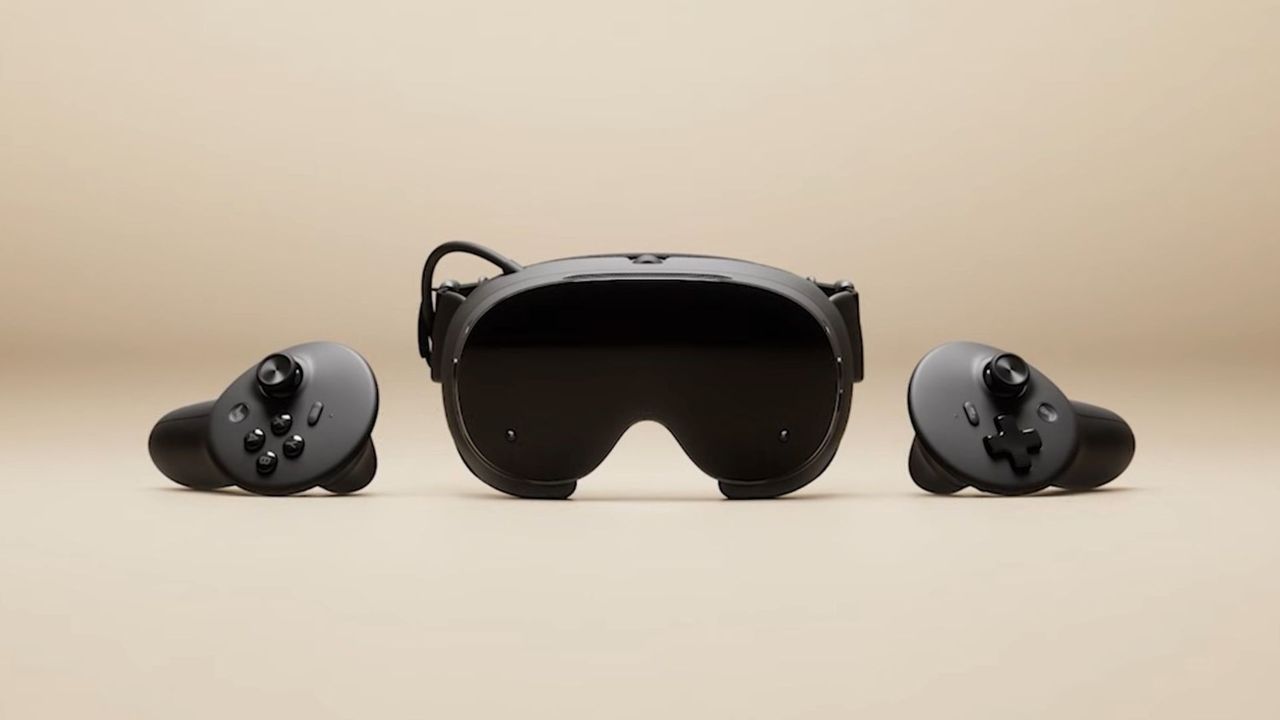
We've just had a new update from Valve about the Steam Frame, so I'm here to tell you everything we know so far. Originally slated for a release in "early 2026", the Steam Frame's price and official launch date should have been with us by now. Valve took to a new hardware blog to say that a release in the first half of 2026 is still on course, but amidst a RAM pricing crisis, we aren't getting a proper price and launch announcement just yet.
We did, however, get some more handy information and close-up looks at a few finer details of the Steam Frame in this new blog post though, so it's time to re-examine everything we know. From the outset, it looks as though Gabe Newell's company is taking a really different approach with this headset than it did with the Valve Index. Valve's first headset earned a spot among the best VR headsets, but it was very much billed as a high-end device that was still in the early era of at-home VR gaming devices. Steam Frame looks like it wants to fit in with a new era of Valve's hardware which is priced more reasonably, although we await confirmation on that.
Accompanying this head-mounted display (HMD) is a new Steam Controller, and the latest iteration of the Steam Machine, both of which are billed for launch at the same time as the Frame. But now that we've had a bit more information from Valve, let's have a closer look at what this headset can do, what we can expect, and if it'll be right for you or not.

What is Steam Frame?
The Steam Frame is one-third of a new family of gaming hardware coming from Valve. It runs on SteamOS as a standalone device, but thanks to a wireless adapter bundled in with it, it can stream a low-latency connection to a gaming PC to make the most of beefier computing hardware.
We know it's arriving in early 2026, but our wait for an official release date and price is ongoing. The most that we know about it comes from Valve's official announcement video, which you can watch below.
What are the Steam Frame's specs?
Processor |
4nm Snapdragon ARM processor |
Memory |
16GB Unified LPDDR5X RAM |
Power |
Rechargeable 21.6 Wh Li-ion battery, one USB-C 2.0 port for charging and data - charging with USB-C, 45W |
Wi-Fi |
Wi-Fi 7, 2x2, Dual Radios enable concurrent 5GHz Wi-Fi, and 6GHz, VR streaming |
Storage |
256GB or 1TB UFS + MicroSD card slot for additional storage upgrades |
Lenses |
Custom Pancake |
IPD |
Target range 60mm-70mm |
Display type |
LCD |
Resolution |
2160 x 2160 per eye |
Refresh Rate |
72-120Hz (144Hz experimental) |
FOV |
Up to 110 degrees horizontal |
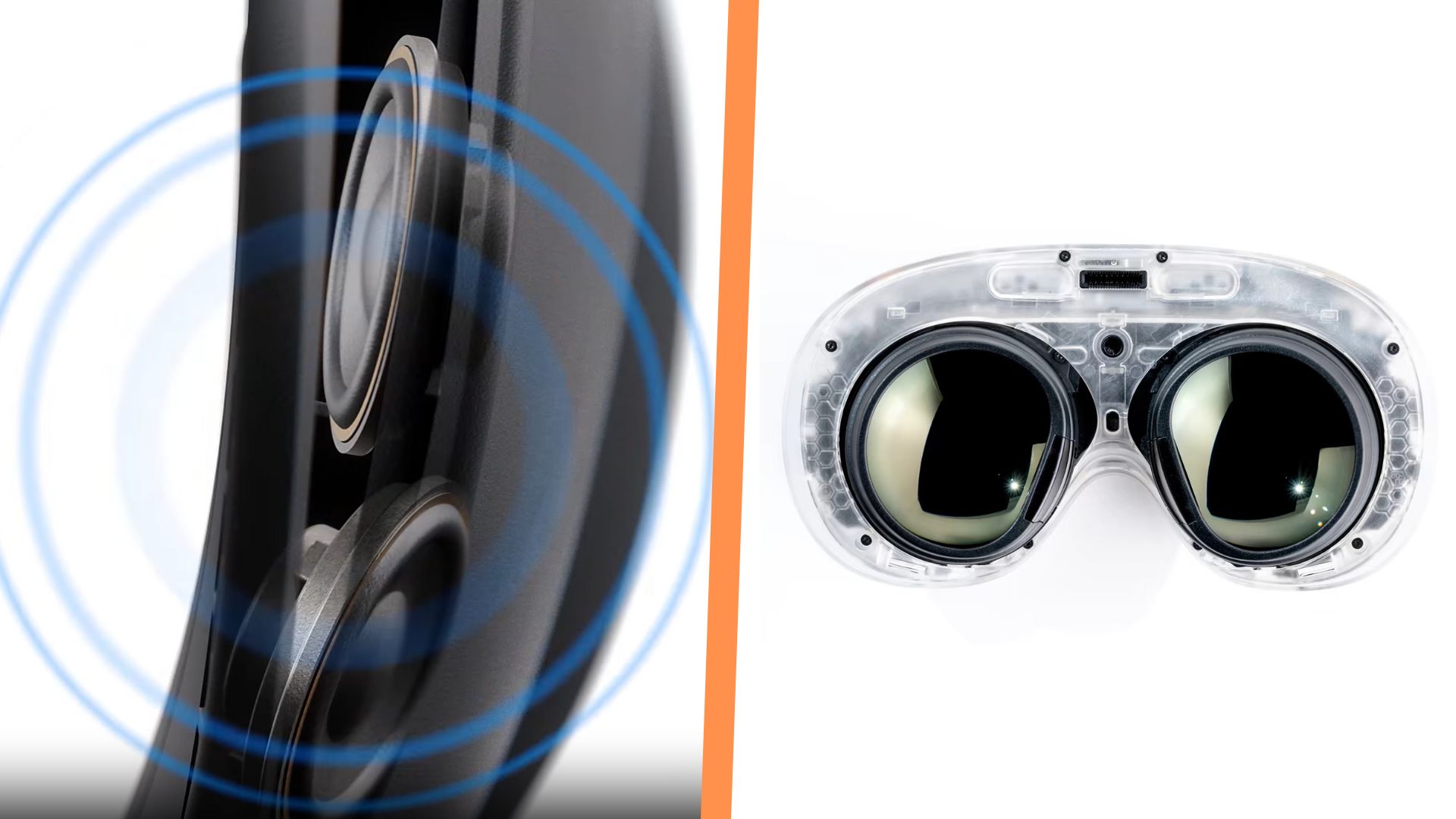
Thanks to Valve's blog post, we have some updated spec tables about both the headset and its controllers. Namely, the headstrap is modular, meaning that besides the integrated dual audio drivers and rechargeable battery on the rear, the headstrap is lightweight at only 245g. The Core module can be separated from the headstrap for others - maybe suggesting we'll get some third-party options that aren't too dissimilar to the best Meta Quest accessories.
We also know now that glasses can be worn inside the headset, although it will depend on the thickness and width of the frames. Valve said in its recent blog post that many of the team creating Steam Frame are glasses wearers, but an updated table of specs says that the max width of glasses in the headset will be 140mm.
Wireless Adapter |
Included in the box, Wi-Fi 6E (6GHz) |
Bluetooth |
Bluetooth 5.3, 2.4GHz dedicated link for Steam Frame controllers |
Audio |
Dual, integrated speakers |
Microphone |
Dual Mic array |
Size |
175mm x 95mm x 110mm (core module + facial interface) |
Weight |
440 g - core module + headstrap, 185 g - core module |
OS |
SteamOS 3 (Arch-based) |
On the matter of controllers, we now know that they'll operate via one replaceable AA battery each, with a 40-hour battery life. They'll each weigh 130g with the battery in.
When will Steam Frame launch?

We know that Steam Frame will launch in the first half of 2026, but that's a pretty generous window for now. It's hard to predict an exact date, since it will largely depend on the ongoing RAM supply shortage.
I would personally guess that late March or early April is the earliest we'd see the new Steam hardware hit the shelves. This is just speculation though, and we're still waiting for official confirmation from Valve about when Steam Frame will launch. The latest blog post from Valve on the issue said:
"Our goal of shipping all three products in the first half of the year has not changed. But we have work to do to land on concrete pricing and launch dates that we can confidently announce, being mindful of how quickly the circumstances around both of those things can change."
How much will Steam Frame cost?
Similarly to the launch date, we still don't know an official price from Valve for the Steam Frame. Again, this has been impacted by global memory supply shortages and price inflation.
"When we announced these products in November, we planned on being able to share specific pricing and launch dates by now," read a blog post from Valve.
"But the memory and storage shortages you've likely heard about across the industry have rapidly increased since then. The limited availability and growing prices of these critical components mean we must revisit our exact shipping schedule and pricing."
I, for one, think that an accessible price is critical to the Steam Frame's success. If Valve wants to strike a balance between usable technology for modern gaming and a price that means a mainstream audience can adopt it, as it did with the original Steam Deck, this will be a crucial decision.
Personally, I think the team Frame needs to be as close to the $500 mark as possible to be successful, especially against the Meta Quest 3 and 3S, but I think a more realistic expectation will be between $600-$700.

What we do know is that the VR market has shifted dramatically since the Valve Index arrived, and not every standalone device is created equal - or priced the same.
Back in the Valve Index's day, PC-tethered headsets were the name of the game, but they were a luxury item that cost at least $1,000. Thankfully, the hardware has come a long way since, because you don't need silly room tracking modules, or even wires, if you don't want them.
Now, we have headsets like PSVR 2, which beats the Valve Index in a few of its specs and features, and costs under $500. Taking up a bigger chunk of the market, though, are standalone devices, and since it's rumoured that Valve Deckard will fit into this niche, its prices could point to a more reasonable (and affordable) device than last time.
I'd personally guess that, based on its specs, the Steam Frame won't cost as little as the Meta Quest 3S, but probably a little more than the 512GB Quest 3 and Pico 4 Ultra. If Valve really wants to take the fight to Meta, it should be aiming as close to the Quest 3's price spot as possible.
I certainly don't see the Frame costing as much as Galaxy XR or Apple Vision Pro, mainly because it's not targeting a spatial computing, high-end niche market, and it doesn't have the really expensive OLED panels those headsets do.
Perhaps most appropriate for comparison is the HTC Vive Focus Vision, a PC-tilted but still standalone VR device. It's designed for visually lossless VR gaming on PC, so it's a natural competitor to whatever Valve is cooking up. That headset costs $999 - which aligns it closer to the original Valve Index.
I'd personally like to think that Valve has learned from the affordability of its Steam Deck and Steam Deck OLED, so I'd hope the Valve Index undercuts HTC. But it entirely depends upon the chipset used, because if it can offer substantially more power than a Quest 3 or Pico 4 Ultra, it'll be worth the extra money versus one of the best gaming handhelds.
Some need-to-know Steam Frame Features
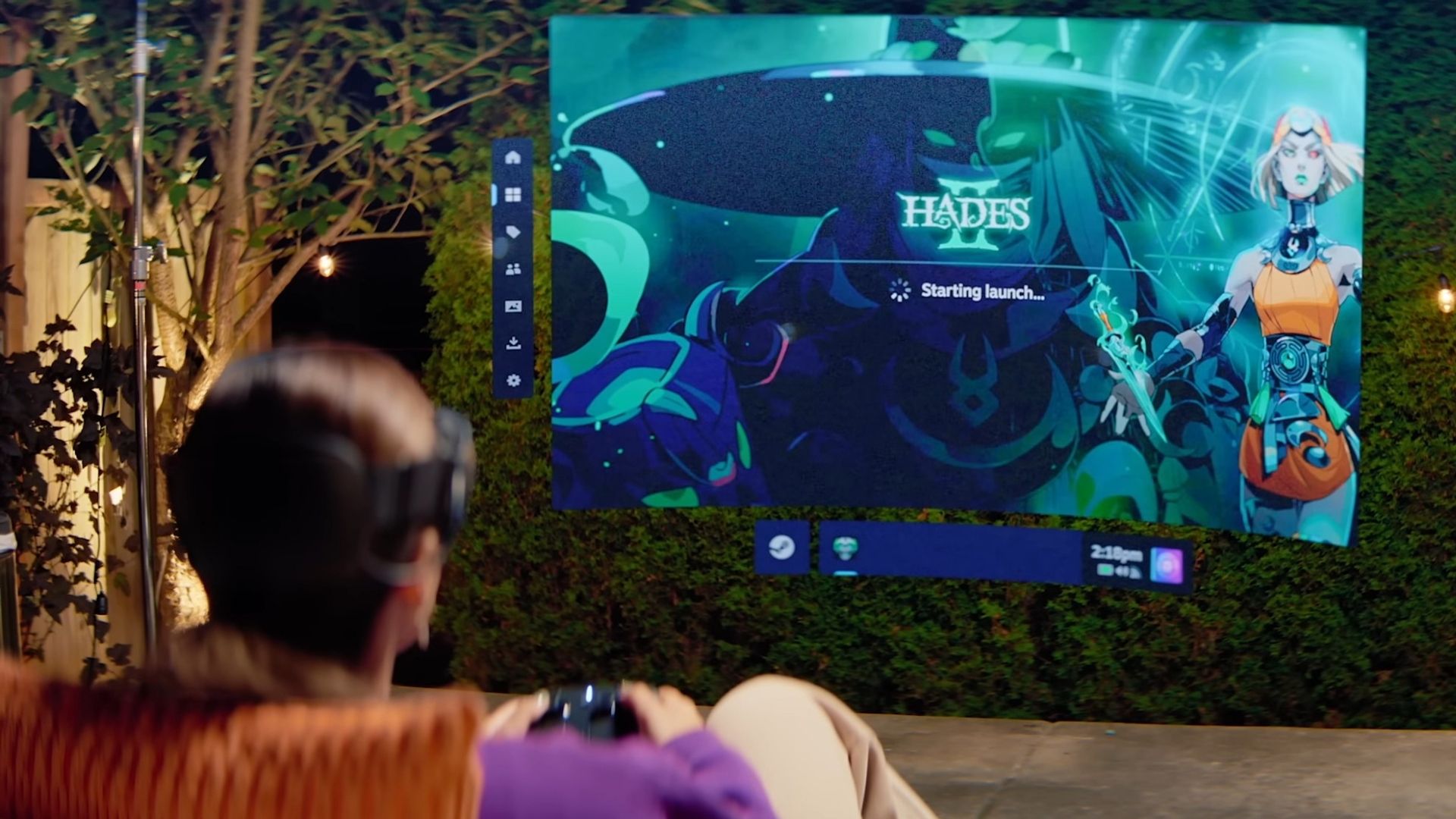
We now know the difference between foveated rendering, found in other VR headsets up until now, and the foveated streaming which Valve is referring to in the Steam Frame. In fairness, they seem very, very similar, but foveated streaming will allow for wider use in games that don't support it from a developer level.
Foveated rendering is when eye tracking data is used to render high resolution pixels to the specific area a player is looking at. Foveated streaming uses the same eye-tracking data to communicate with the PC you're using streams high resolution data to where the player is looking. Essentially, it moves the power demand from the headset to the PC you're playing on, and applies it to all the signals travelling between the two. Valve claims this is so quick you won't notice it.
While SteamOS might not be the easiest integration for streaming services, you will be able to watch content from streaming platforms using the integrated browser, which Valve says can work in a theatrical mode.
What games will Steam Frame be able to play?

Since it runs on Steam OS, Frame will be able to play your entire Steam library - both flat screen and immersive titles. The controllers have a split-gamepad design, which will make playing flat screen games a lot more intuitive, although you will be able to pair the headset with the new Steam Controller, and presumably, a few other best PC controller contenders.
Unlimited access to SteamVR gives the Frame loads of titles to play at launch, but we haven't heard any confirmation of any new VR games made by Valve for the new headset - like we did with Half Life: Alyx.
"Valve Deckard" and what we heard about the Steam Frame in leaks and rumors
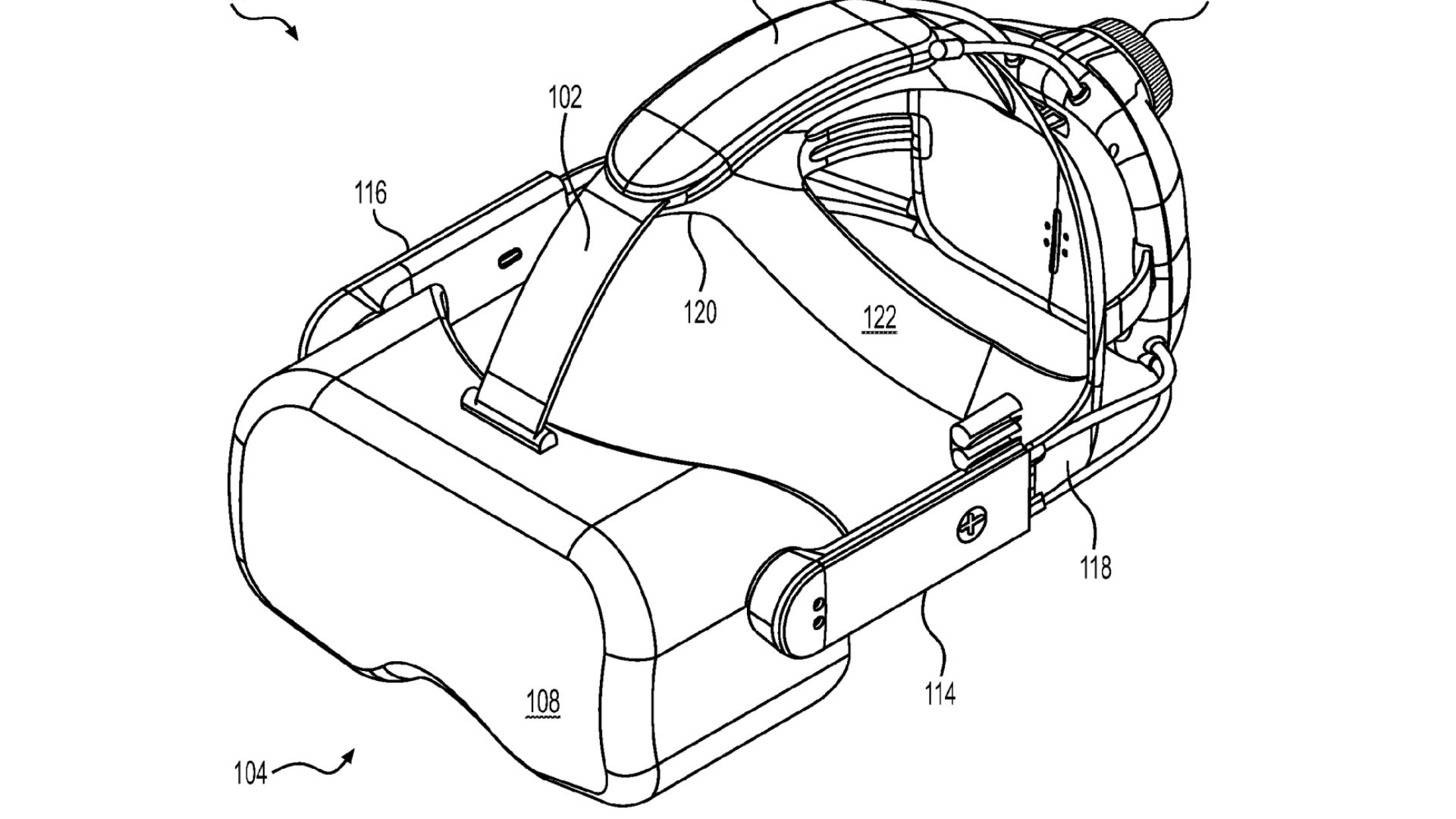
Speculation that Valve was making a new VR headset actually started way back in 2021. Gabe Newell, Valve's CEO, said at a panel talk that the company was making big investments in new headsets. While that's hardly a confirmation that it's been working on a new device since then, it showed that Valve has VR plans beyond the original Index.
pic.twitter.com/Xu2ikA5A4FDecember 1, 2021
More recently, speculation and rumours from Gabe Follower on Twitter (who has a notable track record of releasing Valve's plans ahead of time) said that Deckard will be a new standalone VR headset that will run on a refined version of SteamOS. That means it'll be able to be used without the addition of a gaming PC, and that it'll run on the same operating system as Valve's Steam Deck and Steam Deck OLED.
The purported bonus of running on this OS isn't just that it puts Valve's SteamVR library front and center, but that non-VR games that already run on a Steam Deck will be playable on Valve Deckard for even more portable, play-on-the-go versatility.
Several people have confirmed that Valve is aiming to release new standalone, wireless VR headset (codename Deckard) by the end of 2025. The current price for the full bundle is set to be $1200. Including some "in-house" games (or demos) that are already done. Valve want to give… pic.twitter.com/alHzQuwNvcFebruary 26, 2025
Even though the device is titled to be a standalone headset, it's also possible that the Valve Deckard stays true to its roots and has either HDMI or DisplayPort connectivity for those who want a more powerful, visually lossless VR experience.
According to leaked schematics, Deckard will be paired with controllers that are codenamed "Roy" and look fairly similar to standard VR controllers we've seen already. It looks as though, like Meta Quest 3, Valve has ditched the tracking rings on these ones, though.
In April of 2025, SadlyItsBradley, one of the most well-known sources of VR leaks on the internet, came out with news that Valve has apparently been importing equipment to manufacture HMDs (head-mounted displays) and facial interfaces in the US. The "insider" posted shipping manifests and images attesting to this report, which can be seen below.
Valve has been importing equipment to manufacture VR headset facial interfaces inside the USAThe equipment is being provided by Teleray Group who also manufactured the gaskets for the Valve Index and HP G2 Omnicept pic.twitter.com/7iukcZhKz5April 9, 2025
This led a lot of press to believe that Valve Deckard might not be so far off its rumored 2025 timeline, and that it would seem the headset is being manufactured, at least in part, in the US.
According to a more recent set of reports in May, which again, should be taken with a pinch of salt, the founder of Lynx, a French startup in the XR space, has some knowledge of Valve Deckard. Stan Larroque said on Twitter, "The design of Valve next HMD is quite amazing!
"I would be equally pissed if Lynx nextgen ID got leaked so I won't share more. I'm just excited for good new XR HMDs. The HMD-making world is so small, we all share the same suppliers for some components."
Larroque later claimed that Deckard won't launch until 2026, but this is the first bit of speculation that points to a launch date outside of 2025.
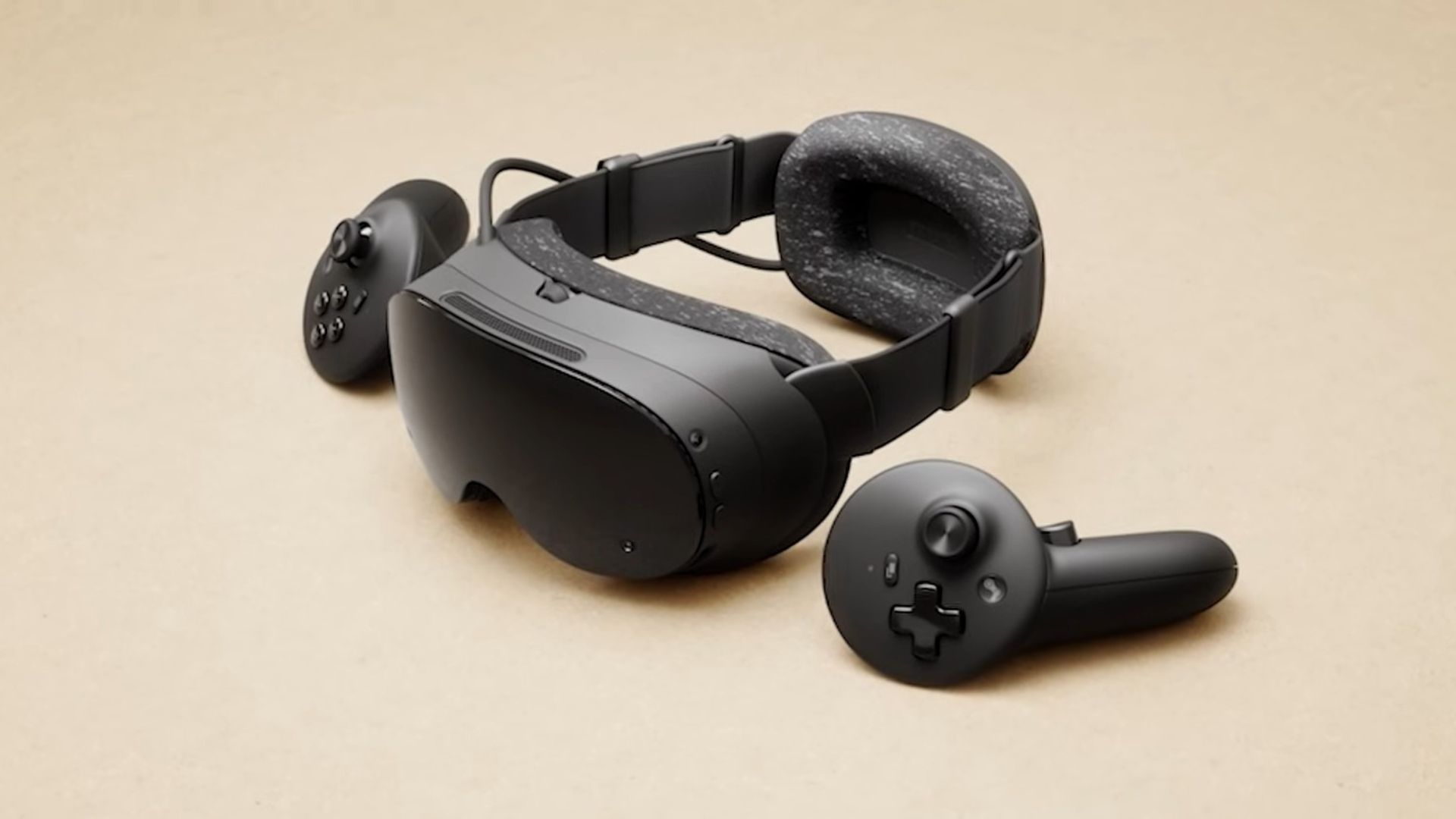
The latest news about Valve Deckard before the official announcement came from a report from UploadVR, which seems to suggest that Valve's next VR headset had entered mass production.
The report stemmed from a Chinese analyst group called XR Research Institute, which apparently claimed that the launch was set for 2025, in the holiday season. While that turned out to be untrue, it's believable that the device has entered production. I'm still unsure about the quantities it cited, however.
XR Research Group estimated that the new Valve headset is set for a production run of 400,000 to 600,000 units per year - which is a similar ballpark figure to the Apple Vision Pro's production numbers. That does hint that this headset will cater to a higher-end market, since the sales figures of the Meta Quest 3 and 3S are both slated to be in the millions, and they're at more affordable prices. Since Steam Frame shares the same design ideology as the Steam Deck (an accessible and fairly affordable gaming device, I'm not sure this will be accurate).
Deckard DV1 and DV2 models appeared in tonight’s SteamVR betaFor Valve hardware: DV units are the final stages before the model (PV) that consumers will buy pic.twitter.com/xO4PJop1WqOctober 9, 2025
Perhaps most interestingly, renowned VR leaker SadlyItsBradley also posted some code from an updated SteamVR beta, which people took to suggest that not one, but two different Valve headsets are on the way. This could mean that two different SKUs are headed for the shelves - but Valve hasn't confirmed this, so I don't think it's worth believing for now.
Upgrading your PC for Valve Deckard's arrival? Take a look at the best RAM for gaming, the best CPU for gaming, and the best graphics cards.







.png?w=600)




