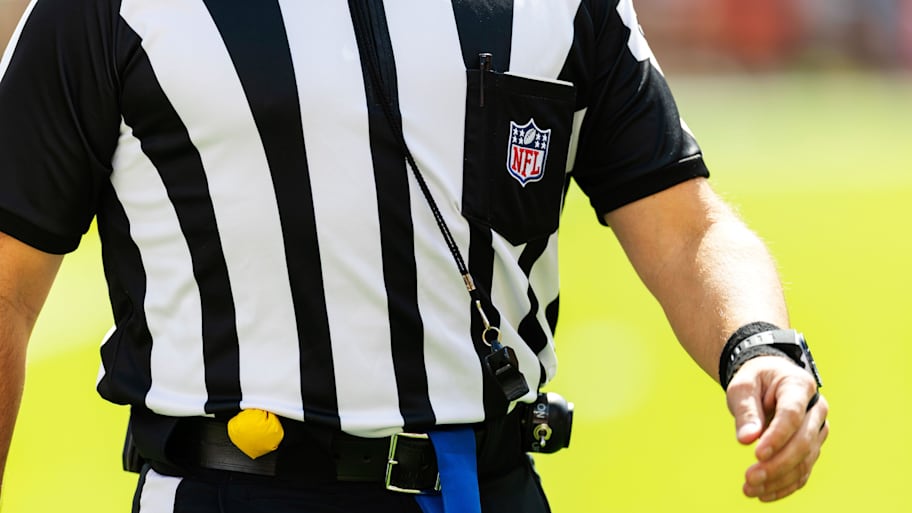
The NFL and its referees' union are racing against the clock to hammer out a new labor deal ahead of a May 31 deadline, and things are ... not going well. Negotiations have stalled in recent days, and the league has since begun preparing to hire replacement officials to use during training camp and beyond in the event of a lockout.
But how exactly did we get here, and what are the issues at the heart of the dispute? Let's take a look:
What are the NFL and the referees' union negotiating?
The league and the union representing the officials it employs—known as the NFLRA—have been in talks over a new collective bargaining agreement since 2024. The current CBA, which was signed in September 2019, will expire at the end of May, by which point both sides would have initially hoped to have a deal.
But conversations have soured as of late. Last week, what was supposed to be two days of negotiations was reportedly called off after less than a half day.
The biggest sticking points at the heart of deliberations are those pertaining to salary—the NFLRA reportedly wants an annual increase of 10% per year for the next six years, while the league is said to have offered 6.45%, per reporting from The Athletic—as well as the length of the offseason dead period and additional performance standards. To that last point, the league would reportedly like to increase the probationary period for new officials from three years to five (the union does not want that), and assign more postseason games based on performance rather than seniority, which is how such appointments are typically made now.
“The bottom line is our officials work for the wealthiest sports league in America, with profits that far exceed any of the others. That’s normally a point of pride for the NFL. However, our officials are substantially under-compensated when compared to baseball and basketball umpires and referees. Our officials also aren’t provided the health care benefits that those at [league headquarters] have,” NFLRA executive director Scott Green said in a recent statement to the media. “As far as performance pay, we had 'high performing officials' who worked this year’s Championship games and the Super Bowl who were paid less for those games than what they were paid for a regular season game. That certainly isn’t rewarding performance, as the NFL claims is their goal.”
NFL executive vice president Jeff Miller responded to Green by saying that, although the league is ready to keep talking, the union refuses to engage in a "meaningful way."
“We continue to focus on investing in accountability and performance in our officiating,” Miller said. “Scott and his team haven’t changed their approach in almost two years, continuing to demand raises at almost double the rates of the increases realized by the players over the course of this CBA and, in addition, millions of dollars in marketing fees that rank-and-file union members never see. We are ready to continue negotiations to reach a fair and reasonable agreement, but in the meantime, while the union refuses to engage in a meaningful way, we will continue to prepare for the expiration of the current agreement because we will be playing football in August.”
What happens if no deal is reached?
The NFL has plans to train and onboard replacement officials, many of whom currently work in the college realm, if a new CBA is not reached by May 31. Starting this process well before the regular season would mean that replacement officials would (ideally) be better prepared should the labor dispute stretch into the fall.
That said, it would also likely rub the union officials the wrong way. If replacements join the fray, "the opportunity to reach an agreement with our current union becomes a bigger challenge, just from simple economics," one source told ESPN.
League owners are also this week expected to approve a series of rule changes that would go into effect only in the event of a work stoppage. Among other amendments, such changes would give NFL staffers in New York additional authority to weigh in on calls and non-calls during a game where replacement refs are working.
So is a lockout expected?
To some, yes.
"We are so close to expiration and so far apart on economics that unless an act of God gets involved...," one individual told ESPN, as recently as Sunday, heavily implying a stoppage on the horizon.
Moreover, the fact that the league is even preparing to hire replacement officials could be taken as a sign of meaningful distance between both sides.
Has a lockout happened before?
Indeed, it has—once in 2001, when replacement refs worked the first week of the regular season, and once in 2012, when NFLRA officials were locked out for the first three weeks of the regular season. The latter instance is the better-known of the two; and of all the infamous errors from that frustrating period, the so-called "Fail Mary" was the most egregious. It was so bad, in fact, that the union and the league resolved the dispute just days later.
"With the current agreement set to expire on May 31, there is still time to reach a constructive solution," Green, the NFLRA executive director, wrote in a recent guest column for Sports Illustrated. "But as the deadline approaches, one thing becomes increasingly clear: No one in the NFL, from owners to coaches, players, officials and fans, should want to relive 2012."
More NFL from Sports Illustrated
- Patriots QB Drake Maye Looks Totally Different After Shaving His Head for Charity
- Chiefs to Likely Duck Seahawks in NFL Season-Opener Due to Patrick Mahomes Rehab
- 2027 NFL Free Agency: Projecting Who Could Be on the Move
- Shedeur Sanders Changes Jersey Number Ahead of Second Season With Browns
This article was originally published on www.si.com as Everything to Know About the NFL's Labor Dispute With Refs As CBA Expiration Nears.