It’s time for April showers again, which in the words of Geoffrey Chaucer’s Prologue to the Canterbury Tales, “pierce the drought of March to the root …” and according to the old proverb, “bring summer flowers”.
But if it rains too hard in April, or there are too many foggy days, our ancestors feared for the forthcoming harvest.
Conversely, snow was regarded as good news, perhaps because it delays the onset of spring so that plants do not bloom too early, only to get killed by a late frost. As one proverb neatly puts it: “Snow in April is manure”.
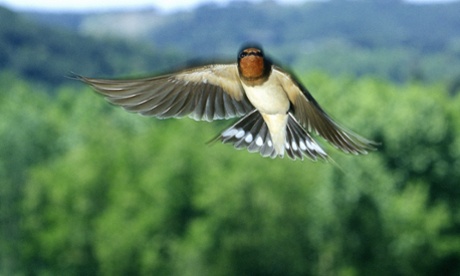
The arrival of migrating birds is a key factor in predicting the weather, and with good reason.
Swallows and other insect-eating species such as warblers and flycatchers will usually stay put on the other side of the Channel when the weather is unsettled, waiting for a high-pressure system to build over southern Britain and northern France. So when they do finally appear, expect at least a couple of days of fine weather.
The proverb “Ne’er cast a clout till May be out” (which refers to the may, or hawthorn blossom rather than the month of May) has its counterpart in the saying “Till April’s dead, change not a thread”, for the weather this month can indeed be very fickle and changeable.
But however late the spring, by the close of April the breeding and growing seasons are well underway for the majority of our birds, insects and spring flowers.