WASHINGTON _ Leading public health experts from inside and outside the government warned Sunday the coronavirus outbreak may flare up more fiercely in coming months, even as many U.S. states are moving to ease stay-at-home restrictions.
Several of the nation's governors, meanwhile, acknowledged they were walking a tightrope, fearing intensified outbreaks even as some of them embarked on reopenings meant to ease deep economic distress in their states.
As the U.S. death toll rose, White House coronavirus coordinator Dr. Deborah Birx implicitly acknowledged that President Donald Trump, as recently as last month, had been overly optimistic about likely fatalities.
In an interview on "Fox News Sunday," Birx said the administration continued to operate on the assumption that the more likely scenario called for as many as nearly a quarter-million deaths _ even with shutdown measures taken to date.
"Our projections have always been between 100,000 and 240,000 American lives lost," she said. "And that's with full mitigation, and us learning from each other how to social distance."
Trump said April 20 that the death toll was "going toward 50, I'm hearing, or 60,000 people" and expressed doubts it would go as high as earlier projections. As of Sunday, there were more than 66,000 deaths.
Scott Gottlieb, former Food and Drug Administration commissioner, said on CBS' "Face the Nation" that there were rising numbers of new cases in about 20 states, suggesting that the outbreak was not yet being tamped down to the degree that officials had hoped.
"While mitigation didn't fail, I think it's fair to say that it didn't work as well as we expected," he said. "We expected that we would start seeing more significant declines in new cases and deaths around the nation at this point. And we're just not seeing that."
Looking ahead to the fall, Gottlieb said that by autumn, after a summer break, "you can see this slow simmer explode into a new epidemic or large outbreaks."
"That's the concern _ that if we don't snuff this out more, and you have this slow burn of infection, it can ignite at any time," he said.
Another leading expert, Thomas Inglesby, director of the Center for Health Security at Johns Hopkins University, said that "overall, as a country, we still have a long way to go."
Inglesby said on NBC's "Meet the Press" that in the autumn, the limits of the nation's health care system will be tested by seasonal influenza as well as the continuing presence of COVID-19, the disease caused by the coronavirus.
"COVID(-19) will be mixed with flu, and will both be contributing to hospitalizations and (intensive care) beds," he said on NBC's "Meet the Press," predicting "two concurrent large public health challenges at the same time."
Reopenings are beginning in many parts of the country even though, as of Sunday, no state had met federal guidelines calling on states to wait for a 14-day period of continually declining cases.
Mississippi, for example, is pressing ahead with an easing of restrictions even though its number of confirmed cases just jumped. Gov. Tate Reeves, a Republican, said the increase reported Friday, the biggest single-day increase to date, was a "one-day blip."
"You have to understand that Mississippi is different than New York and New Jersey," Reeves said on "Fox News Sunday," adding that "sometimes the models are just different for different states."
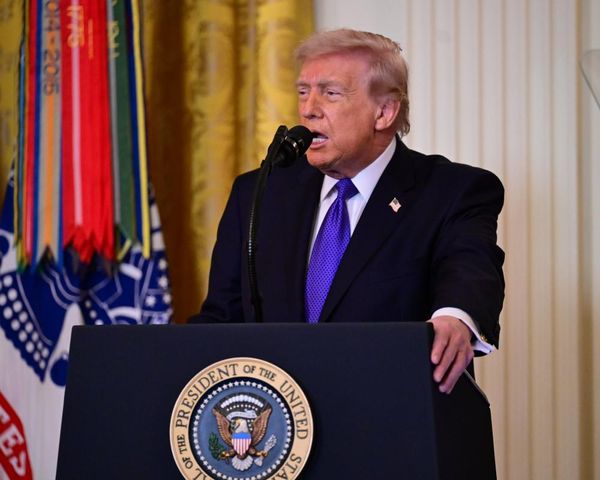
Trump again argued, as he has for much of the outbreak, that states should not stand in the way of economic recovery by keeping restrictions in place.
On Sunday, the president tweeted that "many complaints" were coming in about Maine's stay-at-home orders. "Don't make the cure worse than the problem itself," he wrote on Twitter, citing the case of a Maine brewpub that lost its state health and liquor licenses after reopening its doors in defiance of state rules.
As infections have progressed, many governors have sought to avoid direct criticism of Trump for fear of endangering access to supplies and other federal aid. But some state chief executives who have repeatedly drawn his disfavor offered veiled but unmistakable criticism of his rhetoric and performance Sunday.
Michigan Gov. Gretchen Whitmer, who was urged by Trump last week to "make a deal" with armed anti-shutdown demonstrators who entered the state Capitol, said governors should act in accordance with public health imperatives, however painful.
"This isn't something we just negotiate ourselves out of," she said on CNN's "State of the Union."
Trump has defended the gun-toting protesters in Michigan as "very good people," and Whitmer, who has been touted as a potential running mate for Joe Biden, agreed in the CNN interview that demonstrators have a right to voice their views.
But she decried the display of emblems such as "Confederate flags and nooses," saying they symbolize "some of the worst racism" in U.S. history.
Illinois Gov. J.B. Pritzker, another Democrat, contested the assertion last week by Jared Kushner, a senior White House aide and Trump's son-in-law, that the federal government had risen to the challenge of dealing with the pandemic.
"It's the governors that have risen to the challenge," Pritzker said on CBS' "Face the Nation," adding that "much of what came out of the White House for many weeks was not helpful."
New York Gov. Andrew Cuomo, in his daily briefing, said his state would be teaming up with others in the Northeast to set up a regional supply chain for crucial equipment including masks, ventilators and testing supplies.
Trump said weeks ago the federal government was not a "shipping clerk," brushing aside urging for a coordinated procurement process. Cuomo said Sunday the "totally inefficient" system in place had led states to compete against one another and sent supply prices ballooning.
Also Sunday, Trump lashed out at ex-President George W. Bush, a day after the former leader issued a message calling for national unity amid the coronavirus crisis. In a tweet Sunday morning, Trump said Bush, a fellow Republican, should have voiced support for him when the House impeached the president late last year.
"He was nowhere to be found in speaking up against the greatest Hoax in American history!" Trump wrote of Bush, after citing similar comments from a Fox News anchor.
Throughout the coronavirus outbreak, Trump has often used Twitter and White House briefings on the virus to excoriate political foes. Sometimes he responds to perceived denigration of his pandemic response, but sometimes he brings up grudges and grievances unrelated to the crisis.
Bush's three-minute video, shared Saturday on Twitter, called on all Americans to remember "how small our differences are" in the face of the pandemic.
"In the final analysis, we are not partisan combatants, we are human beings, equally vulnerable and equally wonderful in the sight of God," the former president said. "We rise or fall together, and we are determined to rise."