

European markets under pressure
Despite positive signs for the eurozone economy, it was the US which proved a dominant force for European markets. Weaker than expected US retail sales sent the dollar to a three month low against the euro, in the belief that an interest rate rise by the Federal Reserve had receded further into the distance. The strong euro sent several European equity markets lower, especially export-heavy Germany, although Spain and Italy escaped the damage and the UK market also managed to remain in positive territory, albeit off its best levels. The final scores showed:
- The FTSE 100 finished up 15.83 points or 0.23% at 6949.63
- Germany’s Dax is down 1.05% at 11,351.46
- France’s Cac closed 0.26% lower at 4961.86
- Italy’s FTSE MIB edged up 0.46% to 23,210.97
- Spain’s Ibex ended up 0.02% at 11,324.6
- The Athens market dipped 0.03% to 828.87
On Wall Street, the Dow Jones Industrial Average is virtually unchanged, up 1.6 points.
On that note we’ll close up, so thanks for all your comments.
Over in Athens the finance ministry’s entire top brass are holding urgent talks in a bid to reach final agreement on strategic measures ahead of that hotly anticipated cabinet meeting prime minster Alexis Tsipras has said he will call. Our correspondent Helena Smith reports:
Word is coming through that taxes are at the focus of the meeting called by finance minister Yanis Varoufakis. The talks, which are also being attended by Panaghiotis Nikoloudis, the minister in charge of combatting corruption, are aimed at finalising strategy before the cabinet meeting is held.
Tsipras’ leftist-led administration has signalled that a barrage of new levies will be among the fiscal measures it will announce in its bid to unlock €7.2bn in international bailout funds held over by the EU and IMF. Privatisations - not least the sale of Piraeus port still in the hands of the state - are also topping the agenda as the government attempts to quash mounting criticism of its policies from within its own ranks.
More fuel for the rising oil price.
After Tuesday’s news from the American Petroleum Institute that US stockpiles fell for the second week in a row, the US Energy Information Administration has also recorded a fall in stocks.
Crude inventories dropped by 2.2m barrels in the last week, compared with analysts forecasts of an increase of 386,000.
#Crude stocks fell by 2.2 million barrels last week, says the EIA - significantly more than expected (0.1m) and above API's estimate (2m)^FR
— FOREX.com (@FOREXcom) May 13, 2015
Inventories of #crude products also fell last week: #gasoline stocks by 1.1 million and distillates by a sharp 2.5m ^FR
— FOREX.com (@FOREXcom) May 13, 2015
Updated
The growth in the eurozone is down to Mario Draghi’s QE bounce, reckons economics correspondent Phillip Inman (see also below). Phillip writes:
There’s a return to healthy growth in the eurozone. Surprised? It’s called the QE bounce.
First the head of the central bank says he will inject £1.1tn into the 19-member economic bloc under a programme of quantitative easing (QE). Next, bank lending gets easier. More importantly, businesses breathe a sigh of relief, realising that after four years of austerity someone has put some serious money behind the eurozone’s recovery.
Live Greece back in recession; Bank of England cuts growth forecast - live updatesThe latest eurozone GDP data show France and Italy beat forecasts, but the Greek recovery has been snuffed outRead more
Without downplaying the effect of low oil prices on consumer spending, it is the invisible hand of European Central Bank boss Mario Draghi – working the credit levers to make lending cheaper – that has done the trick.
Full analysis here:
Some better news for Greece with the country recording an unexpected budget surplus for the first four months of the year. Reuters reports:
Greece’s central government recorded a primary budget surplus of €2.16bn in the first four months of the year, versus a targeted small budget deficit due to a slash in spending, the finance ministry said on Wednesday.
The central government surplus excludes the budgets of social security organisations and local administrations and is different from the figure monitored by Greece’s EU/IMF lenders, but indicates the state of the cash-strapped country’s finances.
The government had targeted a primary budget deficit of €287m for the four-month period, data from the ministry showed.
Tax revenues came in at €14.29bn, broadly in line with a target of €14.28bn.
Public spending stood at €16.32bn, €2bn below target as the cash-strapped country cuts back on expenditure to meet its obligations.
Updated
Wall Street has opened higher after the latest data seemed to push any US interest rate further into the distance, almost certainly beyond the June Federal Reserve meeting at least.
The Dow Jones Industrial Average is currently up 44 points or 0.25%, while most European markets apart from Germany are also in positive territory.
Meanwhile oil continues to rise after Tuesday’s news from the American Petroleum Institute that US stockpiles fell for the second week in a row, with Brent crude up 0.7% at $67.33, near a five month high.
Updated
Barclays cuts US Q2 GDP growth tracking estimate to 2.6% from 3.0% after soft April retail sales. Also cuts Q1 estimate to -0.6%.
— Jamie McGeever (@ReutersJamie) May 13, 2015
April Retail Sales: Slow to .8% Y/Y, ex-gas 3.6% Y/Y and control group to 2% Y/Y pic.twitter.com/6mThdgKdPg
— Joseph Brusuelas (@joebrusuelas) May 13, 2015
US retail sales disappoint
Consumers have failed to spash out as much as expected in April, as hopes of a bounceback after the first quarter’s poor weather were dashed, and the chances of an interest rate rise receded further.
According to the Commerce Department, April retail sales were unchanged at 1.1% (with the March figure revised upwards from 0.9%). Analysts had expected a 0.2% increase, but sales of big ticket items like cars were disappointing.
Wall Street futures have slipped slightly on the news, and James Knightley of ING Bank said:
US retail sales for April are softer than hoped, coming in flat on the month versus a 0.2% month on month consensus. Admittedly, the March figure was revised higher by two tenths of a percentage point, but the overall story is one of subdued spending by consumers. Indeed, strip out the volatile components of autos, gasoline and building materials to come up with the so called “control” group – this has a better fit with overall consumer spending trends – and we saw flat growth versus a consensus forecast of 0.5% growth.
Consequently, we still aren’t really seeing the big recovery that was anticipated in the wake of the weather depressed first quarter. This just really reinforces the view that a June hike isn’t happening and that September looks the more probable start point.

And here’s a full breakdown of European growth in the last quarter:
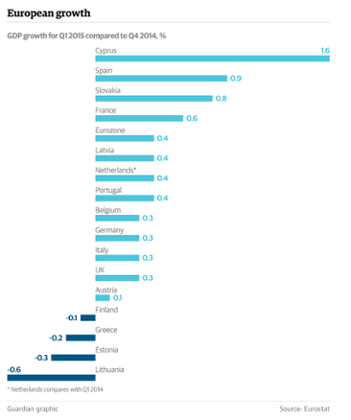
Lunchtime summary: Eurozone is growing (but Greece is shrinking)
A quick recap of the main points, for anyone just tuning in....
Europe’s recovery continues.
The eurozone posted growth of 0.4% in the first three months of this year, faster than the UK or America. It’s the fastest expansion in four years:
Euro area GDP up by 0.4% in Q1 2015, +1.0% compared with Q1 2014 #Eurostat http://t.co/kHA60SNaZk pic.twitter.com/E5ztjqT5J6
— EU_Eurostat (@EU_Eurostat) May 13, 2015
France began the morning as the surprise star performer, growing by 0.6% thanks to strong domestic consumption. The French finance minister said the news was ‘comforting’.
There was also relief for Italy, which posted 0.3% growth.
Germany, though, slowed sharply from 0.7% to 0.3%, while Portugal and the Netherlands both grew by 0.4%.
And there was gloom for Greece, which contracted by 0.2% -- putting the Greek economy back into recession, along with Finland, which shrank by 0.1%.
Analysts say that the ECB’s QE programme is working.
Greece remains gripped by its escalating debt crisis, prompting finance minister Yanis Varoufakis to rule out a parallel currency.
Government insiders also say that a referendum is now unlikely; Greece simply doesn’t have time to hold one before running out of cash.
Alexis Tsipras has called a cabinet meeting to discuss the situation; he’s reportedly planning to address the nation afterwards.

In the UK, the Bank of England has cut its growth forecasts, but insisted the country isn’t flirting with deflation.
Governor Mark Carney also hailed the ‘heroic work’ that European policymakers are doing to fix the Greek crisis, and predicted Britain wouldn’t be badly hurt if they failed.
Updated
The EC is also raising the pressure on Finland to bring its deficit into line.
#finland does no longer respect deficit & debt criterias. @EU_Commission will decide soon if excessive deficit procedure @pierremoscovici
— Olivier Bailly (@OlivierBaillyEU) May 13, 2015
Germany, though, isn’t facing new penalties for running a huge trade surplus:
Commission has decided not to escalate the macroeconomic imblance procedure against Germany on surplus #EuropeanSemester
— Open Europe (@OpenEurope) May 13, 2015
In 2014, Germany’s trade surplus was almost 7% of the country’s GDP. Ben Bernanke, the former head of the Federal Reserve, is one of many experts who is worried:
As Bernanke blogged last month:
In a slow-growing world that is short aggregate demand, Germany’s trade surplus is a problem. Several other members of the euro zone are in deep recession, with high unemployment and with no “fiscal space” (meaning that their fiscal situations don’t allow them to raise spending or cut taxes as a way of stimulating domestic demand). Despite signs of recovery in the United States, growth is also generally slow outside the euro zone.
The fact that Germany is selling so much more than it is buying redirects demand from its neighbors (as well as from other countries around the world), reducing output and employment outside Germany at a time at which monetary policy in many countries is reaching its limits.
Persistent imbalances within the euro zone are also unhealthy, as they lead to financial imbalances as well as to unbalanced growth
The European Commission has recommended that Britain gets its deficit down, builds more houses, and tackles the skills gap.
That’s the conclusion from its latest report into the UK economy, just released:
It HEREBY RECOMMENDS that the United Kingdom take action in 2015 and 2016 to:
- Ensure effective action under the excessive deficit procedure and endeavour to correct the excessive deficit in a durable manner by 2016-17, in particular by prioritising capital expenditure.
- Take further steps to boost supply in the housing sector, including by implementing the reforms of the national planning policy framework.
- Address skills mismatches by increasing employers’ engagement in the delivery of apprenticeships. Take action to further reduce the number of young people with low basic skills. Further improve the availability of affordable, high-quality, full-time childcare.
You can see all the latest recommendations online, here.
Here you can find @EU_Commission country-specific recommendations 2015 for each Member State: http://t.co/SWmfT6GGWR #EuropeanSemester
— Aura Salla (@AuraSalla) May 13, 2015
Updated

Over in Athens the finance minister Yanis Varoufakis has ruled out any suggestion that the crisis-hit country is planning to adopt a parallel currency.
Helena Smith reports:
Doorstepped as he went to work, the minister insisted that “for the government there is … only a political solution” to the huge liquidity problem that protracted negotiations have caused.
“In negotiations there are mutual concessions,” he told reporters gathered outside the finance ministry.
Varoufakis was speaking as it emerged that an estimated €7bn euro had been withdrawn from Greek banks in April alone (when outflows were believed to have dropped considerably).
Some €35bn euro has been removed from the banking system since December, according to finance ministry officials.
Government sources have confirmed that prime minister Alexis Tsipras will address the nation after his ministers meet in cabinet session later today. The far left leader is expected to tell Greeks about the state of negotiations.
Despite the wide speculation that the talks have engendered, very little has been revealed about the decisions/concessions that have been made. There were reports this morning that differences between Athens and foreign lenders were still huge, with the EU and IMF pushing the anti-austerity government to take additional fiscal measures worth at least €3bn euros.
And as we flagged up earlier, the government appears to have ruled out a referendum, due to lack of time....
Updated
Greece’s finance minister appears to have hinted that the government might not last the year.
#Greece Fin Min Varoufakis: I can't guarantee that the govt will be in power until January https://t.co/UhgJSJQcWU
— Efthimia Efthimiou (@EfiEfthimiou) May 13, 2015
@EfiEfthimiou Means a deal will be reached between EU/Greece . . . one contrary to Syriza campaign promises cc @tradinglikeafox
— Emergent Economist (@EmergentEcon) May 13, 2015

Mario Draghi should get a lot of credit for the revival in the eurozone economy.
Nancy Curtin, chief investment officer at Close Brothers Asset Management, says the ECB’s quantitative easing scheme, launched in January, is working.
“Draghi has thrown the kitchen sink at Europe, and it seems to be beginning to work. The European economy is showing signs of economic improvement and likely there will be more to come. Already PMI and credit growth are showing decisive improvements. The combination of a lower Euro boosting exports, ultra-low borrowing rates, and enhanced liquidity as a result of QEare all helping the economy.
“Yes, Greece remains a fly in the ointment, but we don’t see this as the systemic risk it was in 2012. Overall, the Eurozone is reacting to QE just as the US and the UK did, and investors should feel confident that growth will build momentum during the second quarter.”
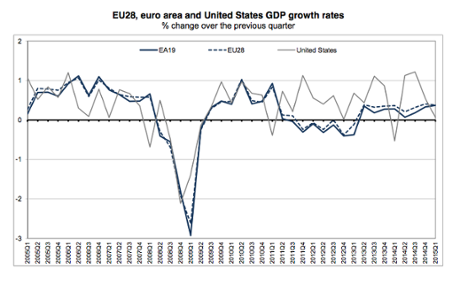
Economists have hailed the news that the eurozone (and indeed the wider EU) grew by 0.4% in the first three months of this year, beating the UK and America.
Josie Cox of the Wall Street Journal has rounded up the best reaction. Here’s a flavour:
Luigi Speranza, economist at BNP Paribas
“Overall, while slightly below our forecasts, the eurozone GDP figure for Q1 was encouraging.
“With plenty of scope for exports and investment to accelerate from current levels, we continue to expect growth of around 0.5% quarter-on-quarter in Q2, despite some possible slowdown in consumption, as oil prices have come back up from their lows.”
Azad Zangana, European economist at Schroders
“Overall I think this is a very strong set of numbers, even though some of the individual country reports were still mixed.
“I think that it will certainly support the case for stocks and help corporate earnings. As this happens, the quite lofty valuations that we’re seeing in equities will start to look more justified.”
More here:
Eurozone GDP: Reactions From the Market
"A reminder that Europe has been quietly going about the business of repairing its economy." Reactions to EZ GDP: http://t.co/80duG2Qmof
— Josie Cox (@JosieCoxWSJ) May 13, 2015
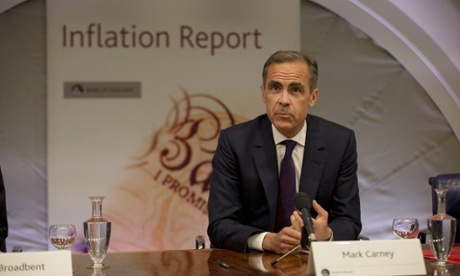
Are European policymakers right to be so complacent about the dangers and consequences if Greece were to leave the eurozone?
European policymakers are making heroic efforts to avoid that situation. They and the IMF are working relentlessly.. .there is no complacency, replies governor Carney.
That said.... our assessment is that an intensification of the Greek crisis would have an impact on global growth, and only a modest impact on UK growth.
And things are quite different than two or thee years ago, in terms of the linkages within the financial system, the improvement in the underlying eurozone economy, and the recent enhancement of the ECB’s toolkit and its willingness to use it.
Ludovic Subran, chief economist at Euler Hermes, reckons the Bank of England’s forecasts are still too optimistic:
#UK heyday is behind: the recovery peaked last year. Now time for a midterm game plan for sustained (nominal) growth https://t.co/b4BwYS4g49
— Ludovic Subran (@Ludovic_Subran) May 13, 2015
Numbers don't add up. We have 2.2% for #UK growth at best for this year https://t.co/j8tcd6XuBP
— Ludovic Subran (@Ludovic_Subran) May 13, 2015
Paul Mason of Channel 4 accuses the Bank of England of dangerous inertia
Inflation falls to zero, you do nothing, people feel a short-term rise in real wages. the government wins re-election, you still do nothing, he says.
You are two percentage points out of your inflation target, and it feels like 2007 when we sat here with Mervyn King saying all is fine. Something’s going to happen....
Carney replies: What’s going to happen is that the rise in the oil price will feed through to the inflation rate. And there are signs that wages are picking up.
Right now, the Bank doesn’t believe there is a need for more stimulus measures.
Is the Bank of England worried that the pound is at a seven year high, following a swathe of interest rate cuts by other central banks? Is there a currency war underway, asks Phil Aldrick of The Times.
Carney replies that sterling’s strength is a factor in the path of interest rates -- in other words, a strong pound means borrowing costs may stay low for longer.
And that’s sent the pound dipping a little...
Paul Mason has the microphone.....
I'm utterly frustrated by BoE inflation report pressers. These are powerful politicians yet nobody asks political questions. I'm about to.
— Paul Mason (@paulmasonnews) May 13, 2015
Updated
What are the three big challenges facing the UK economy?
Mark Carney says the challenge facing the Bank is to get inflation back to target, and keep it there.
But he also cites the need to improve Britain’s “poor” productivity growth, as it’s the long term driver of living standards.
We must also insure that the UK’s financial system has integrity, and is open and innovative. Some of the measures introduced since the financial crisis may need to be adjusted, to ensure they are working, Carney concludes.
What does the Governor make of the recent price falls in the sovereign bond market?
Carney explains that the Bank had been surprised that the longer-term yield curve has flattened (ie, that governments could borrow so cheaply for a long time).
It’s not entirely surprising that they’re moving back up now.
Is it technically driven, or fundamentally driven, though?
Carney declines the chance to comment too closely on the recent moves.

And why has the Bank of England downgraded its forecast for productivity growth?
It’s the nature of the jobs being created, and the nature of the people doing those jobs, Carney replies.
You get people who are new to jobs, who aren’t as productive as they will be eventually be.
Complete turnaround in #productivity by #BoE over last two years. Low productivity is a fact of life now for the BOE not temporary effect
— moyeen islam (@moyeenislam) May 13, 2015
Updated
Carney seems to be downplaying any econ impact of political uncertainty (eg over EU referendum) or on the austerity policies of the new govt
— Richard Edgar (@ITVRichard) May 13, 2015
What work has the Bank of England done into the impact of the government’s plan for an EU referendum, asks the BBC’s Robert Peston?
Carney says the Bank has looked at this issue, though its regular surveys of UK companies.
There was an awareness of uncertainty, but firms’ business plans hadn’t been affected by it, yet.
And we will keep watching closely, as it could be an “important determinant” of whether the economy performs as expected.
Updated
Back in Greece, there are reports that prime minister Alexis Tsipras could issue a ‘proclamation’, following today’s cabinet meeting (see 9.51am)
Greek media report that PM #Tsipras will make a proclamation later today. No info on when, or what about.
— The Greek Analyst (@GreekAnalyst) May 13, 2015
BOE to adjust policy to gov fiscal stance. $GBPUSD coming off a bit now. 1.5674
— Brenda Kelly (@Brenda_Kelly) May 13, 2015
Larry Elliott, our economics editor, reminds Mark Carney that growth slowed sharply after the 2010 election. Why should it be different this time?
Carney explains that it depends on the path of fiscal consolidation, which depends on the decisions of the government.
We’ll adjust our forecast if the government announces new measures, he syas.
But the Conservative Party manifesto included £25bn of cuts, and David Cameron has pledged to implement the manifesto in full. Why hasn’t the Bank of England taken that into account?
Carney: There were also spending plans, though. We’re not going to speculate, we’re going to wait for the next budget.
Onto questions....
Was the Bank of England surprised by the election result, and has it changed its economic forecasts since the Conservative Party won a majority?
We forecast many things, but not political outcomes, Mark Carney smiles. The Bank adjusts policy to events, both here and abroad.
Today’s forecasts do take March’s budget into account.
Carney: Greek crisis would only have modest impact on UK
Carney also touches on the eurozone, and suggests that Britain is pretty-well protected from Greece’s woes.
Any intensification in the Greek crisis would probably only have a modest impact on UK growth, he says.
Carney: Any intensification of the Greek crisis would likely have only a moderate impact on UK growth
— Ed Conway (@EdConwaySky) May 13, 2015
Mark Carney is also warning that UK productivity remains weak - one factor, he suggests, is that there has been a “disproportionate” increase in low productivity jobs since the recovery.
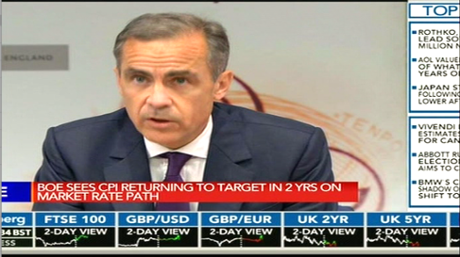
Mark Carney, BoE governor, has written a second letter to the chancellor explaining why inflation is below target (it’s currently zero).
But he insists that there are no signs that Britain is heading into a protracted period of falling prices, or deflation.
The Bank of England’s quarterly inflation report press conference is underway, and being streamed live here.
Inflation Report 13 May 2015
Bank of England cuts growth forecasts
Back in the UK, the Bank of England is publishing its quarterly inflation report.
And the top line is that the British central bank has cut its growth forecasts for this year, and beyond.
The Bank of England now growth this year to come in at 2.5%, down from 2.9% three months ago. [that was before we learned that growth slowed to 0.3% in the first quarter]
It also cut its projections for 2016 and 2017 to 2.6% and 2.4% respectively.
“Growth is forecast to be at or a little below its historical average rate throughout the forecast period”
Updated
@euro GDP grew by 0.4% in q1 and 1% at an annual rate. Weaker Germany the main factor.Two countries in recession- Greece and Finland
— Daniel McLaughlin (@drdanmclaughlin) May 13, 2015
Eurostat also reports that Cyprus’s economy grew by 1.6% in the last quarter, as it fights back from its bailout crisis of 2013.
That means just two countries are in recession - Finland and Greece.
Updated
#Greece is back in recession. 1Q GDP drops 0.2% on quarter after -0.4% in 4Q 2014. pic.twitter.com/Vy00xE7elp
— Holger Zschaepitz (@Schuldensuehner) May 13, 2015
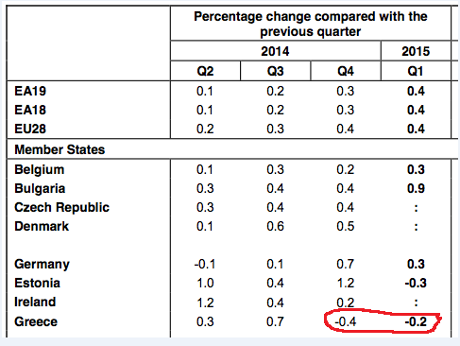
This chart confirms that the nascent Greek recovery has been snuffed out:
Greece back in recession
Greece has fallen back into recession!
The Greek economy shrank by 0.2% in the first three months of this year, following a 0.4% contraction in the last three months of 2014.
Greece had returned to growth last year, offering hopes that the worst of its crisis was behind it.
Instead, the political uncertainty that has gripped the country for months has hit demand.
Elstat: #Greece GDP decreased by 0.2% in Q1 2015 compared to Q4 2014. Expectations at 0.5% contraction http://t.co/SzJzkZDs5v
— Open Europe (@OpenEurope) May 13, 2015
The wages of Syrzia: Greece GDP in Q1 down 0.2%.
— Tom Nuttall (@tom_nuttall) May 13, 2015
Eurozone Q1 GDP growth of 0.4% means it is now growing faster than the UK for the first time in, well, ages pic.twitter.com/kFQ5GKijfo
— Ed Conway (@EdConwaySky) May 13, 2015
Eurozone grows by 0.4%
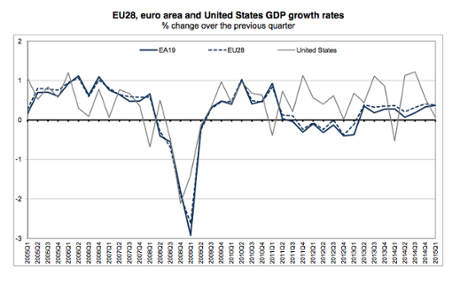
Here we go! The Eurozone economy grew by 0.4% in the first three months of 2015.
That’s thanks to France’s unexpectedly strong growth, up 0.6%, and another solid month in Germany, up 0.3%.
That’s broadly in line with forecasts, and means the eurozone expanded faster than both Britain and the United States.
Updated
Greece seeks 'honourable compromise', not referendum
Over in Athens prime minister Alexis Tsipras has called another cabinet meeting for this afternoon.
This follows a marathon five-hour session on Tuesday, where cabinet ministers representing his anti-austerity government hotly debated concessions and “red lines”.

Helena Smith reports from Athens:
Ministers emerging from yesterday’s meeting were in two minds over the prospect of a referendum being held to approve any deal that is ultimately agreed. A public vote would require at least 30 days to set up from the day of announcement, constitutional lawyers say.
With public coffers practically empty - and public sector pension and salary payments looming - there is a growing realisation that there may simply not be enough time.
German finance minister Wolfgang Schauble’s almost mocking acceptance of the idea has also given the government cause for concern, insiders say.
The interior minister Nikos Voutsis gave voice to the government’s new thinking telling parliament this morning:
“We will have neither a referendum nor elections [but] an honourable compromise.”
A compromise, it is fast emerging, would include Athens rolling back on pledges to increase the minimum wage to €751 and reintroduce a 13th Christmas bonus for pensioners.
Updated
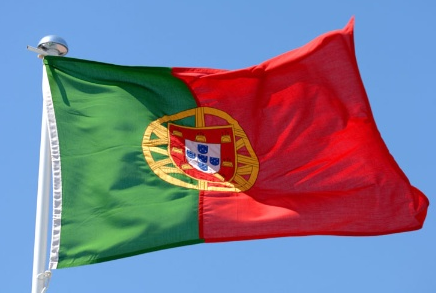
Back in the eurozone...and Portugal has reported growth of 0.4% in the first three months of 2015.
That’s a little weaker than expected, but matches the growth in the last three months of 2014.
Portugal GDP misses by a tenth 0.4% v 0.5% exp
— Steve Collins (@TradeDesk_Steve) May 13, 2015
The pound has hit a five-month high against the US dollar, up half a cent to $1.5727.
Traders are welcoming this latest drop in UK unemployment, and calculating that it may herald an interest rate rise.
Reminder, the Bank of England issues its new quarterly inflation report in an hour....
#GBP spikes higher as UK labour data and earnings all strong. #BoE inflation report out in 1hr pic.twitter.com/ahuYI75pxb
— Joshua Raymond (@Josh_CityIndex) May 13, 2015
UK jobless rate falls, and wages rise
Breaking news: the UK’s unemployment rate has fallen to 5.5%, its lowest level since the summer of 2008.
The number of people out of work fell by 35,000 to 1.83 million, according to data just released by the Office for National Statistics.
And encouragingly, average earnings rose by 1.9% in the three months to March, up from 1.7%.
At first glance, it’s a good set of figures.
Unemployment rate drops to 5.5% and employment rate up to 73.5%. 202,000 more in employment in latest three months. Very good figures.
— David Smith (@dsmitheconomics) May 13, 2015
Perhaps more importantly Avg UK Earnings (3M/Mar) better 1.9% vs 1.7% est vs 1.7% prev and Ex-bonus 2.2% vs 2.1% est vs 1.8% prev #gbp
— Mike van Dulken (@Accendo_Mike) May 13, 2015
So, the big news is that the eurozone’s five largest members all posted growth in the first three months of this year.
A reminder of the key points so far:
-
Germany: grew by +0.3% in the first three months of 2014. Slowdown. Worse than expected.
-
France: grew by +0.6%. Acceleration. Better than expected.
-
Italy: +0.3%. Acceleration. Better than expected.
-
The Netherlands: +0.4%. Slowdown. Worse than expected.
We already know that Spain’s economy grew by 0.9% in first quarter of 2015 (Madrid released its data last month).
So, there’s a good chance that the eurozone grew by as much as 0.5%. Just 40 minutes to wait....
Updated
It’s a morning of surprises... at 0.3%, Italy grew as fast as Britain and Germany last quarter.
Italy Q1 GDP = UK Q1 GDP. Penalties in three months.
— Alberto Nardelli (@AlbertoNardelli) May 13, 2015
Don’t fancy our chances....
#Italy | Q1 PRELIMINARY GDP Q/Q: 0.3% V 0.2%E; Y/Y: 0.0% V -0.2%E ..knocking it out of the park in Italian GDP terms pic.twitter.com/gnz8hzQWEo
— Ioan Smith (@moved_average) May 13, 2015
Updated
Italy grows by 0.3%
Get the bunting out! Italy’s economy expanded by 0.3% in the first quarter of 2015, faster than expected.
However, that still means growth was flat over the last 12 months.
Italy Q1 GDP comes in at 0.3% exp: 0.2% Prev: 0%
— Michael Hewson (@mhewson_CMC) May 13, 2015
More to follow....
Corrrection. It appears that Austria is not reporting GDP data today, as I thought.
Its statistics office did issue a preliminary estimate of 0.1% growth late last month.
Updated
Slovakia’s economy grew by 0.8% in the last quarter, beating forecasts of 0.6%.
European stock markets are rallying this morning, led by France.
The French CAC has jumped by 0.9%, as traders welcome the news that its GDP rose by 0.6% last quarter.
The FTSE 100 is up 0.5%, and Germany’s DAX has gained 0.6%.
And the bond markets are calmer too, after yesterday’s wild selloff.
Yields lower, stocks higher. Makes a change pic.twitter.com/dIjday5qQC
— World First (@World_First) May 13, 2015
It’s not a great day for Finland -- not only is its economy shrinking, but it’s about to get ticked off by Brussels for borrowing too much.
Today Finland records negative growth, will be warned about its deficit, and will trigger Schadenfreude across the periphery.
— Tom Nuttall (@tom_nuttall) May 13, 2015
Dutch Q1 GDP misses by a tenth 0.4% v 0.5% expected.
— Steve Collins (@TradeDesk_Steve) May 13, 2015
The Netherlands economy experienced a slowdown in the last quarter.
Dutch GDP rose by 0.4%, down from 0.8% in the last three months of 2014 (which I think has been revised up from 0.5%)
Finland in recession
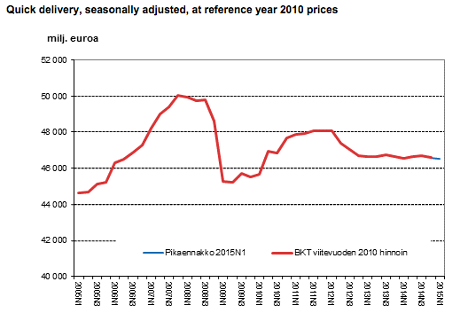
Bad news for Finland. Its economy shrank by 0.1% in the first three months of the year, its statistics office has estimated.
And that follows a 0.3% contraction in the last three months of 2014, meaning it is in recession.
As this chart shows, Finland has been struggling since the end of 2012
Finland is suffering from a cocktail of problems.
Growth has been hit by austerity measures imposed to bring its deficit down to European targets. It has been struggling to cope with the decline of Nokia, and tougher times in the forestry industry.
Finland has also felt the impact of the sanctions imposed on Russia, its neighbour, over the Ukraine crisis.
#GDP down second quarter in a row. #Finland plays in the same league with #Greece and #Cyprus. That's #recession http://t.co/4Q54xcJoVB
— Matti Sohlman (@Zemppa) May 13, 2015
No wonder its its new coalition government looked so serious yesterday:
#Finland's new govt coalition: A cheery bunch pic.twitter.com/jcikEkLKxn
— Peter Spiegel (@SpiegelPeter) May 12, 2015
Updated
Romania has beaten forecasts with quarterly growth of 1.6%.
More data is coming in.
Hungary’s economy grew by 0.6% quarter-on-quarter in the first three month of 2015, or 3.4% compared to a year ago. Its statistics office said there was robust growth in manufacturing (mainly vehicles and electronics) and food production.
Analysts at BNP Paribas reckon the French GDP paints a unduly positive picture, because it is driven by household spending rather than business investment.
BNP Paribas on French GDP: 'unexpectedly strong, but misleading' - driven by inventories, consumption + public spend. pic.twitter.com/EETz45N9E2
— Mike Bird (@Birdyword) May 13, 2015
It’s worth remembering that the oil price has risen since the start of this year, so that stimulus effect may now fade away. (Brent crude costs $67 per barrel today, compared with $47 in mid-Jabuary.
In the comments section, johnsnow92 has kindly explained why net trade had a negative impact on Germany’s growth rate:

this doesn't make any sense, at all
It makes when you calculate the GDP.
GDP (Y) is the sum of consumption (C), investment (I), government spending (G) and net exports (X – M).
Y = C + I + G + (X − M)
where M (imports).
As you can see imports are with minus the more you import the lower GDP goes otherwise you would add the same thing twice (once in consumption)
French finance minister comforted by growth data

France’s finance minister, Michel Sapin, says today’s forecast-beating growth 0f 0.6% is “clearly comforting”, and bodes well for the rest of the year.
Sapin told reporters:
“This first figure is very encouraging,....Our growth perspectives for 2015 are today clearly comforting.”
Thomas Gitzel, chief economist at VP Bank, blames weaker global demand for Germany’s slowdown:
“Weak global trade is hitting German industry - an export heavyweight - and if the consumers start refraining from spending too, overall economic growth will decline rapidly.”
“But there’s no reason to be miserable - the euro is weak and interest rates are low, both of which point to somewhat solid growth in the coming quarters.”
(quotes via Reuters)
The German economy has a Bayern Munich problem

Germany’s economy is rather like its top football team, says ING economist Carsten Brzeski, good, but not quite good enough.
He writes:
As witnessed in yesterday’s soccer Champions League semi-final: a solid performance is not (always) sufficient to stay at the top. As Bayern Munich will probably now discuss new investments in its current squad, the German government should do the same for its economy.
And that should include more efforts to stimulate the jobs market:
The labour market seems to have reached a level of full employment. New structural reforms would be needed to push unemployment below the level it has now been fluctuating around for two years. As regards investment, except for the construction sector, industrial production has moved rather horizontally for almost four years.
Good but not good enough, or, the Bayern Munich factor. Quck take on German GDP data. http://t.co/LwZIBKBP3a
— Carsten Brzeski (@carstenbrzeski) May 13, 2015
So #Germany growth slows more than forecast as #France accelerates
— Francine Lacqua (@flacqua) May 13, 2015
IHS Global Insight economist Diego Iscaro predicts that the French economy will grow faster than expected this year, but its jobless rate will remain too high:
The sharp acceleration in activity during the first quarter ...points to growth in 2015 being somewhat stronger than the 1.0% expected by the government,”
“However, we still do not estimate that the recovery will be strong enough to make a significant dent into France’s high unemployment rate”.
Who predicted this last year? France’s economy has grown twice as fast as Germany between January and March, and also twice as fast as the UK.
Updated
And here’s a Destatis chart, confirming that Germany’s growth rate has slowed:
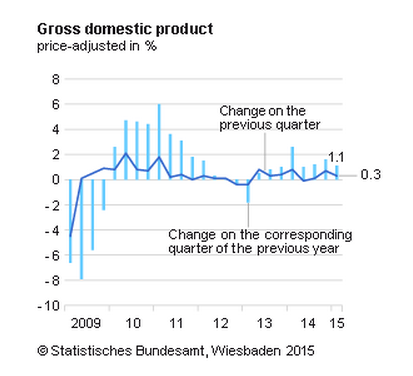
Germany’s growth rate slowed because imports grew faster than exports.
Destatis, the stats body, explains:
According to provisional calculations, exports of goods and services were slightly up at the beginning of 2015 compared with the fourth quarter of 2014, imports recorded a much stronger increase.
However, household consumption rise, and business investment jumped markedly.
#Germany disappoints. Q1 preliminary GDP comes at 0.3% QoQ lower than expected 0.5%. pic.twitter.com/AtdnidfSiM
— Holger Zschaepitz (@Schuldensuehner) May 13, 2015
Germany misses forecasts, with 0.3% growth
Just in: Germany’s economy grew by 0.3% in the first quarter of 2015, weaker than expected.
That’s a big drop on the 0.7% growth achieved in the last three months of 2014.
Economists had expected growth of 0.5%.
More to follow....
MISS: German GDP (Q1) 0.3% QoQ vs 0.5% est vs 0.7% prev; 1.0% YoY vs 1.2% est vs 1.4% prev #eur
— Mike van Dulken (@Accendo_Mike) May 13, 2015
Updated
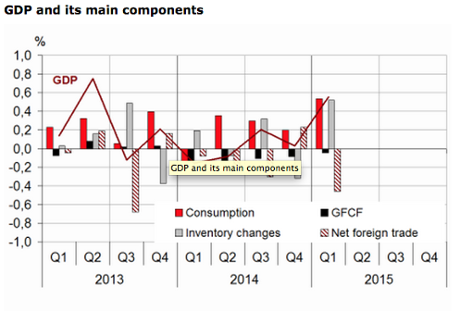
This charts shows how household spending (consumption) drove French growth in the last quarter, while business investment (GFCF) dipped. The big drop in net trade is because imports outpaced exports.
Updated
France needs to keep growing at this rate to bring its jobless rate down from record levels, says Bloomberg economist Maxime Sbaihi.
France needs much more Q1-like quarters to reverse the investment decline & finally start bringing down a record-high unemployment rate.
— Maxime Sbaihi (@MxSba) May 13, 2015
Updated
French recovery driven by household spending
Although France’s recovery is impressive, it was driven by consumer spending rather than business investment. That’s not a great sign.
INSEE, the statistics office, explains:
In the three first months of 2015, household consumption expenditure accelerated (+0.8% after +0.1%) while total gross fixed capital formation (GFCF) decreased again (–0.2% after –0.4%). Overall, total domestic demand (excluding inventory changes) increased: it contributed for +0.5 points to GDP growth (after +0.1 points in Q4 2014).
And trade had a negative impact on GDP: exports growth slowed to +0.9% (from +2.5%) while imports accelerated (+2.3% after 1.5%).
FRANCE: GDP beats expectations, grows 0.6% in Q1 thanks to household consumption. But total investment fell for seventh consecutive month...
— Maxime Sbaihi (@MxSba) May 13, 2015
#French #GDP grew by 0.6% in Q1, its highest growth in 2 years (INSEE). Forecast was at +0.4%.
— Stephane Pedrazzi (@StephPedrazzi) May 13, 2015
Allez les bleus
— Tom Nuttall (@tom_nuttall) May 13, 2015
French economy grows by 0.6%
Here we go..... and France has smashed expectations.
The French economy grew by 0.6% in the first three months of this year, having stagnated in the previous quarter.
That’s the best growth figures in at least two years, and much stronger than expected.
- FRENCH PRELIMINARY Q1 GDP +0.6 PCT Q/Q (F’CAST + 0.4 PCT) VS REVISED 0.0 PCT IN Q4 2014 - INSEE
Details to follow....
FRANCE!
— Mike Bird (@Birdyword) May 13, 2015
Updated
Today’s GDP data may show growth in France and Italy picked up, predicts Michael Hewson of CMC Markets:
France, in particular is set to see a significant rebound in economic activity, from 0.1% to 0.4% for Q1, however it is difficult to see how this will be sustained given that its manufacturing sector PMI’s have stayed stuck in contraction for the last eleven months.
Germany on the other hand is expected to see a little bit of a slowdown from 0.7% to 0.5% in Q1, while Italy is expected to show its first growth in over a year, coming in at 0.2%, up from 0%. If all these numbers come in as expected the broader EU GDP number is expected to come in at 0.4%.
Today’s growth data should show that the European recovery is gaining momentum, write my colleague Katie Allen:
Eurozone politicians are hoping for glimmers of a long-awaited economic rebound this week, with growth in the single-currency bloc forecast to beat both the UK and US.
Economists expect the lower oil price to have provided a fillip to eurozone growth in the opening months of the year and have pencilled in a 0.5% pick-up in GDP, according to a Reuters poll ahead of Wednesday’s figures. That would be the fastest for four years.....
The Agenda: Eurozone GDP, the Inflation Report, and Greece
Good morning.
Today we discover whether the European recovery is continuing.
Countries from across the region are reporting growth figures for the first quarter of 2015, and it could paint a relatively encouraging picture.
Economists believe the eurozone could have grown by as much as 0.5% in the first quarter of the year. That would be its strongest growth since 2011.
It would also beat the UK, which expanded by 0.3%, and the US which barely managed any growth at all.
So why the turnaround, after years of weak growth?
The weak euro and cheaper oil prices have both provided a stimulus recently. But credit must also go to the European Central Bank’s new QE scheme, for shoring up confidence and encouraging bank lending.
And here are some of the main events...
- 6.30am BST (7.30am CEST): France
- 7am: Germany
- 8am:
Austria, Hungary, the Czech Republic, Slovakia - 8.30am: The Netherlands
- 9am: Italy,
Poland
- 9.30am: Portugal
- 10am: Greece, Cyprus, and the eurozone as a whole.
And once that’s all over, the Bank of England will be releasing its latest Quarterly Inflation Report, outlining the state of the UK economy. Press conference from 10.30am.
We’ll also have an eye on Greece’s bailout talks, as usual.
A busy morning ahead....
Updated













"Germany’s growth rate slowed because imports grew faster than exports."
this doesn't make any sense, at all