During a bad week for journalism you needed something good to happen. And something hearteningly good did just that. When media-owning trusts and foundations launched the European Press Prize in 2012, they hoped they were doing something that might, in time, have a Pulitzer aura: a benchmark of quality. That may still be part of the mix, but my job there – I chair the committee that orders translations and reads everything, reducing the latest crop of 346 entries, from 36 countries this year, down to a couple of dozen or so – sparks a rather different realisation.
Simply, this Europe, our Europe, is already one of journalism’s treasure troves (often disguised by language, tradition and national borders). But if you piece the news and views together, creating a pattern of experience, an unexpected Europe surfaces: a Europe of spiky comment and relentless investigation, a Europe that declines to suffer knaves in office gladly.
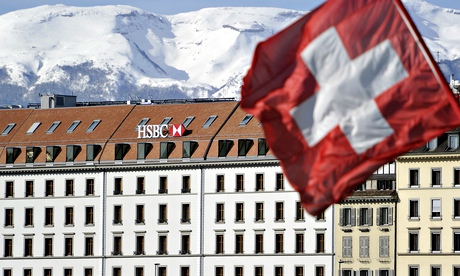
What are the great press stories of the past 12 months? One of them is the joining of digital forces to voyage far beyond anything Woodward or Bernstein could imagine. It was the International Consortium of Investigative Journalists (ICIJ), 64 reporters and data detectives in 26 European countries, that pounded terminals and pavements – and showed, in damning detail, how Luxembourg provides both a European commission president and the tax shelters multinationals love. (It’s the same ICIJ that started 2015 by stripping away secrecy inside HSBC Switzerland and tipping hundreds of tax evaders into plain sight.)
Add more cross-border teams tackling migrants drowned in the heartless Med and other reporters tracking money flows from the office of the president of Belarus. The latest EPP investigations show us how Russian money in need of laundering finds its way to Moldova – because a bank there claims restitution for supposed bad debts – then passes to Latvia en route to a wider Europe: how the prime minister of Montenegro took the high road to EU membership, then fell in a ditch when reporters snapped at his heels: how Bulgaria still swims in a sea of corruption: how the Kremlin funds rightwing politicians far and wide in order to stir maximum dissent: how mobile phones are a licence to print money if you’re a big cheese in Azerbaijan: how even the church has ways of making a profit in Armenia.
These aren’t tales of petty skimmings. They are revelations that shake the fabric of national politics. Their handicap is that they emerge, after much brilliant digging, in one of the 47 countries that the Council of Europe calls home. But they still shake the world in ways that US state and city politics can’t. Trouble in New Jersey or Houston is one thing; trouble in Greece – like trouble across the other Balkan states, Archduke Franz Ferdinand – is rather different.
Last year a brave young Russian journalist won the main reporting prize for his stories from Crimea; this year another Russian correspondent, Elena Kostyuchenko, is the most vivid of eyewitnesses as a distraught Russian wife searches for the body of her soldier husband, brought back from the Ukraine in a freezer lorry packed with corpses and buried now in the graveyard of bureaucracy.
Pieces like this, whether they win prizes or not, add something special to the raw casualty figures and raw rhetoric of war on Europe’s eastern border. They reassure you that there is still fine journalism – from New Times, from Novaya Gazeta – inside Russia. They tell us, east and west, that ordinary, fallible human beings are caught up with the carnage.
Maverick incidents, maverick reporters and, because one goes with another, P Oborne, maverick editors.