The European Parliament election for European Union member countries was held, and pro-EU forces maintained the majority of the seats. The euroskeptic forces that seek policies placing top priority on domestic interests struggled to increase their number of seats, acquiring only about 30 percent of the total.
The election results warrant no optimism that the EU can restore unity and will head toward stability. The EU must produce concrete results on such imminent issues as refugees, security and economic disparity among EU countries, and restore confidence in the EU.
The European Parliament is one of the EU's legislative bodies. Seats are allocated based on the population ratio of the member countries, and the lawmakers create cross-country parliamentary groups for their activities.
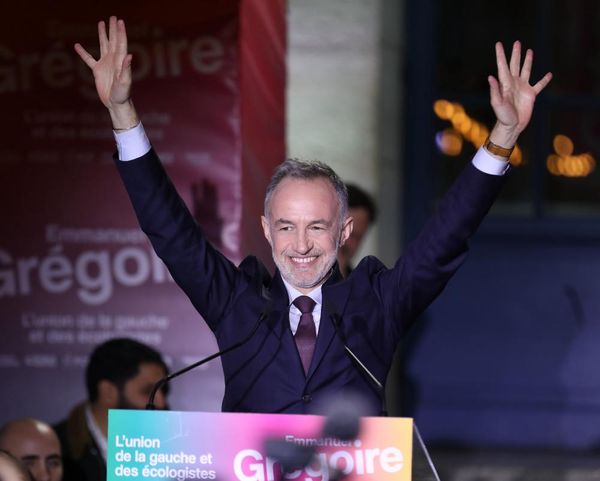
In France, the ruling Republic on the Move led by President Emmanuel Macron and Marine Le Pen's far-right National Rally competed fiercely to become the leading party, resulting in the National Rally slightly surpassing the Republic on the Move.
Macron has come out with ambitious initiatives for EU reform, such as the creation of a budget covering the entire eurozone. If his ideas cannot obtain wider support, even in his own country, Macron's efforts to call for the promotion of European integration will not be persuasive.
In Italy, which is suffering from economic stagnation, the far-right League that joined the administration last year achieved a landslide victory. The party's tactic of touting the confrontation with the EU over fiscal and other issues worked effectively. The spread of anti-EU sentiment is a serious situation.
Smoothly choose new leader
The situation will continue in which euroskeptic parties maintain influence to a certain extent in each member country and cause conflicts.
Both center-left and center-right parties that have led the European Parliament lost influence, while liberal parties and environmentalist parties increased their number of seats. With the multipolarity of pro-EU forces, it is feared that consensus-building will become difficult.
The focal point for the present is who will succeed European Commission President Jean-Claude Juncker after he steps down in autumn this year. The center-right forces recommend a German candidate, while Macron and others oppose the candidate as being inexperienced. Together with the appointment of a new president of the European Central Bank, it is necessary to smoothly coordinate this personnel matter.
In the previous European Parliament election five years ago, the euroskeptic forces increased their number of seats, taking advantage of the EU's poor handling of the European fiscal and financial crisis that allowed it to expand. A brake was put on that momentum for the present, perhaps because voters had a heightened sense of urgency following the confusion over Brexit in Britain.
The voting rate was about 51 percent, up as many as eight percentage points from the previous election. The rate has been falling since the first election in 1979, but improved for the first time in this election.
According to a recent opinion survey, nearly 70 percent had a high opinion of their country joining the EU, seeing it as "beneficial."
Many people cast votes, taking into serious consideration the significance of the election. This can be said to have led to the moderate outcome.
(From The Yomiuri Shimbun, May 30, 2019)
Read more from The Japan News at https://japannews.yomiuri.co.jp/